
How do I prioritize choices?
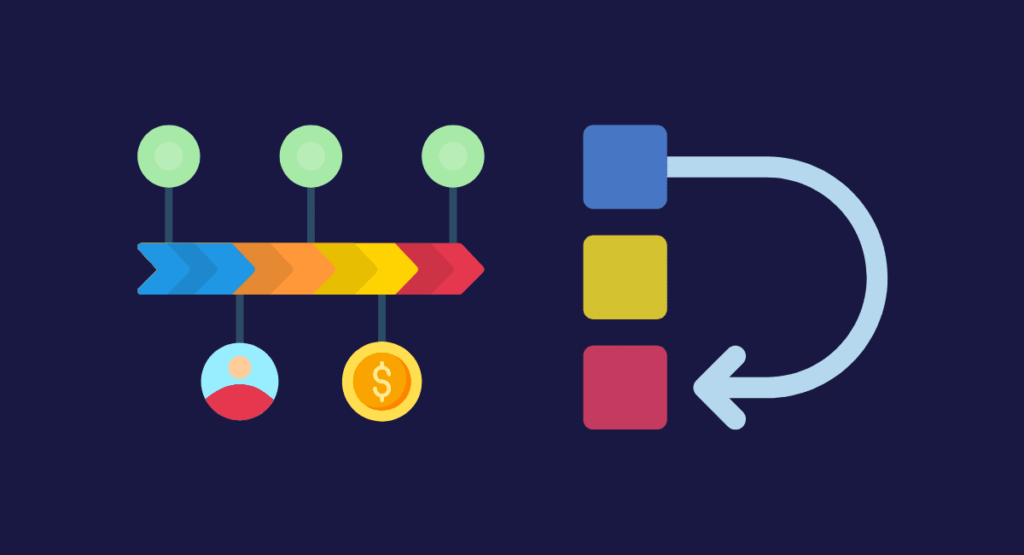
How Do I Prioritize Choices? The Hidden Logic Behind Better Decisions
Every day begins with a quiet negotiation.
Should I tackle the difficult project or answer a backlog of emails? Should I invest time learning a new skill or refining one I already possess? Should I accept another opportunity, postpone an existing commitment, or simply decline?
Most decisions do not announce themselves as life-changing. They arrive disguised as ordinary moments. That is precisely what makes prioritization so difficult. Major choices rarely fail because we lack intelligence. They fail because we spend our limited attention solving the wrong problems first.
The uncomfortable truth is that prioritization is not a productivity exercise. It is an exercise in judgment.
That distinction matters. Productivity helps us accomplish more. Prioritization determines whether the things we accomplish deserve our effort at all.
I discovered this during a consulting project several years ago. My calendar looked impressive. Meetings filled every available hour. Progress reports multiplied. Stakeholders expressed satisfaction. From the outside, the project appeared exceptionally well managed.
Yet one afternoon, while reviewing our work, I realized we had become extraordinarily efficient at discussing secondary questions. The genuinely strategic issues—the ones capable of determining success or failure—had quietly migrated to future meetings because they were uncomfortable, ambiguous, and resistant to quick answers.
The project succeeded eventually, but the lesson stayed with me. Activity creates an illusion of importance. Importance rarely announces itself through activity.
Learning to prioritize means learning to distinguish those two ideas.
Why Prioritization Feels Harder Than It Should
Most people believe prioritization is about ranking tasks.
It is not.
Ranking assumes that every option deserves consideration. Better prioritization begins earlier by asking whether some options deserve consideration at all.
Our minds naturally resist this approach because eliminating possibilities feels like losing opportunities.
Behavioral research repeatedly demonstrates that people dislike giving something up more than they enjoy acquiring something of equal value. That tendency quietly distorts priorities.
Imagine receiving five promising job offers.
Objectively, choosing one means declining four.
Emotionally, declining four opportunities feels like sacrificing potential futures.
The consequence is predictable.
People delay.
They gather unnecessary information.
They postpone commitment.
They confuse additional analysis with better analysis.
The difficulty lies less in selecting one option than in abandoning the others.
Every Choice Is a Trade-Off
Prioritization begins with an uncomfortable acknowledgment.
Everything valuable has a cost.
Sometimes the cost is money.
More often, it is attention.
Consider an executive deciding whether to launch a new product.
The financial investment receives careful analysis.
Less visible is the opportunity cost.
Launching Product A means engineering resources are unavailable for Product B.
Marketing attention shifts.
Leadership meetings change focus.
Customer support adapts.
The decision extends far beyond budgets.
The same logic governs personal life.
Accepting one invitation means declining another.
Learning one skill delays mastery of another.
Every "yes" quietly contains several invisible "no" responses.
Recognizing these hidden trade-offs transforms prioritization from scheduling into strategy.
Urgency Is Not Importance
Few distinctions matter more.
Urgent work demands immediate attention.
Important work determines long-term outcomes.
Unfortunately, urgency generates stronger emotional signals.
Notifications.
Deadlines.
Requests.
Interruptions.
Each insists upon immediate action.
Importance rarely behaves this way.
Building expertise.
Developing relationships.
Improving health.
Designing better systems.
These activities seldom arrive with alarms.
Their consequences accumulate gradually.
Because urgency feels louder than importance, many organizations unintentionally reward responsiveness over effectiveness.
Individuals often do the same.
A Simple Framework for Evaluating Priorities
Rather than asking, "What should I do next?" consider evaluating opportunities across several dimensions simultaneously.
| Choice | Long-Term Value | Urgency | Reversibility | Required Resources | Strategic Priority |
|---|---|---|---|---|---|
| Respond to routine emails | Low | High | High | Low | Low |
| Develop a new professional skill | High | Low | High | Medium | High |
| Hire a senior employee | High | Medium | Low | High | Very High |
| Redesign internal processes | High | Medium | Medium | High | High |
| Attend an optional meeting | Low | Medium | High | Low | Low |
Notice something interesting.
Urgency influences only one column.
It should never dominate the entire evaluation.
Begin With Objectives, Not Tasks
Lists create a dangerous illusion.
Twenty unfinished tasks appear equally legitimate simply because they occupy neighboring lines.
Reality disagrees.
Before prioritizing activities, clarify objectives.
Suppose your objective is increasing customer retention.
Several possible activities emerge.
Improve onboarding.
Reduce response time.
Expand loyalty programs.
Increase advertising.
Only after defining the objective can meaningful prioritization begin.
Otherwise, efficiency merely accelerates movement in uncertain directions.
Distinguish Decisions From Habits
Not every recurring action deserves repeated evaluation.
Many daily choices consume unnecessary mental energy because they remain decisions instead of becoming routines.
Successful prioritization often means reducing the number of decisions requiring attention.
If every morning begins with deciding when to exercise, whether to read, or how to organize work, cognitive resources disappear before meaningful problems even appear.
Habits preserve attention for situations where judgment truly matters.
Beware of Attractive Distractions
Some opportunities appear valuable simply because they are new.
Novelty attracts attention.
Attention creates perceived importance.
Importance encourages investment.
Yet many exciting opportunities produce only modest long-term value.
Organizations frequently abandon successful initiatives to pursue fashionable alternatives.
Individuals repeat the same mistake.
A new productivity system.
Another online course.
Another networking event.
Another side project.
None may be harmful individually.
Collectively, they scatter attention across too many directions.
The consequence is not failure.
It is fragmentation.
My Most Valuable Lesson About Prioritization
Years ago, I maintained an ambitious quarterly plan.
Every objective seemed justified.
Every project possessed convincing arguments.
Reviewing the list produced satisfaction.
Executing it produced exhaustion.
Eventually, a mentor asked one question.
"If you completed only three items, which would change everything else?"
The silence that followed was revealing.
Three projects immediately stood apart.
The remaining twelve suddenly looked optional.
Nothing about the projects themselves had changed.
Only the comparison had.
Since then, I have approached planning differently.
Rather than asking how many priorities I can manage, I ask how few truly deserve the title.
That small adjustment consistently improves the quality of my decisions.
Ranking Is Less Useful Than Filtering
Traditional prioritization encourages ranking every alternative.
First.
Second.
Third.
Twentieth.
Filtering asks a better question.
Does this belong on the list at all?
Elite decision makers spend remarkable amounts of time eliminating possibilities before comparing survivors.
The result appears decisive.
Its foundation is disciplined exclusion.
Consider Reversibility
Some decisions permanently reshape future options.
Others can be corrected quickly.
Treating both categories identically creates unnecessary anxiety.
Ask instead:
Can I reverse this decision easily?
If yes, move faster.
If no, invest additional analysis.
Reversibility provides a practical guide for allocating attention.
Not every decision deserves equal scrutiny.
The Danger of Consensus
Agreement often feels reassuring.
It may also conceal collective blind spots.
Groups naturally converge toward socially acceptable priorities.
The loudest voices receive attention.
The most measurable objectives dominate discussion.
Subtle but strategically important concerns quietly disappear.
Healthy disagreement improves prioritization because it exposes competing assumptions.
Consensus should conclude thoughtful debate—not replace it.
Think in Portfolios
Investors rarely allocate every resource to one asset.
Priorities deserve similar treatment.
Some projects generate immediate returns.
Others build future capabilities.
Some reduce risk.
Others create innovation.
A balanced portfolio acknowledges uncertainty without surrendering strategic direction.
Diversification is not indecision.
It is recognition that the future rarely unfolds according to one scenario.
Eliminate Before You Optimize
Optimization attracts intelligent people.
Optimization also distracts them.
Organizations spend months refining processes that should have disappeared entirely.
Individuals optimize routines supporting obsolete goals.
Before asking how to improve an activity, ask whether the activity should continue.
Elimination often produces greater value than refinement.
Measure Progress Carefully
What gets measured influences behavior.
Poor metrics create distorted priorities.
Suppose a customer support department rewards agents exclusively for closing tickets quickly.
Response times improve.
Customer satisfaction may decline.
The metric succeeds.
The objective fails.
Good prioritization requires metrics aligned with genuine outcomes rather than convenient measurements.
Ask Better Questions
The quality of prioritization depends less upon answers than questions.
Instead of asking:
"What should I finish today?"
Try asking:
"What creates the greatest long-term value?"
Instead of:
"What can I complete quickly?"
Ask:
"What deserves completion regardless of difficulty?"
Instead of:
"What does everyone expect?"
Consider:
"What would matter if nobody were watching?"
Small changes in framing often produce dramatically different priorities.
The Role of Uncertainty
Perfect information never arrives.
Waiting indefinitely creates its own costs.
Effective prioritization therefore balances analysis with action.
Gather sufficient evidence.
Challenge assumptions.
Estimate consequences.
Then decide.
Uncertainty cannot be eliminated.
It can only be managed intelligently.
Conclusion: Priorities Reveal More Than Preferences
Every completed task tells a story.
Not about intention.
About judgment.
Prioritization is ultimately an expression of values translated into action. It determines where finite attention, limited resources, and irreplaceable time will be invested. That responsibility deserves more than instinct or convenience.
The temptation will always be to chase urgency, satisfy expectations, and preserve optionality. Yet meaningful progress rarely emerges from satisfying every demand equally. It emerges from deliberate exclusion—from accepting that saying yes to what matters requires saying no to many things that appear worthwhile.
The most effective decision makers are not distinguished by extraordinary intelligence or perfect foresight. They excel because they repeatedly ask a difficult question before committing their attention:
If everything seems important, what evidence suggests otherwise?
That question rarely produces comfortable answers.
It frequently produces better ones.
- Arts
- Business
- Computers
- Jogos
- Health
- Início
- Kids and Teens
- Money
- News
- Personal Development
- Recreation
- Regional
- Reference
- Science
- Shopping
- Society
- Sports
- Бизнес
- Деньги
- Дом
- Досуг
- Здоровье
- Игры
- Искусство
- Источники информации
- Компьютеры
- Личное развитие
- Наука
- Новости и СМИ
- Общество
- Покупки
- Спорт
- Страны и регионы
- World

 English
 Russian
 French
 Spanish
 Portuguese
 Deutsch
 Turkish
 Dutch
Dutch
 Italiano
 Arabic
 Romaian
 Greek
Greek