
How is income inequality measured?
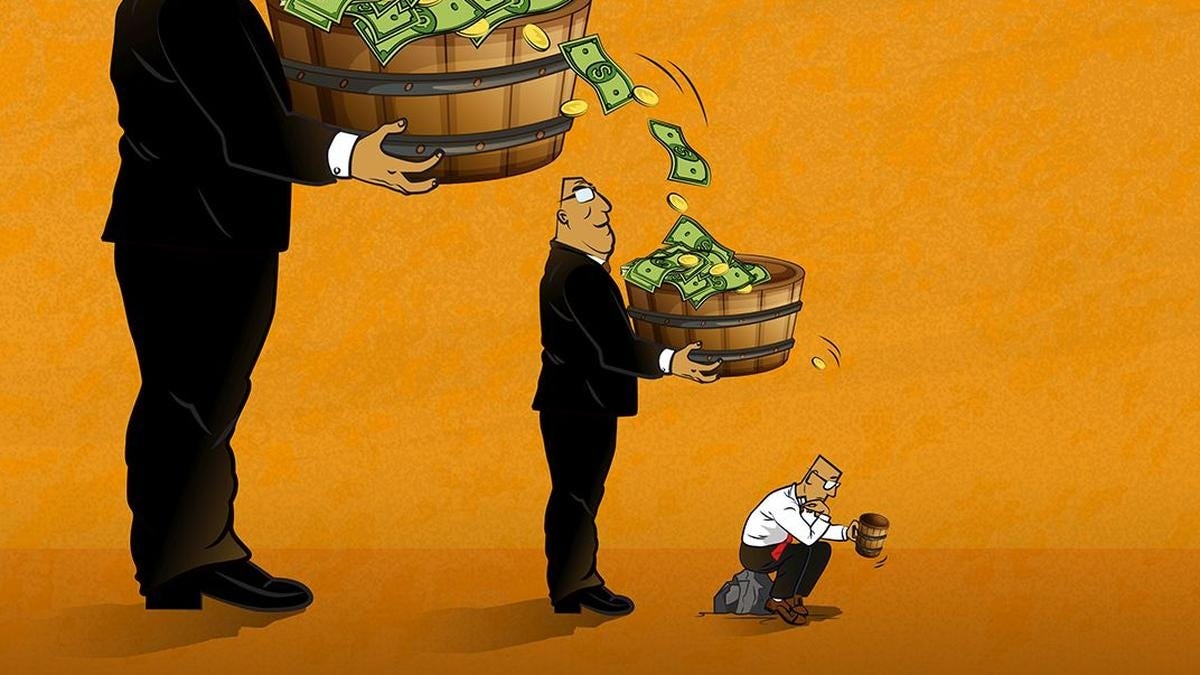
How Is Income Inequality Measured?
Income inequality refers to the uneven distribution of income among individuals or households within a society. While it is easy to recognize that some people earn more than others, measuring the extent of this gap requires standardized methods. Economists, governments, and international organizations use several statistical tools to evaluate income inequality, compare regions, and track changes over time.
Understanding how income inequality is measured helps policymakers design fair economic policies and allows researchers to assess the effectiveness of programs aimed at reducing poverty and promoting equal opportunities.
Why Measure Income Inequality?
Measuring income inequality serves several important purposes:
-
It helps governments understand how income is distributed across the population.
-
It identifies groups that may be economically disadvantaged.
-
It supports the development of tax, welfare, and labor policies.
-
It enables comparisons between countries and across different time periods.
-
It evaluates whether economic growth benefits everyone or mainly higher-income groups.
Without reliable measurements, it would be difficult to determine whether inequality is increasing, decreasing, or remaining stable.
The Gini Coefficient
The most widely used measure of income inequality is the Gini coefficient, also called the Gini index.
The Gini coefficient ranges from 0 to 1, although it is often expressed as a percentage from 0 to 100.
-
0 (or 0%) represents perfect equality, where everyone earns exactly the same income.
-
1 (or 100%) represents perfect inequality, where one person receives all income while everyone else receives none.
For example:
-
Gini coefficient of 0.25: Relatively equal income distribution.
-
Gini coefficient of 0.40: Moderate inequality.
-
Gini coefficient of 0.55 or higher: High income inequality.
The Gini coefficient is popular because it summarizes an entire income distribution into a single number, making international comparisons straightforward.
The Lorenz Curve
The Lorenz Curve is a graphical representation of income distribution and forms the basis of the Gini coefficient.
It compares:
-
The cumulative percentage of the population.
-
The cumulative percentage of total income earned.
If income were distributed perfectly equally, the Lorenz Curve would be a straight diagonal line.
In reality, the curve bows below this line because higher-income households earn a disproportionate share of total income. The greater the distance between the curve and the line of equality, the greater the level of income inequality.
Income Shares by Population Groups
Another common method is to examine how much income different segments of society receive.
Examples include:
-
Bottom 20% of households
-
Middle 40%
-
Top 10%
-
Top 5%
-
Top 1%
For instance, analysts may report that:
-
The richest 10% earn 45% of all national income.
-
The poorest 20% earn only 6%.
These statistics clearly show how income is concentrated among different groups.
Income Ratios
Income ratios compare the earnings of high-income groups with those of lower-income groups.
Common examples include:
-
90/10 ratio: Income at the 90th percentile divided by income at the 10th percentile.
-
80/20 ratio: Average income of the richest 20% compared with the poorest 20%.
-
Palma ratio: Income share of the richest 10% divided by the income share of the poorest 40%.
These ratios highlight the size of income gaps and are easy for the public to understand.
Median vs. Average Income
Income inequality is also assessed by comparing median income and average (mean) income.
Average Income
Average income is calculated by dividing total income by the number of people.
Very high earners can significantly increase the average, even if most people's incomes remain unchanged.
Median Income
Median income is the income earned by the person exactly in the middle of the income distribution.
Half the population earns more, and half earns less.
Because the median is less affected by extremely high incomes, it often provides a more accurate picture of what a typical person earns.
A large difference between average and median income usually indicates greater income inequality.
Percentile Analysis
Economists frequently divide the population into income percentiles.
Examples include:
-
Bottom 10%
-
Bottom 25%
-
Middle 50%
-
Top 10%
-
Top 1%
Tracking income growth for each percentile helps determine whether economic gains are shared broadly or concentrated among wealthier households.
For example, if incomes rise by:
-
2% for the bottom half
-
15% for the top 1%
income inequality is increasing even though average incomes have risen overall.
Poverty Measures
Although poverty and inequality are different concepts, poverty statistics help provide context.
Common indicators include:
-
Poverty rate
-
Relative poverty
-
Absolute poverty
-
Deep poverty
A country may have relatively low poverty but still experience significant income inequality if high-income households earn vastly more than everyone else.
Before-Tax and After-Tax Income
Income inequality can be measured using different definitions of income.
Market Income
This includes:
-
Wages
-
Salaries
-
Business profits
-
Investment income
before taxes and government benefits.
Disposable Income
Disposable income measures income after:
-
Taxes
-
Government transfers
-
Social benefits
Comparing these two measures shows how taxes and social programs reduce inequality.
Many countries experience lower inequality after government redistribution.
Household vs. Individual Income
Researchers also decide whether to measure:
-
Individual income
-
Household income
Household income often provides a better picture because family members share resources.
To make fair comparisons, economists frequently adjust household income according to household size, a process known as equivalized income.
International Comparisons
Organizations such as the World Bank, the International Monetary Fund (IMF), and the Organisation for Economic Co-operation and Development (OECD) publish standardized income inequality statistics.
These organizations adjust for differences in:
-
Currency values
-
Household size
-
Tax systems
-
Data collection methods
This allows countries to compare inequality more accurately.
Limitations of Measuring Income Inequality
Although these methods are useful, none is perfect.
Some limitations include:
-
Informal income may not be reported.
-
Tax evasion can hide true earnings.
-
Wealth is not included in income measures.
-
Cost of living varies by region.
-
Household surveys may miss the richest individuals.
-
Different countries collect data differently.
As a result, economists often use several measures together rather than relying on just one.
Income Inequality vs. Wealth Inequality
It is important to distinguish between income and wealth.
-
Income is the money people earn through work, investments, or other sources over a period of time.
-
Wealth is the total value of assets such as savings, property, investments, and businesses minus debts.
A country may have moderate income inequality but much greater wealth inequality because wealth accumulates over generations.
Conclusion
Income inequality is measured using a variety of statistical tools, each providing a different perspective on how income is distributed. The Gini coefficient and Lorenz Curve offer broad summaries, while income shares, percentile analysis, income ratios, and median income provide more detailed insights into who benefits from economic growth.
Because no single measure captures every aspect of inequality, economists typically use several indicators together. These measurements help governments, researchers, and international organizations better understand economic disparities and develop policies that promote more inclusive and sustainable growth.
- Arts
- Business
- Computers
- Παιχνίδια
- Health
- Κεντρική Σελίδα
- Kids and Teens
- Money
- News
- Personal Development
- Recreation
- Regional
- Reference
- Science
- Shopping
- Society
- Sports
- Бизнес
- Деньги
- Дом
- Досуг
- Здоровье
- Игры
- Искусство
- Источники информации
- Компьютеры
- Личное развитие
- Наука
- Новости и СМИ
- Общество
- Покупки
- Спорт
- Страны и регионы
- World

 English
 Russian
 French
 Spanish
 Portuguese
 Deutsch
 Turkish
 Dutch
Dutch
 Italiano
 Arabic
 Romaian
 Portuguese (Brazil)