
What are examples of income inequality?
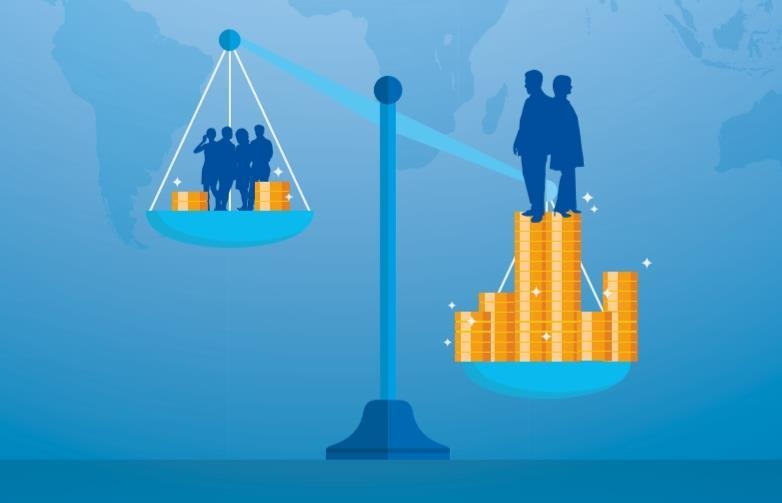
What Are Examples of Income Inequality?
Income inequality refers to the uneven distribution of income among individuals, households, or groups within a society. While some level of income difference is expected in any economy, large gaps between high earners and low earners can create social, economic, and political challenges. Understanding real-world examples of income inequality helps explain how it affects people's lives and why it has become an important global issue.
Wage Differences Between Occupations
One of the most common examples of income inequality is the difference in wages across professions. Highly skilled professionals such as surgeons, software engineers, and corporate executives often earn significantly more than workers in retail, hospitality, agriculture, or cleaning services.
For example, a chief executive officer (CEO) may earn millions of dollars annually, while an entry-level cashier or restaurant worker earns only enough to cover basic living expenses. Although education, experience, and responsibility help explain part of this gap, critics argue that executive compensation has increased much faster than average worker pay.
Income Gap Between Full-Time and Part-Time Workers
Full-time employees generally receive higher annual incomes than part-time workers. In addition to working fewer hours, part-time employees may lack access to benefits such as health insurance, retirement plans, and paid leave.
Many industries, including retail and food service, rely heavily on part-time labor. As a result, workers in these sectors often experience lower incomes and greater financial insecurity.
Gender Pay Gap
Income inequality is also evident in earnings between men and women. In many countries, women earn less than men on average, even when performing similar work.
Several factors contribute to this difference, including occupational segregation, career interruptions related to caregiving, unequal opportunities for promotion, and, in some cases, direct pay discrimination. While the gender pay gap has narrowed in many places over time, it remains a significant issue.
Wealthy and Low-Income Neighborhoods
Income inequality can often be seen geographically. Wealthy neighborhoods typically feature larger homes, better schools, improved healthcare facilities, safer streets, and greater access to parks and recreational opportunities.
By contrast, lower-income neighborhoods may struggle with underfunded schools, aging infrastructure, limited public services, and fewer employment opportunities. These differences can reinforce inequality across generations.
Educational Opportunities
Education is closely connected to income inequality. Families with higher incomes can often afford private schools, tutoring, extracurricular activities, and college tuition. These advantages increase the likelihood that their children will secure well-paying jobs later in life.
Meanwhile, students from lower-income families may attend underfunded schools, have fewer educational resources, and face financial barriers to higher education. This can limit future earning potential and contribute to ongoing income inequality.
Differences Between Urban and Rural Areas
Income levels often differ between cities and rural communities. Urban areas generally offer more employment opportunities in industries such as finance, technology, healthcare, and professional services.
Rural areas may rely more heavily on agriculture, manufacturing, or seasonal work, which often pays less and provides fewer career advancement opportunities. This geographic imbalance contributes to regional income inequality.
Global Income Inequality
Income inequality is not limited to individual countries—it also exists between nations. High-income countries typically have stronger economies, better infrastructure, advanced healthcare systems, and higher average wages.
In contrast, many low-income countries face challenges such as limited industrial development, lower productivity, political instability, and restricted access to education. As a result, average incomes can differ dramatically across countries.
Differences Between Business Owners and Employees
Business ownership can be another source of income inequality. Successful entrepreneurs and investors may generate income from profits, dividends, and capital gains, allowing their wealth to grow over time.
Employees, on the other hand, primarily depend on wages or salaries. While many workers receive raises throughout their careers, their earnings often increase more slowly than investment income or business profits.
Technology and High-Skill Jobs
The growth of technology has created new opportunities but has also widened income differences. Workers with advanced technical skills in fields such as software development, artificial intelligence, cybersecurity, and engineering often earn high salaries.
Meanwhile, jobs involving routine manual or administrative tasks have become increasingly automated or outsourced, reducing wages or employment opportunities for some workers. This creates a growing divide between highly skilled and lower-skilled workers.
Generational Income Differences
Income inequality can also appear across generations. Younger adults often face rising housing costs, student debt, and competitive job markets, making it harder to build wealth than previous generations.
Older individuals who purchased homes decades ago or accumulated investments during periods of economic growth may have significantly greater financial resources. These differences can create unequal opportunities between generations.
Healthcare Access
Income affects access to healthcare in many parts of the world. Higher-income individuals may afford comprehensive health insurance, preventive care, and specialized medical treatment.
Lower-income families may delay medical care due to cost, leading to poorer health outcomes and reduced earning potential. Poor health can further reinforce existing income inequality.
Housing Affordability
Housing is another clear example of income inequality. High-income households are more likely to own homes in desirable neighborhoods, benefiting from rising property values and increased wealth over time.
Lower-income households may spend a larger share of their income on rent, struggle to save for homeownership, or face overcrowded living conditions. Rising housing costs often widen the gap between wealthier and poorer families.
Digital Access
In today's economy, internet access and digital technology are increasingly essential. Higher-income households typically have reliable internet connections, modern computers, and access to online learning resources.
Lower-income families may have limited digital access, making it more difficult to complete schoolwork, search for jobs, develop new skills, or participate fully in the digital economy.
Why These Examples Matter
These examples demonstrate that income inequality affects much more than earnings alone. It influences education, healthcare, housing, employment opportunities, and overall quality of life. Persistent inequality can reduce social mobility, meaning that children born into low-income families may have fewer opportunities to improve their economic situation.
Governments, businesses, and communities address income inequality through various approaches, including investments in education, workforce training, progressive taxation, minimum wage policies, affordable healthcare, and social support programs. While opinions differ on the best solutions, most economists agree that understanding the causes and examples of income inequality is the first step toward creating more inclusive economic growth.
Conclusion
Income inequality appears in many forms, from wage differences between occupations to unequal access to education, healthcare, housing, and technology. It exists both within countries and across the world, affecting individuals, families, and entire communities. By recognizing these examples, policymakers and citizens can better understand the challenges associated with unequal income distribution and work toward policies that promote greater economic opportunity for everyone.
- Arts
- Business
- Computers
- Spiele
- Health
- Startseite
- Kids and Teens
- Geld
- News
- Personal Development
- Recreation
- Regional
- Reference
- Science
- Shopping
- Society
- Sports
- Бизнес
- Деньги
- Дом
- Досуг
- Здоровье
- Игры
- Искусство
- Источники информации
- Компьютеры
- Личное развитие
- Наука
- Новости и СМИ
- Общество
- Покупки
- Спорт
- Страны и регионы
- World

 English
 Russian
 French
 Spanish
 Portuguese
 Turkish
 Dutch
Dutch
 Italiano
 Arabic
 Romaian
 Portuguese (Brazil)
 Greek
Greek