
Will Autonomous Vehicles Change Delivery Services?
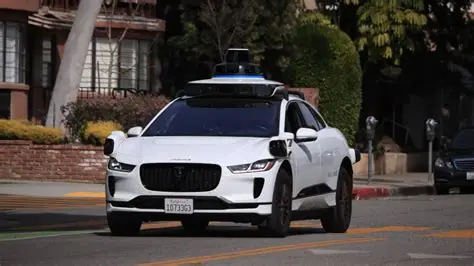
A few years ago, I attended a logistics demonstration where engineers proudly showcased an autonomous delivery vehicle navigating a carefully designed test route. The technology was impressive. The vehicle identified obstacles, adjusted its speed, and completed the course with remarkable precision.
After the presentation, however, I found myself paying closer attention to the conversations happening nearby.
Operations managers weren't asking how fast the vehicle could drive.
They were asking different questions.
What happens if a customer isn't home?
How does the system respond when a package requires a signature?
Who handles unexpected road closures?
How quickly can a human intervene if something goes wrong?
Those questions revealed something important.
Autonomous vehicles are not simply transportation technology. They represent a new operating model for delivery services—one that reshapes logistics, customer expectations, workforce roles, and business strategy simultaneously.
The future of delivery is unlikely to be defined by vehicles driving themselves alone. It will be shaped by how effectively businesses combine automation with the human judgment, trust, and adaptability that customers continue to value.
The conversation, therefore, is larger than technology.
It is about redesigning an entire service experience.
Delivery Has Always Been About More Than Transportation
Most people associate delivery services with movement.
Packages travel from warehouses to customers.
Meals travel from restaurants to homes.
Groceries travel from stores to kitchens.
Yet transportation is only one component of the overall experience.
Customers also care about:
- Reliability
- Communication
- Accurate arrival estimates
- Package security
- Problem resolution
- Convenience
Autonomous vehicles may improve transportation efficiency, but successful delivery platforms must continue performing well across every one of these dimensions.
Speed alone rarely defines satisfaction.
Confidence does.
Why Businesses Are Investing in Autonomous Delivery
Delivery demand continues to expand across industries.
Retail.
Healthcare.
Restaurants.
Pharmacies.
Business-to-business logistics.
As order volumes increase, organizations face growing pressure to improve efficiency while controlling costs.
Autonomous vehicles promise several operational advantages.
They can potentially reduce repetitive driving tasks, operate for extended periods, optimize routing through connected systems, and integrate seamlessly with predictive logistics platforms.
Importantly, these benefits accumulate gradually rather than appearing all at once.
Transformation is likely to occur through incremental deployment rather than immediate replacement of existing fleets.
Autonomous Vehicles Change Logistics in Several Ways
Traditional delivery operations rely heavily on human coordination.
Dispatchers assign routes.
Drivers navigate changing traffic.
Support teams respond to delays.
Customers contact service representatives when expectations shift.
Autonomous systems increasingly automate many of these operational activities.
Artificial intelligence recalculates routes.
Sensors monitor vehicle performance.
Predictive maintenance identifies equipment needs.
Traffic data continuously updates navigation decisions.
The result is a delivery network capable of adapting more rapidly to changing conditions.
Automation improves coordination as much as transportation.
Comparing Traditional and Autonomous Delivery Models
| Delivery Function | Traditional Operations | Autonomous Vehicle Operations | Potential Customer Benefit |
|---|---|---|---|
| Route planning | Human-assisted scheduling | AI-driven optimization | More accurate arrival times |
| Navigation | Driver judgment with GPS | Continuous autonomous routing | Improved efficiency |
| Fleet utilization | Fixed operational planning | Dynamic vehicle allocation | Faster deliveries |
| Vehicle monitoring | Periodic inspections | Real-time diagnostics | Greater reliability |
| Fuel and energy management | Manual oversight | Automated optimization | Lower operating costs |
| Delivery tracking | GPS updates | Continuous location intelligence | Better visibility |
| Maintenance | Scheduled servicing | Predictive maintenance | Fewer service interruptions |
| Exception management | Human intervention | Hybrid AI and human support | Faster issue resolution |
Notice that relatively few improvements involve driving alone.
Most relate to better operational decision-making.
Customer Expectations Will Continue to Rise
Technology rarely lowers expectations.
It usually raises them.
As autonomous systems improve delivery consistency, customers may increasingly expect:
More precise delivery windows.
Greater transparency.
Faster fulfillment.
Improved package security.
Continuous communication.
Organizations introducing autonomous vehicles therefore assume a new responsibility.
Higher reliability becomes the new baseline.
Meeting that standard consistently becomes part of the customer experience.
Human Roles Will Evolve Rather Than Disappear
One of the most common assumptions surrounding autonomous vehicles is that delivery workers will simply become unnecessary.
Experience across many industries suggests a more nuanced outcome.
Routine driving responsibilities may decline in certain environments.
Human responsibilities may simultaneously expand in other areas.
Fleet supervision.
Customer support.
Remote operations.
Maintenance.
Complex deliveries.
Problem resolution.
Relationship management.
The nature of work changes because automation shifts where human judgment creates the greatest value.
That pattern has appeared repeatedly throughout technological change.
My Perspective Changed During a Warehouse Visit
Several years ago, I toured a regional distribution center evaluating new automation technologies.
The executive leading the tour proudly described robotics, predictive inventory systems, and intelligent routing software.
Everything appeared remarkably efficient.
Then an unexpected order arrived requiring immediate manual intervention.
Within minutes, experienced employees reorganized shipments, coordinated transportation, contacted the customer, and resolved the issue.
No automation system had anticipated the situation.
People had.
That experience reinforced a lesson I continue to see across industries.
Technology performs exceptionally well within predictable environments.
People excel when reality becomes unpredictable.
Successful delivery organizations recognize the importance of both.
Safety Will Shape Public Acceptance
Efficiency alone will not determine adoption.
Customers, regulators, and communities must also develop confidence in autonomous operations.
Safety therefore becomes central to long-term success.
Organizations investing in autonomous fleets increasingly prioritize:
Continuous sensor monitoring.
Redundant safety systems.
Remote operational oversight.
Cybersecurity protections.
Transparent incident reporting.
Public trust grows gradually.
Reliable performance over time matters more than ambitious announcements.
Confidence is earned through consistency.
Urban and Rural Adoption May Follow Different Paths
Not every environment presents the same challenges.
Dense urban areas include pedestrians, cyclists, construction zones, and highly dynamic traffic conditions.
Rural routes often involve longer travel distances but fewer complex interactions.
Consequently, autonomous delivery adoption is unlikely to occur uniformly.
Organizations will probably introduce services where operational conditions align most effectively with current technological capabilities.
Expansion will follow demonstrated success.
Practical deployment often advances one environment at a time.
Artificial Intelligence Extends Beyond Driving
Autonomous vehicles depend heavily on artificial intelligence.
Yet AI contributes far beyond vehicle navigation.
It forecasts delivery demand.
Optimizes warehouse operations.
Predicts maintenance requirements.
Coordinates fleet deployment.
Improves customer communication.
The vehicle becomes one participant within a much larger intelligent logistics ecosystem.
Understanding that broader context explains why autonomous delivery represents an operational transformation rather than simply a transportation upgrade.
Trust Will Remain the Competitive Advantage
Customers ultimately judge delivery experiences through a surprisingly human lens.
Did the package arrive safely?
Was communication clear?
Were expectations realistic?
Did someone resolve problems promptly?
Autonomous vehicles influence each of these outcomes.
They do not determine them independently.
Businesses still design customer experiences.
Employees still establish service standards.
Leadership still defines organizational priorities.
Technology supports those choices.
It does not replace them.
The Future Is Hybrid
For the foreseeable future, delivery networks will likely combine multiple operating models.
Traditional drivers.
Autonomous vehicles.
Delivery robots.
Micro-fulfillment centers.
Human support teams.
Artificial intelligence coordinating them all.
Hybrid systems often outperform purely automated ones because they balance efficiency with flexibility.
Each participant contributes complementary strengths.
The ecosystem becomes more resilient.
The Future of Delivery Is Bigger Than the Vehicle
Asking whether autonomous vehicles will change delivery services invites a straightforward answer: yes. They almost certainly will. But the more meaningful question is how they will change them.
The greatest transformation is unlikely to come from replacing steering wheels with software. It will come from redesigning the entire delivery experience. Artificial intelligence, predictive analytics, real-time fleet management, connected infrastructure, and autonomous transportation will increasingly work together to reduce delays, improve reliability, and allocate resources more intelligently.
Even so, technology alone does not create exceptional service.
Customers continue to value transparency, accountability, and confidence. When deliveries encounter unexpected obstacles, people still expect thoughtful communication and effective solutions. Those expectations remain deeply human.
The organizations that thrive in the coming years will recognize that autonomous vehicles are not an end in themselves. They are one component of a broader strategy focused on creating delivery experiences that are more dependable, more responsive, and more trustworthy.
Ultimately, the future of delivery will not be defined by whether a vehicle drives itself.
It will be defined by whether every interaction—from warehouse to doorstep—makes customers feel that the promise they were given is the promise that was kept.
- Arts
- Business
- Computers
- Spiele
- Health
- Startseite
- Kids and Teens
- Geld
- News
- Personal Development
- Recreation
- Regional
- Reference
- Science
- Shopping
- Society
- Sports
- Бизнес
- Деньги
- Дом
- Досуг
- Здоровье
- Игры
- Искусство
- Источники информации
- Компьютеры
- Личное развитие
- Наука
- Новости и СМИ
- Общество
- Покупки
- Спорт
- Страны и регионы
- World

 English
 Russian
 French
 Spanish
 Portuguese
 Turkish
 Dutch
Dutch
 Italiano
 Arabic
 Romaian
 Portuguese (Brazil)
 Greek
Greek