
How Does PaaS Work?
The first cloud project I observed looked deceptively simple on a planning board.
The development team had a clear objective: build a customer portal that would allow clients to track orders, update account information, and communicate with support. The timeline was ambitious, but the team felt confident. After all, the application itself wasn't unusually complicated.
Then reality arrived.
Before anyone wrote meaningful application code, discussions revolved around virtual machines, operating systems, storage, networking, security patches, runtime environments, database provisioning, and deployment pipelines. Days turned into weeks as engineers assembled the foundation necessary to support the software they actually wanted to create.
At one point, a project manager asked a question that shifted the entire conversation.
"What if we didn't have to build all of this ourselves?"
That question led the organization to adopt a Platform as a Service (PaaS) solution.
Within weeks, the team's conversations changed dramatically. Infrastructure planning faded into the background. Product design, customer feedback, and feature development became the center of attention.
That experience taught me something I continue to see across organizations of every size.
The real value of PaaS isn't that it changes how servers operate.
It changes how people spend their time.
Understanding how Platform as a Service works begins with recognizing that its greatest contribution isn't infrastructure.
It's focus.
What Is Platform as a Service?
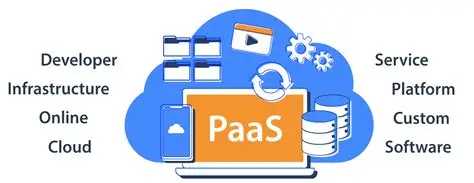
Platform as a Service, or PaaS, is a cloud computing model that provides developers with a complete environment for building, testing, deploying, managing, and scaling applications without requiring them to manage the underlying infrastructure.
Instead of configuring servers, installing operating systems, maintaining middleware, and managing runtime environments, developers access a ready-to-use platform through a cloud provider.
The provider manages the foundation.
Developers build the application.
This shared responsibility dramatically reduces operational complexity while accelerating software delivery.
The Basic Idea Behind PaaS
Imagine building a house.
One approach requires manufacturing bricks, pouring concrete, installing electrical systems, and constructing the foundation before decorating a single room.
Another approach begins with a completed structure.
You simply design the interior.
PaaS follows the second model.
It provides the technical "building" so developers can concentrate on creating software instead of assembling infrastructure.
The platform already includes the essential components required to support modern applications.
The Core Components of a PaaS Environment
Although providers offer different features, most PaaS platforms include several essential building blocks:
- Computing infrastructure
- Operating systems
- Runtime environments
- Middleware
- Managed databases
- Development frameworks
- Security services
- Monitoring tools
- Deployment automation
- Scaling capabilities
Developers interact primarily with the tools that support application development.
The underlying infrastructure remains largely invisible.
How PaaS Works Step by Step
The workflow is surprisingly straightforward.
Step 1: The Platform Is Provisioned
The cloud provider prepares the infrastructure before the developer even begins working.
Servers, networking, storage, operating systems, and runtime environments are already configured.
Developers don't purchase hardware or manually install software.
The platform is immediately available.
Step 2: Developers Build Applications
Once connected to the platform, developers begin writing code using supported programming languages and development frameworks.
The platform often integrates directly with development tools and source-code repositories.
Collaboration becomes easier because every developer works within a standardized environment.
Step 3: Applications Are Tested
Most PaaS environments include integrated testing capabilities.
Teams validate functionality, performance, security, and compatibility without building separate testing infrastructure.
Automation plays an important role.
Many platforms execute tests automatically whenever developers submit new code.
Step 4: Applications Are Deployed
Instead of manually configuring servers, developers publish applications directly through the platform.
Deployment pipelines frequently automate tasks such as:
- Building application packages
- Running quality checks
- Updating production environments
- Monitoring deployment status
Releasing new software becomes significantly faster.
Step 5: The Platform Continues Managing Operations
After deployment, the cloud provider continues maintaining the underlying environment.
This includes:
- Operating system updates
- Hardware maintenance
- Infrastructure monitoring
- Security patching
- Backup management
- Resource allocation
Developers remain focused on improving the application itself.
Responsibilities: Developer vs. Cloud Provider
| Responsibility | Developer | PaaS Provider |
|---|---|---|
| Application code | ✔ | |
| Business logic | ✔ | |
| User experience | ✔ | |
| Data management | ✔ | |
| Runtime environment | ✔ | |
| Middleware | ✔ | |
| Operating system | ✔ | |
| Virtual machines | ✔ | |
| Networking | ✔ | |
| Storage infrastructure | ✔ | |
| Hardware maintenance | ✔ | |
| Security patches | ✔ | |
| Infrastructure scalability | ✔ |
This division of responsibility explains why organizations often develop software more efficiently with PaaS.
Developers work where they create the greatest business value.
Infrastructure specialists at the cloud provider handle the operational foundation.
My Biggest Lesson Came From Observing Two Teams
Several years ago, I watched two software teams launch remarkably similar applications.
One managed its own infrastructure.
The other adopted Platform as a Service.
Both teams employed talented engineers.
Both had experienced leadership.
Yet their weekly meetings felt completely different.
The first team spent considerable time discussing operating system updates, server utilization, storage capacity, infrastructure monitoring, and deployment issues.
The second team discussed customer feedback.
Feature requests.
Product adoption.
User experience.
Neither approach was inherently wrong.
But one team invested far more attention where customers could actually see the results.
That experience permanently changed how I think about cloud platforms.
Technology should remove distractions—not create new ones.
Automatic Scaling Keeps Applications Responsive
One of PaaS's most valuable capabilities is automatic scaling.
Application demand rarely remains constant.
Traffic increases during promotions.
Seasonal events create spikes.
New product launches attract unexpected attention.
Traditional infrastructure often requires organizations to purchase additional servers before demand materializes.
PaaS approaches the problem differently.
Resources expand or contract based on actual usage.
When demand increases, additional computing capacity becomes available.
When activity declines, resources scale back.
Organizations pay for what they use rather than permanently maintaining excess capacity.
Security Is Built Into the Platform
Security remains a shared responsibility.
Cloud providers typically manage:
- Infrastructure security
- Operating system updates
- Network protection
- Physical data center security
Organizations remain responsible for:
- Application security
- User authentication
- Access permissions
- Data governance
- Secure coding practices
PaaS simplifies many operational security tasks while leaving business-specific decisions with the customer.
Why Developers Prefer PaaS
Developers often value PaaS for reasons extending beyond convenience.
It allows them to:
- Build applications faster
- Collaborate more effectively
- Reduce repetitive infrastructure work
- Release updates more frequently
- Experiment with new features
- Focus on solving customer problems
Removing operational friction improves productivity without reducing technical quality.
How Artificial Intelligence Is Expanding PaaS
Modern platforms increasingly integrate artificial intelligence directly into development environments.
Developers can access services including:
- Machine learning models
- Natural language processing
- Image recognition
- Predictive analytics
- Speech processing
- Intelligent automation
Rather than constructing these capabilities independently, organizations connect existing platform services into their applications.
This accelerates development while reducing implementation complexity.
Common Business Uses for PaaS
Organizations across industries use Platform as a Service to support digital transformation.
Common applications include:
- Customer portals
- E-commerce platforms
- Mobile applications
- Financial dashboards
- Healthcare systems
- Business intelligence tools
- Internal workflow applications
- Software-as-a-Service products
Regardless of industry, the objective remains consistent.
Reduce infrastructure complexity.
Increase development speed.
Improve customer experiences.
Conclusion: PaaS Works by Simplifying Everything Beneath the Application
At first glance, Platform as a Service appears to be another cloud technology.
Look more closely, and it represents something more meaningful.
It changes where organizations invest their attention.
Instead of allocating engineering talent to maintaining servers, configuring middleware, and managing runtime environments, PaaS provides those capabilities as managed services.
Developers build.
The platform supports.
The cloud provider maintains.
That simple division of responsibility explains why PaaS has become such an important part of modern software development.
The question is no longer, "How quickly can we configure infrastructure?"
It is, "How quickly can we create value for customers?"
PaaS doesn't eliminate technical complexity.
It relocates it.
By moving infrastructure management into the background, it allows organizations to focus on the part of software development that customers actually experience: reliable applications, meaningful features, and continuous innovation.
Ultimately, that's how Platform as a Service works.
Not by making technology disappear.
But by making it quietly support the work that matters most.
- Arts
- Business
- Computers
- Jogos
- Health
- Início
- Kids and Teens
- Money
- News
- Personal Development
- Recreation
- Regional
- Reference
- Science
- Shopping
- Society
- Sports
- Бизнес
- Деньги
- Дом
- Досуг
- Здоровье
- Игры
- Искусство
- Источники информации
- Компьютеры
- Личное развитие
- Наука
- Новости и СМИ
- Общество
- Покупки
- Спорт
- Страны и регионы
- World

 English
 Russian
 French
 Spanish
 Portuguese
 Deutsch
 Turkish
 Dutch
Dutch
 Italiano
 Arabic
 Romaian
 Greek
Greek