
What Are the Key Features of PaaS?
The first time I walked into a software team's weekly planning meeting, I expected to hear discussions about new product ideas.
Instead, the conversation revolved around servers.
Storage capacity.
Operating system updates.
Database patches.
Network configuration.
None of these topics had anything to do with the customers the company hoped to serve. Yet they consumed hours of valuable engineering time every week.
A year later, I visited the same organization after it had adopted a Platform as a Service (PaaS) solution.
The atmosphere had changed.
Developers debated user feedback instead of infrastructure upgrades. Product managers focused on customer adoption rather than deployment schedules. Releases happened more frequently, and discussions centered on innovation rather than maintenance.
That experience reinforced a lesson I've seen repeated across organizations of every size.
Technology creates its greatest value when it quietly removes obstacles.
The defining features of Platform as a Service aren't impressive because they introduce new technical capabilities. They're valuable because they remove distractions that prevent teams from building better software.
Understanding those features reveals why PaaS has become a foundational technology for modern application development.
What Is PaaS?
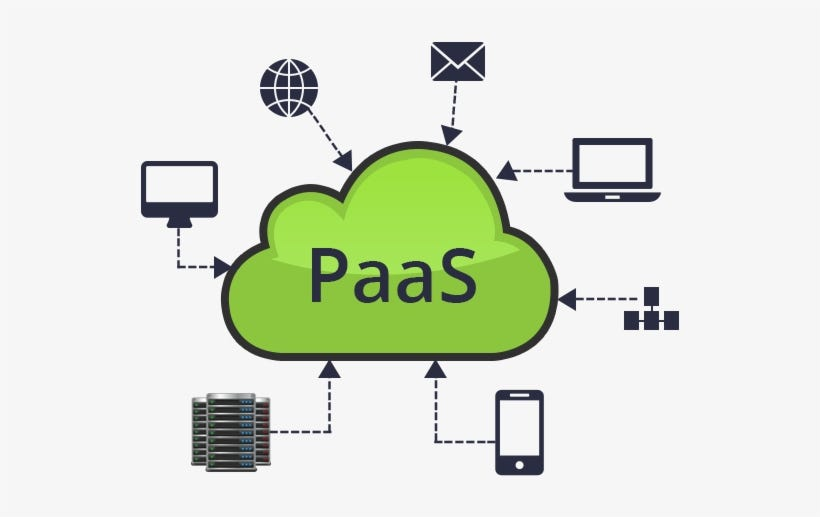
Platform as a Service (PaaS) is a cloud computing model that provides developers with a complete environment for building, testing, deploying, managing, and scaling applications.
Instead of managing servers, operating systems, middleware, and runtime environments internally, organizations access these capabilities through a cloud provider.
The provider maintains the platform.
Developers create the applications.
That shared responsibility dramatically simplifies software development while improving speed and operational efficiency.
Why Features Matter More Than Specifications
When organizations evaluate technology, it's easy to focus on specifications.
Processing power.
Storage capacity.
Supported programming languages.
Integration options.
Those details certainly matter.
But the real question is different.
How do these capabilities improve the daily experience of developers, operations teams, and ultimately, customers?
The key features of PaaS are valuable because they reduce complexity while enabling faster innovation.
Each feature contributes to that broader objective.
Key Features of Platform as a Service
| Feature | Purpose | Primary Business Benefit |
|---|---|---|
| Managed infrastructure | Eliminates server maintenance | Lower operational overhead |
| Integrated development tools | Simplifies software creation | Faster development cycles |
| Automatic scalability | Adjusts resources based on demand | Improved application performance |
| Managed databases | Simplifies data management | Reduced administrative effort |
| Built-in security | Protects infrastructure | Stronger security posture |
| Continuous deployment | Automates software releases | Faster feature delivery |
| Monitoring and analytics | Tracks application performance | Better operational visibility |
| Collaboration tools | Supports distributed teams | Improved productivity |
| API integration | Connects external services | Greater flexibility |
| High availability | Minimizes downtime | Better customer experience |
Individually, these features solve specific technical problems.
Collectively, they reshape how organizations build software.
Managed Infrastructure Removes Routine Complexity
Perhaps the most recognizable feature of PaaS is managed infrastructure.
Cloud providers handle:
- Physical servers
- Storage systems
- Networking
- Operating system updates
- Hardware maintenance
- Runtime environments
Developers no longer spend valuable time configuring foundational systems before beginning application development.
Instead, the infrastructure already exists.
The platform is ready.
This allows engineering teams to concentrate on solving business problems rather than operational ones.
Integrated Development Tools Accelerate Productivity
Most PaaS platforms include development environments designed to streamline software creation.
These commonly include:
- Source code integration
- Application frameworks
- Testing environments
- Build automation
- Version control support
- Deployment pipelines
Rather than assembling separate tools from multiple vendors, development teams often work within a unified ecosystem.
That consistency reduces friction throughout the software lifecycle.
Automatic Scaling Supports Business Growth
Application demand rarely follows a predictable pattern.
Traffic increases during promotions.
Seasonal events create spikes.
Unexpected publicity drives new users.
Traditional infrastructure often requires organizations to purchase additional hardware long before demand materializes.
PaaS approaches scaling differently.
Resources expand automatically when usage increases.
When activity declines, unused resources are released.
Organizations maintain performance without continuously managing capacity planning.
Managed Databases Simplify Data Operations
Nearly every modern application depends on reliable data management.
PaaS platforms frequently provide managed database services that include:
- Provisioning
- Backups
- Updates
- Replication
- Performance optimization
- High availability
Database administrators still play an important role.
However, much of the repetitive maintenance shifts to the cloud provider.
This reduces operational complexity while improving reliability.
My Biggest Lesson Came from Watching Priorities Shift
During a cloud migration project, I expected the most noticeable improvement to be technical.
Faster deployments.
More reliable infrastructure.
Improved scalability.
Those benefits certainly appeared.
What surprised me was something less tangible.
The conversations changed.
Engineers spent less time discussing maintenance schedules and more time discussing customer feedback.
Executives reviewed product adoption rather than infrastructure utilization.
The organization became noticeably more customer-focused—not because its people changed, but because its technology demanded less attention.
That experience taught me that the best platform features are often invisible.
Their success is measured by the problems teams no longer have to solve.
Built-In Security Strengthens the Foundation
Security remains one of the most valuable PaaS capabilities.
Cloud providers typically manage:
- Infrastructure protection
- Operating system patching
- Network security
- Data center security
- Vulnerability monitoring
Organizations continue managing:
- User permissions
- Application security
- Business data
- Regulatory compliance
- Secure development practices
This shared model allows companies to benefit from enterprise-grade infrastructure while maintaining control over business-specific security decisions.
Continuous Deployment Supports Faster Innovation
Modern software evolves continuously.
Customers expect regular improvements rather than infrequent major releases.
Many PaaS platforms include continuous integration and continuous deployment (CI/CD) capabilities that automate:
- Code validation
- Application builds
- Testing
- Deployment
- Rollbacks
Automation reduces manual effort while increasing consistency across software releases.
Monitoring and Analytics Improve Visibility
Applications generate enormous amounts of operational data.
PaaS platforms frequently include monitoring tools capable of tracking:
- Response times
- Resource usage
- Error rates
- User activity
- Application health
- System availability
These insights help organizations identify issues before they significantly affect customers.
Good decisions depend on accurate information.
Monitoring provides that visibility.
Collaboration Features Support Modern Development Teams
Software development increasingly involves distributed teams working across multiple locations and time zones.
PaaS environments encourage collaboration by providing shared access to:
- Development environments
- Source code
- Deployment pipelines
- Testing tools
- Documentation
Standardized workflows reduce confusion while improving productivity.
Teams spend less time coordinating infrastructure and more time building software.
API Integration Expands Possibilities
Modern applications rarely operate independently.
They connect with payment providers.
Customer relationship management systems.
Identity platforms.
Artificial intelligence services.
Communication tools.
PaaS platforms often include extensive API integration capabilities that simplify these connections.
Organizations create richer digital experiences without rebuilding existing services.
High Availability Improves Customer Confidence
Customers rarely think about infrastructure.
They notice availability.
Applications that consistently remain online strengthen trust.
PaaS providers typically design platforms with redundancy, failover mechanisms, and disaster recovery capabilities that improve reliability.
This reduces downtime while supporting business continuity.
Availability becomes part of the platform rather than a separate engineering challenge.
Why These Features Matter Together
Each feature delivers measurable value individually.
Their greatest strength, however, lies in how they complement one another.
Managed infrastructure reduces maintenance.
Automation accelerates releases.
Scalability supports growth.
Monitoring improves decision-making.
Security strengthens resilience.
Together, these capabilities allow organizations to build software more efficiently while responding quickly to changing customer needs.
The platform becomes more than technology.
It becomes an operational advantage.
Conclusion: The Best PaaS Features Create Freedom
The defining features of Platform as a Service are often described in technical language.
Managed databases.
Runtime environments.
Deployment automation.
Infrastructure orchestration.
Those descriptions are accurate.
But they overlook the broader business impact.
Each feature exists for a larger purpose.
To remove complexity.
To reduce repetitive work.
To accelerate innovation.
To allow talented people to spend more time solving customer problems instead of maintaining technology.
The organizations that benefit most from PaaS are not necessarily those with the largest engineering teams or the most sophisticated infrastructure.
They are the ones that recognize a simple truth.
Competitive advantage rarely comes from managing servers more efficiently.
It comes from delivering better products, responding to customers more quickly, and improving continuously.
The key features of PaaS make that possible by quietly handling everything beneath the application—allowing developers, product leaders, and businesses to focus on what customers actually experience.
- Arts
- Business
- Computers
- Spellen
- Health
- Home
- Kids and Teens
- Money
- News
- Personal Development
- Recreation
- Regional
- Reference
- Science
- Shopping
- Society
- Sports
- Бизнес
- Деньги
- Дом
- Досуг
- Здоровье
- Игры
- Искусство
- Источники информации
- Компьютеры
- Личное развитие
- Наука
- Новости и СМИ
- Общество
- Покупки
- Спорт
- Страны и регионы
- World

 English
 Russian
 French
 Spanish
 Portuguese
 Deutsch
 Turkish
 Italiano
 Arabic
 Romaian
 Portuguese (Brazil)
 Greek
Greek