
Which Is Better: PaaS or IaaS?
The Better Question Isn't "Which One Wins?"
A few years ago, I sat in on a strategy meeting where an executive asked what sounded like a straightforward question.
"Should we choose Platform as a Service or Infrastructure as a Service?"
The room immediately split into camps.
The developers argued for flexibility. The operations team emphasized control. Finance wanted predictable costs. Product leaders cared about speed.
Everyone was answering the same question, yet no one was talking about the same problem.
That meeting taught me something I've carried into every cloud conversation since: technology decisions rarely fail because organizations choose the wrong tool. They fail because organizations ask the wrong question.
Instead of asking whether PaaS is better than IaaS, ask this:
Where does your organization create value?
The answer almost always points toward the right cloud strategy.
Why This Comparison Matters
Platform as a Service (PaaS) and Infrastructure as a Service (IaaS) are often presented as competing cloud models.
They're not.
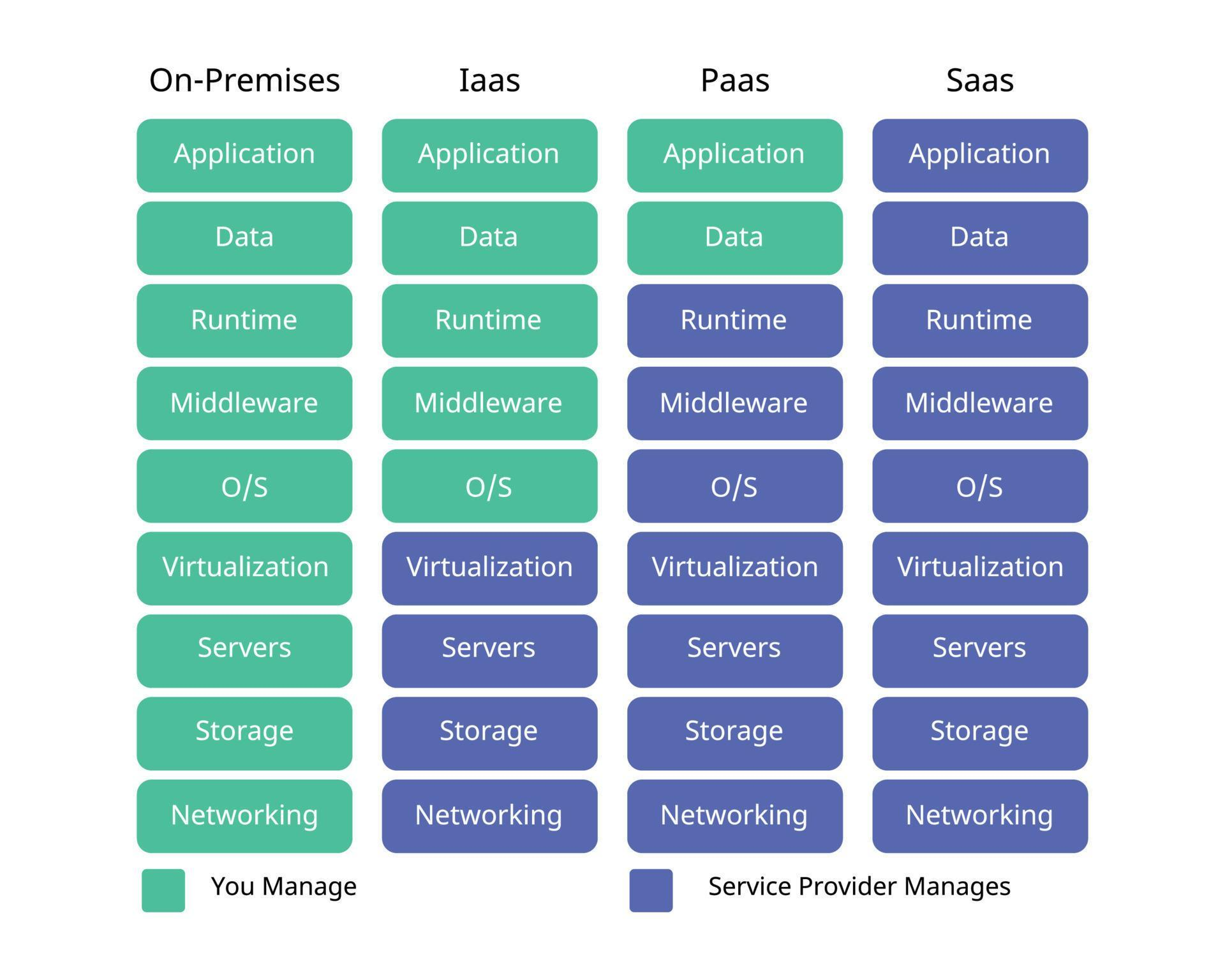
They're different ways of allocating responsibility.
With IaaS, you manage much of the software environment yourself while a cloud provider supplies the underlying infrastructure.
With PaaS, the provider manages much more of the technology stack, allowing developers to focus primarily on building applications.
Both approaches are powerful.
Both solve legitimate business challenges.
The difference lies in where complexity lives.
Understanding the Trade-Off
Every technology decision involves trade-offs.
More control usually means more responsibility.
More simplicity often means accepting standardized environments.
Neither outcome is inherently better.
Organizations succeed when those trade-offs align with their business objectives rather than their technical preferences.
What Makes IaaS Appealing?
Infrastructure as a Service gives organizations substantial control over their computing environment.
Instead of purchasing physical servers, businesses rent virtual infrastructure while retaining responsibility for operating systems, middleware, networking configurations, runtime environments, and many security settings.
This flexibility creates opportunities that managed platforms sometimes cannot match.
Advantages of IaaS
Greater customization
Organizations can configure nearly every layer of their environment to support specialized applications.
Support for legacy systems
Older enterprise software often requires operating system versions or infrastructure configurations unavailable in managed platforms.
Fine-grained resource control
Engineering teams can optimize storage, networking, virtual machines, and performance characteristics according to workload requirements.
Architectural flexibility
Organizations with diverse workloads can build highly customized cloud environments.
These strengths explain why many enterprises continue to rely heavily on IaaS.
Control matters.
Sometimes it matters enormously.
Why Many Organizations Choose PaaS
Platform as a Service takes a different approach.
Instead of handing developers virtual infrastructure, it provides a complete development environment.
The provider manages infrastructure, operating systems, runtime environments, middleware, scaling, and much of the operational maintenance.
Developers concentrate on applications.
Not servers.
Not operating systems.
Not deployment pipelines.
Applications.
That shift often changes how engineering teams spend their time.
Advantages of PaaS
Faster development
Developers spend less time provisioning environments and more time writing code.
Lower operational overhead
Routine maintenance moves from internal teams to the platform provider.
Simplified deployments
Standardized environments reduce deployment inconsistencies.
Automatic scalability
Many platforms adjust computing resources as demand changes.
Improved collaboration
Shared development environments reduce friction across engineering teams.
Notice something interesting.
Most benefits aren't new capabilities.
They're reductions in operational effort.
PaaS vs. IaaS: A Detailed Comparison
| Category | Platform as a Service (PaaS) | Infrastructure as a Service (IaaS) |
|---|---|---|
| Infrastructure Management | Provider | Provider |
| Operating System | Provider | Customer |
| Middleware | Provider | Customer |
| Runtime Environment | Provider | Customer |
| Application Code | Customer | Customer |
| Infrastructure Flexibility | Moderate | Extensive |
| Deployment Speed | Faster | Slower due to configuration |
| Maintenance Effort | Lower | Higher |
| Scaling | Often automated | Customer-managed with configurable automation |
| Best For | Rapid application development | Customized infrastructure and specialized workloads |
Looking across the table, one pattern becomes obvious.
PaaS reduces responsibility.
IaaS preserves choice.
Whether that's an advantage depends entirely on your priorities.
The Hidden Cost That Rarely Appears in Budget Meetings
Cloud discussions frequently revolve around monthly infrastructure costs.
Those numbers matter.
But another cost deserves equal attention.
Engineering attention.
One organization might save money by managing infrastructure internally.
Another might spend considerably more because highly skilled developers devote hundreds of hours each quarter to operational work instead of customer-facing innovation.
I've watched this happen more than once.
An engineering team believed it needed additional developers because product releases kept slipping. After mapping where time actually went, the picture changed dramatically.
Feature development occupied less than half of the team's capacity.
The rest disappeared into environment management, deployment troubleshooting, security updates, monitoring, and infrastructure maintenance.
No invoice captured that expense.
Yet it was one of the organization's largest investments.
That experience permanently changed how I evaluate cloud platforms.
Infrastructure isn't free simply because it already belongs to your team.
When IaaS Is the Better Choice
IaaS often delivers the greatest value when infrastructure itself represents a strategic capability.
Examples include:
Highly Regulated Industries
Organizations operating under strict compliance requirements may require precise control over networking, security, and operating systems.
Complex Enterprise Environments
Large organizations integrating multiple systems frequently need customized infrastructure architectures.
Specialized Performance Requirements
Applications with unusual storage, networking, or processing demands often benefit from deeper infrastructure control.
Legacy Software
Older applications sometimes depend on operating system versions or middleware unavailable within managed platforms.
For these organizations, operational complexity may be an acceptable price for flexibility.
When PaaS Is the Better Choice
Many organizations compete through software rather than infrastructure.
For them, PaaS often creates greater leverage.
Software Startups
Small teams can launch products quickly without hiring dedicated infrastructure specialists.
SaaS Providers
Rapid deployment pipelines accelerate product improvements.
Innovation Teams
Developers experiment without waiting for infrastructure provisioning.
Growing Businesses
Automatic scaling simplifies expansion during periods of rapid customer growth.
Here, infrastructure supports the business.
It isn't the business.
Can You Use Both?
Absolutely.
In fact, many mature organizations do.
A customer-facing web application may run on a PaaS environment that enables rapid feature releases.
Meanwhile, specialized analytics platforms, machine learning workloads, or legacy enterprise applications operate within IaaS environments where greater infrastructure control is essential.
This isn't indecision.
It's alignment.
Different workloads solve different business problems.
They deserve different cloud strategies.
Five Questions That Lead to Better Decisions
Rather than asking whether PaaS or IaaS is objectively superior, consider these questions:
- Where does our organization create unique value?
- How much infrastructure customization do we genuinely require?
- Would our developers create more value building products or managing platforms?
- How important is rapid feature delivery compared with infrastructure flexibility?
- Which responsibilities should remain internal, and which can confidently be entrusted to a cloud provider?
These questions shift the conversation away from technology preferences and toward business priorities.
That's where meaningful decisions are made.
A Lesson Worth Remembering
One lesson has surfaced repeatedly throughout my work with technology teams.
Organizations often overestimate the value of control and underestimate the value of focus.
Control feels reassuring.
Focus creates momentum.
Neither is universally more important.
But the highest-performing teams I've observed share one characteristic.
They're remarkably intentional about where they invest their expertise.
They don't outsource what differentiates them.
They also don't insist on managing every technical layer simply because they can.
That balance—not the technology itself—usually determines long-term success.
Conclusion
So, which is better: PaaS or IaaS?
The honest answer is that neither model is inherently superior.
Infrastructure as a Service offers flexibility, customization, and granular control for organizations whose workloads demand it.
Platform as a Service reduces operational complexity, accelerates development, and enables engineering teams to devote more energy to creating customer value.
The better choice depends on what your organization is trying to optimize.
If infrastructure is central to your competitive advantage, IaaS may provide the control you need.
If speed, innovation, and developer productivity matter most, PaaS often delivers greater leverage.
Perhaps the most valuable takeaway isn't about cloud architecture at all.
Every technology investment is ultimately an investment in attention.
Where your teams spend their time will shape what they build, how quickly they deliver, and how effectively they respond to changing customer needs.
The question isn't simply which cloud model is better.
It's which one allows your organization to focus on the work that only your organization can do.
- Arts
- Business
- Computers
- Jeux
- Health
- Domicile
- Kids and Teens
- Argent
- News
- Personal Development
- Recreation
- Regional
- Reference
- Science
- Shopping
- Society
- Sports
- Бизнес
- Деньги
- Дом
- Досуг
- Здоровье
- Игры
- Искусство
- Источники информации
- Компьютеры
- Личное развитие
- Наука
- Новости и СМИ
- Общество
- Покупки
- Спорт
- Страны и регионы
- World

 English
 Russian
 Spanish
 Portuguese
 Deutsch
 Turkish
 Dutch
Dutch
 Italiano
 Arabic
 Romaian
 Portuguese (Brazil)
 Greek
Greek