
What Are the Disadvantages of PaaS?
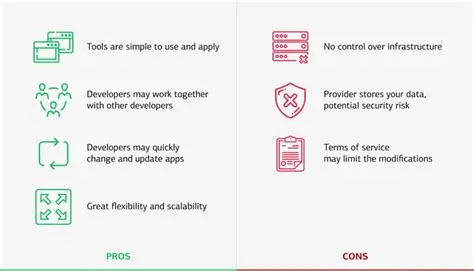
Every Shortcut Comes With a Trade-Off
A few years ago, I met with the leadership team of a fast-growing software company that had recently migrated its development environment to a Platform as a Service (PaaS) solution. The mood was optimistic. Deployment times had dropped dramatically. Developers no longer spent their mornings troubleshooting infrastructure. Product releases became more frequent.
By almost every measure, the migration was a success.
Then, about six months later, another meeting revealed a different conversation.
The engineering team wanted to implement a specialized runtime environment for a new product. Security leaders needed tighter control over certain infrastructure configurations. Procurement raised concerns about long-term vendor dependency. Suddenly, the platform that had accelerated development also introduced new constraints.
No one regretted adopting PaaS.
But everyone recognized something important.
Every technology decision solves one set of problems while introducing another.
That's not a flaw unique to cloud computing. It's true of nearly every strategic investment.
The mistake isn't choosing PaaS.
The mistake is assuming its advantages come without meaningful trade-offs.
Understanding those trade-offs allows organizations to make decisions with greater clarity—and fewer surprises.
Why PaaS Isn't the Right Fit for Every Organization
Platform as a Service simplifies software development by providing a managed environment where developers can build, deploy, and maintain applications without managing much of the underlying infrastructure.
For many organizations, that's an enormous advantage.
Infrastructure management shifts to the provider.
Developers focus on applications.
Operational complexity decreases.
Yet simplicity always comes from abstraction.
The more responsibilities a platform assumes, the fewer decisions remain under your direct control.
Whether that's beneficial depends entirely on your business priorities.
1. Limited Infrastructure Control
Perhaps the most frequently cited disadvantage of PaaS is reduced infrastructure customization.
Providers manage operating systems, middleware, runtime environments, networking components, and many platform services.
For organizations with conventional application requirements, this arrangement works exceptionally well.
For organizations requiring highly specialized configurations, it can become restrictive.
Developers may discover they cannot install specific software versions, customize operating system settings, or configure infrastructure exactly as required.
Freedom gives way to standardization.
Sometimes that's a worthwhile exchange.
Sometimes it isn't.
2. Vendor Lock-In Can Become a Long-Term Challenge
Cloud platforms inevitably encourage organizations to adopt provider-specific services.
Managed databases.
Messaging systems.
Identity services.
Monitoring tools.
Deployment pipelines.
Each integration simplifies development today.
Collectively, they can complicate migration tomorrow.
Moving applications from one PaaS provider to another may require significant redevelopment, testing, and operational planning.
This phenomenon—commonly known as vendor lock-in—isn't always problematic.
If the provider continues delivering value, organizations may never feel constrained.
The challenge emerges when business priorities change faster than the platform evolves.
3. Less Flexibility for Legacy Applications
Not every application was designed for modern cloud platforms.
Many enterprises continue operating systems built years—or even decades—ago.
These applications may depend on:
- Older runtime environments
- Specialized middleware
- Proprietary libraries
- Custom networking configurations
- Operating system-specific dependencies
PaaS platforms often prioritize standardized development environments optimized for contemporary applications.
Legacy software may require extensive modification before migration becomes practical.
In some cases, Infrastructure as a Service (IaaS) remains the better option.
4. Shared Responsibility Requires Clear Boundaries
One misconception about PaaS is that the provider handles "security."
The reality is more nuanced.
The provider typically secures the platform itself.
Customers remain responsible for:
- Application security
- User authentication
- Data protection
- API security
- Access controls
- Secure coding practices
Confusion around these responsibilities can create unnecessary risk.
Organizations must clearly understand where provider responsibilities end and customer responsibilities begin.
Security doesn't disappear.
It simply changes ownership.
5. Custom Compliance Requirements May Be Difficult
Many PaaS providers support widely recognized compliance standards.
However, organizations operating within highly regulated industries sometimes require infrastructure configurations extending beyond platform capabilities.
Examples include:
- Specialized audit controls
- Geographic data residency requirements
- Custom encryption implementations
- Industry-specific operational procedures
When regulatory obligations exceed platform flexibility, organizations may require dedicated infrastructure or private cloud environments.
Compliance often demands precision.
Standardization doesn't always provide enough.
6. Platform Outages Affect Everyone
One overlooked consequence of managed platforms is shared dependency.
If the provider experiences a significant outage, customers often have limited ability to resolve the underlying issue themselves.
Applications remain dependent on provider availability.
Fortunately, major cloud providers invest heavily in resilience.
Still, outages occasionally occur.
Organizations must decide whether reduced operational responsibility outweighs reduced operational control during unexpected events.
7. Performance Optimization Has Limits
Some workloads demand unusually precise infrastructure tuning.
High-performance analytics.
Scientific computing.
Real-time financial processing.
Specialized machine learning applications.
These environments sometimes benefit from direct control over networking, storage architecture, processor allocation, or operating system optimization.
Managed platforms intentionally abstract many of these details.
For most business applications, abstraction improves productivity.
For highly specialized workloads, abstraction may limit optimization opportunities.
8. Costs Can Increase as Applications Scale
PaaS often reduces upfront investment.
However, long-term operating costs deserve careful evaluation.
Managed services provide convenience.
Convenience has value.
It also carries pricing implications.
As applications grow, organizations may discover that highly managed platform services become more expensive than self-managed infrastructure operating at significant scale.
The comparison isn't straightforward.
Infrastructure savings must be weighed against reduced maintenance effort, improved developer productivity, and faster software delivery.
Cloud invoices tell only part of the financial story.
9. Technology Choices May Become Constrained
Development teams occasionally need technologies beyond those officially supported by the platform.
Perhaps a newer programming language version.
A specialized framework.
A unique database engine.
Custom runtime extensions.
PaaS providers intentionally limit supported technologies to maintain platform stability.
While this benefits consistency, it may restrict experimentation or delay adoption of emerging tools.
Innovation sometimes arrives before managed platforms fully support it.
10. Migration Can Be More Complex Than Expected
Organizations often assume cloud migration ends once applications are deployed.
In reality, migration is rarely a one-time event.
Businesses evolve.
Platforms evolve.
Architectures evolve.
Eventually, organizations may wish to change providers, adopt multi-cloud strategies, or move certain workloads elsewhere.
Applications deeply integrated with provider-specific services frequently require additional redevelopment during these transitions.
Portability depends largely on architectural decisions made long before migration becomes necessary.
Comparing the Main Disadvantages of PaaS
| Challenge | Why It Happens | Potential Business Impact |
|---|---|---|
| Limited Infrastructure Control | Provider manages the platform | Reduced customization |
| Vendor Lock-In | Dependence on proprietary services | More difficult migrations |
| Legacy Application Compatibility | Standardized environments | Additional modernization effort |
| Shared Security Responsibility | Division of operational roles | Risk if responsibilities are misunderstood |
| Compliance Limitations | Platform standardization | Regulatory challenges |
| Provider Outages | Centralized infrastructure | Temporary service disruption |
| Performance Constraints | Managed infrastructure abstraction | Limited optimization |
| Higher Long-Term Costs | Managed service pricing | Increased operating expenses at scale |
| Technology Restrictions | Supported platform components | Slower adoption of niche technologies |
| Migration Complexity | Provider-specific integrations | Longer transition projects |
Notice something important.
None of these disadvantages automatically disqualify PaaS.
They simply define where thoughtful planning becomes essential.
A Lesson That Changed My Thinking
Earlier in my career, I tended to evaluate technology platforms according to feature lists.
More capabilities seemed to imply better technology.
Experience gradually challenged that assumption.
I watched one organization reject PaaS because they wanted maximum infrastructure control.
Ironically, they rarely used most of that control.
Meanwhile, another organization embraced PaaS enthusiastically but failed to anticipate future compliance requirements, eventually investing considerable effort adapting its architecture.
Neither decision was inherently wrong.
Both organizations underestimated one thing.
Technology choices are rarely permanent.
They're milestones in an evolving strategy.
The best cloud decisions don't optimize for today's requirements alone.
They anticipate tomorrow's questions as well.
That lesson has shaped every architecture discussion I've participated in since.
Does This Mean You Should Avoid PaaS?
Not at all.
For many organizations, PaaS remains one of the most effective ways to accelerate software development, simplify operations, and improve developer productivity.
The key is alignment.
Organizations creating customer-facing digital products often benefit enormously from allowing cloud providers to manage operational complexity.
Organizations requiring highly customized infrastructure, specialized compliance controls, or extensive performance optimization may prefer Infrastructure as a Service (IaaS) or hybrid cloud architectures.
Success comes from matching the platform to the business—not forcing the business to match the platform.
Conclusion
Platform as a Service offers compelling advantages, but those benefits come with important trade-offs.
Reduced infrastructure control, potential vendor lock-in, compatibility challenges, shared security responsibilities, compliance considerations, provider dependency, performance limitations, evolving costs, technology restrictions, and migration complexity all deserve thoughtful evaluation.
Yet these disadvantages don't suggest that PaaS is flawed.
They illustrate a broader principle.
Every technology strategy involves choosing which complexities your organization wants to own—and which it prefers to delegate.
PaaS excels when operational simplicity, development speed, and innovation matter more than complete infrastructure control.
For organizations whose competitive advantage lies in creating software rather than managing servers, that trade-off is often well worth making.
The real question isn't whether PaaS has disadvantages.
It's whether those disadvantages matter more than the opportunities it creates for your business.
- Arts
- Business
- Computers
- Jogos
- Health
- Início
- Kids and Teens
- Money
- News
- Personal Development
- Recreation
- Regional
- Reference
- Science
- Shopping
- Society
- Sports
- Бизнес
- Деньги
- Дом
- Досуг
- Здоровье
- Игры
- Искусство
- Источники информации
- Компьютеры
- Личное развитие
- Наука
- Новости и СМИ
- Общество
- Покупки
- Спорт
- Страны и регионы
- World

 English
 Russian
 French
 Spanish
 Portuguese
 Deutsch
 Turkish
 Dutch
Dutch
 Italiano
 Arabic
 Romaian
 Greek
Greek