
Which Programming Languages Are Supported for PaaS?
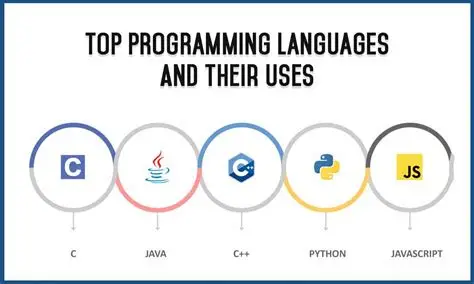
A few years ago, I sat in on a technology planning session that began with what seemed like a straightforward question.
A product leader wanted to know whether the company’s existing applications could move to a Platform as a Service environment.
The engineering team immediately started discussing deployment pipelines, databases, scalability, and security.
Then someone asked a simpler question.
“What languages does the platform actually support?”
The room paused.
Because before organizations can evaluate architecture, automation, or operational efficiency, they need confidence that their applications can run in the first place.
And that raises one of the most common questions in cloud computing:
Which programming languages are supported for PaaS?
The short answer is reassuring.
Almost every mainstream programming language is supported by modern Platform as a Service providers.
The more interesting answer is that language support has evolved dramatically over the last decade.
Today, PaaS is no longer defined by a limited collection of approved runtimes. Increasingly, platforms are designed to accommodate whatever language developers choose to use.
That shift has profound implications—not only for technical teams but also for organizations seeking flexibility, speed, and long-term adaptability.
The Evolution of PaaS Language Support
Early Platform as a Service environments tended to be opinionated.
Very opinionated.
Providers often supported a small number of runtimes and expected applications to conform to platform-specific requirements.
This approach created simplicity.
It also created limitations.
Developers occasionally found themselves changing application architectures simply to fit the platform.
Over time, customer expectations changed.
Organizations wanted flexibility.
Developers wanted freedom.
Cloud-native technologies accelerated those demands.
Containerization expanded possibilities even further.
As a result, modern PaaS providers increasingly support a broad spectrum of programming languages, frameworks, and runtime environments.
Today, language compatibility is rarely the primary barrier to adoption.
The conversation has shifted from “Can the platform support this language?” to “How well does the platform support this language?”
That distinction matters.
The Most Commonly Supported Programming Languages
Nearly every major PaaS provider supports a core group of languages that dominate modern software development.
These include:
- Python
- JavaScript (Node.js)
- Java
- C# (.NET)
- Go
- PHP
- Ruby
- Rust
- Kotlin
- TypeScript
Some platforms also support emerging languages and niche ecosystems.
Others allow developers to bring virtually any runtime through container deployment.
The result is a remarkably flexible landscape.
PaaS Language Support Comparison
The table below highlights language support across several leading PaaS platforms.
| Language | Heroku | Render | Railway | Google Cloud Run | Azure App Service | AWS Elastic Beanstalk |
|---|---|---|---|---|---|---|
| Python | Excellent | Excellent | Excellent | Excellent | Good | Excellent |
| Node.js | Excellent | Excellent | Excellent | Excellent | Good | Excellent |
| Java | Excellent | Good | Good | Excellent | Excellent | Excellent |
| .NET | Good | Growing | Limited | Excellent | Excellent | Excellent |
| PHP | Excellent | Good | Good | Excellent | Excellent | Excellent |
| Ruby | Excellent | Good | Good | Excellent | Good | Good |
| Go | Excellent | Excellent | Excellent | Excellent | Good | Excellent |
| Rust | Moderate | Excellent | Excellent | Excellent | Moderate | Good |
| Kotlin | Good | Good | Moderate | Excellent | Excellent | Excellent |
| TypeScript | Excellent | Excellent | Excellent | Excellent | Good | Excellent |
At first glance, the table suggests broad compatibility.
Yet language support is only part of the story.
Developer experience often matters just as much.
Python: The PaaS Favorite
Few languages have benefited from the rise of PaaS as much as Python.
The reasons are easy to understand.
Python applications often prioritize rapid development.
Developers value simplicity.
Organizations value productivity.
PaaS platforms complement those priorities naturally.
Frameworks such as:
- Django
- Flask
- FastAPI
are widely supported across major providers.
Deployments tend to be straightforward.
Configuration requirements are manageable.
Scaling options are mature.
As a result, Python has become one of the most PaaS-friendly languages available.
Node.js and JavaScript: Built for Fast Iteration
Node.js occupies a similarly strong position.
Modern web applications frequently depend on JavaScript across both frontend and backend environments.
PaaS providers have responded accordingly.
Support is nearly universal.
Many platforms even optimize deployment workflows specifically for Node.js applications.
This alignment reflects a broader trend.
Node.js teams often deploy frequently.
PaaS platforms thrive when deployment frequency is high.
The relationship is mutually reinforcing.
Java: Enterprise Stability Meets Cloud Flexibility
Java presents a different dynamic.
Historically, Java applications were associated with large enterprise environments.
Complex deployments.
Extensive infrastructure.
Lengthy release cycles.
PaaS has changed that perception.
Modern platforms support Java workloads exceptionally well.
Spring Boot applications, in particular, have become common deployment targets.
Cloud-native Java development has grown significantly as organizations modernize legacy systems while preserving existing expertise.
The result is a compelling combination of stability and operational simplicity.
.NET: A Natural Fit for Azure
No discussion of language support would be complete without addressing .NET.
Microsoft has invested heavily in creating a seamless cloud experience for .NET developers.
Azure App Service remains one of the strongest deployment environments for:
- ASP.NET Core
- Blazor
- .NET Web APIs
- Enterprise business applications
Support extends beyond Azure, of course.
AWS, Cloud Run, and other providers also accommodate .NET workloads effectively.
Yet Azure's ecosystem integration often creates an advantage.
The language and platform evolved together.
That history matters.
Go and Rust: The Modern Cloud-Native Languages
Some languages feel particularly aligned with modern cloud infrastructure.
Go is a prime example.
Designed with concurrency and performance in mind, Go has become a favorite for:
- APIs
- Infrastructure tooling
- Cloud-native services
- Distributed systems
PaaS providers increasingly optimize for Go deployments.
Rust is following a similar trajectory.
Although adoption remains smaller, interest continues growing.
Rust applications offer compelling performance characteristics.
Container-based PaaS environments have made deployment significantly easier than it once was.
The result is growing support across the ecosystem.
The Rise of Container-Based Language Independence
Perhaps the most significant development in PaaS language support has little to do with specific languages.
It has to do with containers.
Historically, platforms explicitly supported certain runtimes.
Today, containerization changes the equation.
If an application can run inside a container, many platforms can deploy it regardless of language.
This creates remarkable flexibility.
Developers gain freedom.
Organizations gain portability.
Platform vendors gain broader compatibility.
Everyone benefits.
The practical implication is profound.
Language support increasingly becomes a container support question.
And container support is becoming nearly universal.
A Lesson Learned from Choosing the Wrong Language Strategy
Several years ago, I worked with a company preparing a cloud migration initiative.
The leadership team became fixated on selecting the perfect PaaS provider.
Dozens of evaluation meetings followed.
Feature comparisons multiplied.
Vendor demonstrations filled calendars.
Eventually, an engineer raised an observation that shifted the entire discussion.
The company's applications were built using a language with excellent support across nearly every platform under consideration.
Language compatibility was not the constraint.
Organizational priorities were.
The real questions involved deployment workflows, governance requirements, scalability needs, and operational practices.
That experience reinforced an important lesson.
Organizations sometimes overestimate the significance of language support while underestimating the importance of ecosystem fit.
Modern PaaS platforms support more languages than ever before.
The strategic differentiators increasingly lie elsewhere.
Framework Support Matters Too
Language support alone doesn't guarantee a smooth experience.
Framework support plays an equally important role.
Examples include:
Python Frameworks
- Django
- Flask
- FastAPI
Java Frameworks
- Spring Boot
- Micronaut
- Quarkus
JavaScript Frameworks
- Express
- NestJS
- Next.js
.NET Frameworks
- ASP.NET Core
- Blazor
The best platforms provide optimized deployment experiences for popular frameworks.
That optimization reduces friction and improves productivity.
Developers notice the difference immediately.
What About Legacy Languages?
Organizations often worry about older technologies.
The concern is understandable.
Many businesses continue running applications built with:
- PHP
- Perl
- Classic Java applications
- Legacy .NET Framework workloads
The good news is that support remains surprisingly strong.
Many providers continue accommodating mature technologies.
Containerization further expands options.
Legacy systems may require additional effort.
But language compatibility alone is rarely a dealbreaker.
How to Determine Whether Your Language Is Supported
The process is generally straightforward.
Ask three questions:
Does the Platform Support the Runtime?
Most providers publish official compatibility documentation.
This should be the first checkpoint.
Does It Support Your Framework?
Framework compatibility often matters more than language compatibility.
Deployment workflows depend heavily on framework support.
Can It Run Containers?
If container deployment is available, compatibility options expand dramatically.
Container support acts as a safety net for unusual workloads.
The Future of Language Support in PaaS
Looking ahead, a fascinating trend is emerging.
Language support is becoming less visible.
Not because it matters less.
Because it is increasingly assumed.
Modern developers expect platforms to support their preferred languages.
Providers recognize this expectation.
As container adoption grows, the distinction between supported and unsupported languages continues to blur.
The conversation shifts toward developer experience, observability, security, scalability, and governance.
Language compatibility becomes the baseline rather than the differentiator.
Conclusion: The Better Question Isn't Which Languages Are Supported
The answer to our original question is encouraging.
Modern PaaS platforms support nearly every major programming language, including Python, Node.js, Java, .NET, Go, PHP, Ruby, Rust, Kotlin, and many others.
For most organizations, compatibility is not the challenge.
Optimization is.
The more useful question may be:
Which platform provides the best experience for the language your team already knows?
Because software success rarely comes from choosing the trendiest runtime.
It comes from enabling talented teams to work efficiently, deploy confidently, and adapt quickly.
And that is where modern PaaS platforms truly excel.
They reduce infrastructure constraints.
They expand architectural flexibility.
They allow organizations to focus less on whether their applications can run and more on what those applications can accomplish.
In a market defined by speed, experimentation, and constant evolution, that freedom may be the most valuable feature of all.
- Arts
- Business
- Computers
- Jogos
- Health
- Início
- Kids and Teens
- Money
- News
- Personal Development
- Recreation
- Regional
- Reference
- Science
- Shopping
- Society
- Sports
- Бизнес
- Деньги
- Дом
- Досуг
- Здоровье
- Игры
- Искусство
- Источники информации
- Компьютеры
- Личное развитие
- Наука
- Новости и СМИ
- Общество
- Покупки
- Спорт
- Страны и регионы
- World

 English
 Russian
 French
 Spanish
 Deutsch
 Turkish
 Dutch
Dutch
 Italiano
 Arabic
 Romaian
 Portuguese (Brazil)
 Greek
Greek