
Does PaaS Automatically Scale?
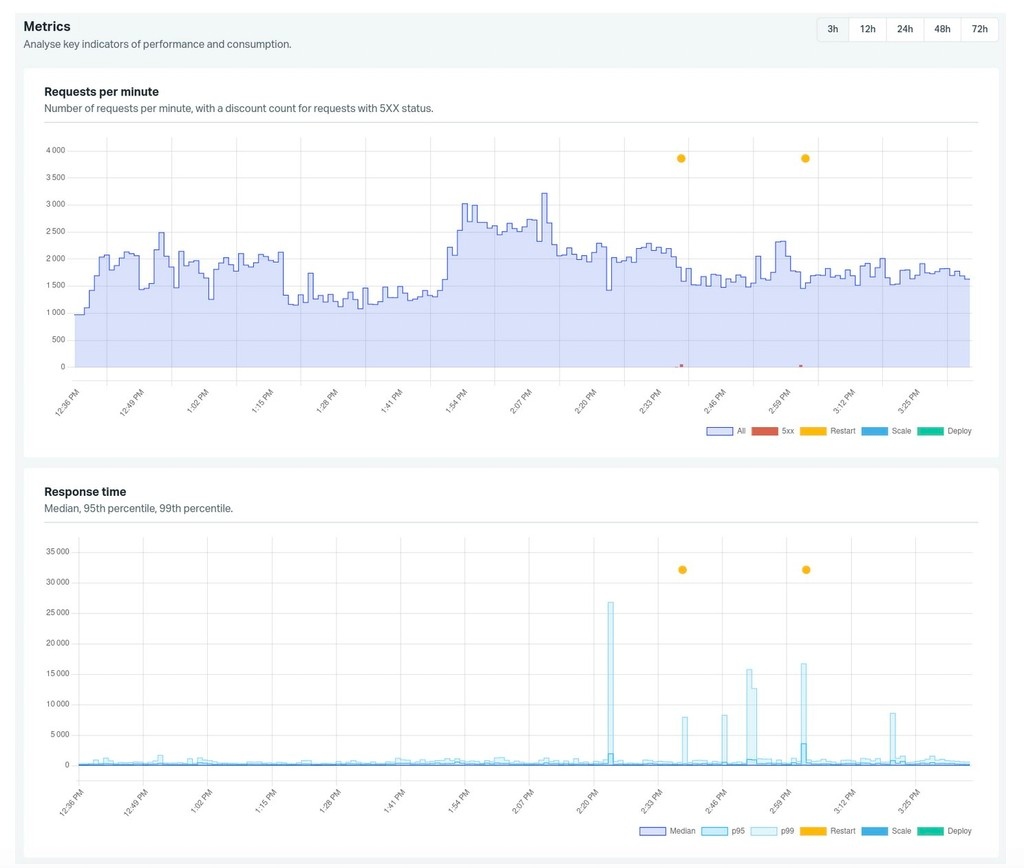
A founder once told me about the most stressful fifteen minutes of his company's year.
The product had been featured in a major industry publication.
Traffic exploded.
Customer registrations surged.
The marketing team celebrated.
The engineering team panicked.
Years earlier, a similar spike would have triggered an all-hands emergency. Servers would have been monitored obsessively. Capacity forecasts would have been revisited. Engineers would have scrambled to determine whether infrastructure could survive the sudden influx of users.
This time, something different happened.
The application remained available.
Performance stayed stable.
Users kept signing up.
The platform quietly added resources behind the scenes.
The founder eventually looked at his operations lead and asked:
“Did we actually do anything?”
The answer was simple.
“No.”
And that was precisely the point.
One of the most attractive promises of Platform as a Service (PaaS) is automatic scalability. Organizations are told they can stop worrying about infrastructure growth because the platform handles it for them.
Yet that promise often raises another question:
Does PaaS automatically scale?
The short answer is yes—many modern PaaS platforms offer automatic scaling capabilities.
The longer answer is more interesting.
Because automatic scaling is not magic.
It is not universal.
And it does not eliminate the need for thoughtful application design.
Understanding how automatic scaling works reveals both the strengths and limitations of the PaaS model.
The Short Answer: Most Modern PaaS Platforms Support Auto-Scaling
Automatic scaling has become one of the defining characteristics of modern cloud platforms.
Rather than requiring administrators to manually provision additional infrastructure, many PaaS providers can adjust resources dynamically based on demand.
Common scaling triggers include:
- CPU utilization
- Memory consumption
- Request volume
- Queue length
- Network traffic
- Application response times
When predefined thresholds are reached, the platform allocates additional resources.
When demand declines, resources may be reduced.
The result is an environment that adapts more fluidly to changing workloads.
At least in theory.
Why Scaling Matters in the First Place
Before cloud platforms became commonplace, scalability often involved planning months in advance.
Organizations purchased hardware based on anticipated growth.
Forecasting became a critical discipline.
Unfortunately, forecasting is imperfect.
Overestimate demand and resources sit idle.
Underestimate demand and applications struggle under load.
Neither outcome is ideal.
PaaS emerged partly as a response to this challenge.
Instead of asking organizations to predict future demand precisely, the platform adjusts capacity as conditions change.
Infrastructure becomes more responsive.
Business planning becomes less dependent on guesswork.
What Auto-Scaling Actually Means
The term "automatic scaling" is frequently used broadly.
In practice, it encompasses several distinct capabilities.
Horizontal Scaling
Additional application instances are created.
Instead of one application server handling requests, multiple servers share the workload.
This approach is common in modern PaaS environments.
Vertical Scaling
Existing resources are expanded.
Additional CPU, memory, or compute capacity becomes available to the application.
Not all platforms support vertical scaling automatically.
Many emphasize horizontal scaling instead.
Scale-to-Zero
Some platforms can reduce resources to zero when applications are idle.
Resources reactivate when requests arrive.
This model can significantly reduce costs for intermittent workloads.
Each approach serves different objectives.
Understanding those differences matters.
Why Auto-Scaling Became a Defining PaaS Feature
PaaS providers compete heavily on developer experience.
Developers generally prefer spending time building products rather than managing servers.
Auto-scaling supports that preference.
Benefits include:
- Reduced operational overhead
- Improved availability
- Better resource utilization
- Faster response to demand changes
- Simplified capacity planning
Organizations gain flexibility without continuously managing infrastructure.
That shift represents one of the platform model's most significant advantages.
Auto-Scaling Across Popular PaaS Providers
Not all platforms implement scaling identically.
Capabilities vary based on architecture and operational philosophy.
PaaS Auto-Scaling Comparison
| PaaS Provider | Auto-Scaling Support | Scale-to-Zero | Horizontal Scaling | Custom Scaling Rules |
|---|---|---|---|---|
| Google Cloud Run | Extensive | Yes | Yes | Yes |
| Azure App Service | Strong | Limited | Yes | Yes |
| AWS Elastic Beanstalk | Strong | No | Yes | Yes |
| Render | Strong | Available for certain workloads | Yes | Yes |
| Heroku | Available on selected plans | No | Yes | Moderate |
| Platform.sh | Strong | Limited | Yes | Yes |
| OpenShift | Extensive | Platform dependent | Yes | Extensive |
Although the implementations differ, the overall trend is clear.
Automatic scaling has evolved from a premium capability into a core platform expectation.
The Misconception: Auto-Scaling Solves Everything
This is where many organizations encounter disappointment.
Automatic scaling is powerful.
It is not limitless.
Applications still have architectural constraints.
Databases still have performance boundaries.
External dependencies still create bottlenecks.
Auto-scaling can address infrastructure shortages.
It cannot automatically resolve every performance challenge.
An inefficient application simply becomes an inefficient application with more resources.
The distinction matters.
A Lesson Learned During a Traffic Surge
Several years ago, I observed an organization preparing for a major product launch.
Leadership felt confident.
The application operated on a modern cloud platform with auto-scaling enabled.
Traffic arrived exactly as expected.
Infrastructure scaled beautifully.
Yet users still experienced delays.
Why?
The bottleneck wasn't the application layer.
It was a database query that had never been optimized.
The platform successfully added application instances.
Those instances continued making the same inefficient database request.
Performance suffered.
The lesson was memorable.
Auto-scaling amplifies strengths.
It can also amplify weaknesses.
Platform automation works best when applications are designed thoughtfully.
Application Architecture Still Matters
Some applications scale naturally.
Others resist scaling.
Applications that generally perform well in auto-scaling environments often exhibit characteristics such as:
- Stateless design
- Distributed workloads
- Externalized session storage
- Efficient database interactions
- Independent service components
Applications tightly coupled to specific servers may encounter greater challenges.
PaaS provides scaling mechanisms.
Applications must still be capable of leveraging them effectively.
How Scaling Decisions Are Made
Most PaaS platforms rely on metrics.
The platform continuously monitors workload conditions.
When thresholds are exceeded, scaling actions occur.
Common metrics include:
CPU Utilization
One of the most widely used indicators.
High CPU usage may trigger additional instances.
Memory Consumption
Applications approaching memory limits may receive additional resources.
Request Volume
Growing traffic levels often trigger horizontal scaling.
Queue Length
Background processing systems frequently scale based on pending workloads.
The specific implementation varies by provider.
The underlying principle remains consistent.
Resources respond to demand.
The Economics of Auto-Scaling
One reason organizations embrace PaaS is financial flexibility.
Traditional infrastructure often requires provisioning for peak demand.
Auto-scaling changes the equation.
Organizations pay closer to actual consumption.
This creates several potential advantages:
- Reduced idle resources
- Improved cost efficiency
- Better alignment with business activity
However, costs can also increase unexpectedly during sustained growth.
Auto-scaling optimizes utilization.
It does not eliminate resource consumption.
Understanding usage patterns remains essential.
Scale-to-Zero: The Most Interesting Evolution
Among recent innovations, scale-to-zero may be the most fascinating.
Instead of maintaining idle resources continuously, certain platforms suspend workloads when demand disappears.
When new requests arrive, resources reactivate automatically.
This approach is particularly attractive for:
- Internal applications
- Development environments
- Event-driven workloads
- Low-traffic services
Organizations gain efficiency without sacrificing availability.
The model reflects a broader trend toward increasingly dynamic infrastructure.
Auto-Scaling and Reliability
Scalability and reliability are closely related.
Applications that scale effectively often maintain availability more consistently.
Unexpected demand becomes less disruptive.
Resource shortages become less frequent.
Yet reliability requires more than scaling.
Organizations must also consider:
- Monitoring
- Incident response
- Redundancy
- Disaster recovery
- Dependency management
Auto-scaling contributes to resilience.
It does not define resilience completely.
Common Scaling Challenges
Even mature environments encounter scaling difficulties.
Examples include:
Database Bottlenecks
Application instances scale.
Databases struggle to keep pace.
External API Limitations
Third-party services may impose rate limits.
Session Management Issues
Applications storing session data locally may encounter scaling constraints.
Cost Surprises
Unexpected traffic increases can generate higher consumption charges.
These challenges are manageable.
They simply require planning.
The Future of Automatic Scaling
The evolution of scaling continues.
Artificial intelligence increasingly influences resource allocation.
Predictive scaling models are becoming more sophisticated.
Platforms are learning to anticipate demand rather than merely react to it.
The objective is straightforward.
Reduce latency.
Increase efficiency.
Improve responsiveness.
The infrastructure becomes increasingly adaptive.
Human intervention becomes less frequent.
Conclusion: Yes, PaaS Automatically Scales—But Context Matters
So, does PaaS automatically scale?
In many cases, yes.
Modern platforms can monitor workloads, allocate resources dynamically, add application instances, reduce unused capacity, and respond to changing demand with minimal human intervention.
Those capabilities represent one of the most compelling aspects of the PaaS model.
Yet the more interesting answer lies beneath the surface.
Automatic scaling is not a substitute for architecture.
It is not a substitute for performance optimization.
It is not a substitute for thoughtful engineering.
Instead, it is an amplifier.
When applications are designed effectively, auto-scaling unlocks remarkable flexibility.
When applications contain inefficiencies, scaling alone cannot eliminate them.
Perhaps that is why the most successful organizations approach auto-scaling differently.
They do not view it as an escape from responsibility.
They view it as a tool that allows talented teams to focus their attention where it matters most.
Not on provisioning servers.
Not on forecasting hardware purchases.
But on building products, serving customers, and creating value.
And that shift in focus may be the most transformative aspect of PaaS scaling of all.
- Arts
- Business
- Computers
- Παιχνίδια
- Health
- Κεντρική Σελίδα
- Kids and Teens
- Money
- News
- Personal Development
- Recreation
- Regional
- Reference
- Science
- Shopping
- Society
- Sports
- Бизнес
- Деньги
- Дом
- Досуг
- Здоровье
- Игры
- Искусство
- Источники информации
- Компьютеры
- Личное развитие
- Наука
- Новости и СМИ
- Общество
- Покупки
- Спорт
- Страны и регионы
- World

 English
 Russian
 French
 Spanish
 Portuguese
 Deutsch
 Turkish
 Dutch
Dutch
 Italiano
 Arabic
 Romaian
 Portuguese (Brazil)