
How Can I Improve Application Performance on PaaS?
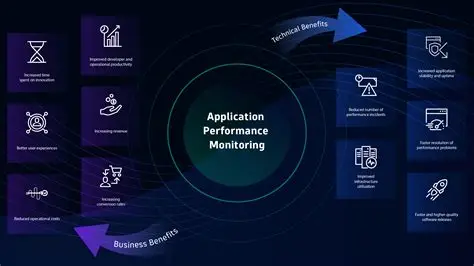
The dashboard looked healthy.
CPU utilization was comfortably below critical thresholds. Memory consumption appeared stable. Auto-scaling rules were active. The Platform as a Service environment was functioning exactly as designed.
Yet customers were complaining.
Pages loaded slowly.
Transactions took longer than expected.
Support tickets were increasing.
Executives began asking a familiar question:
“If the infrastructure is fine, why does the application feel slow?”
It's a question I have encountered repeatedly in conversations about Platform as a Service (PaaS).
Many organizations assume performance is largely solved once an application moves to a modern cloud platform. After all, PaaS providers offer managed infrastructure, automated scaling, load balancing, and sophisticated monitoring capabilities.
Surely performance should take care of itself.
But performance is rarely that simple.
A fast application is not the result of a single technology decision. It emerges from hundreds of small decisions involving architecture, databases, code efficiency, caching, monitoring, scaling strategies, and operational discipline.
The platform provides opportunity.
The application determines how effectively that opportunity is used.
So how can organizations improve application performance on PaaS?
The answer begins by understanding what performance actually means.
Performance Is Not a Server Problem
One of the most persistent misconceptions in cloud computing is that performance issues are primarily infrastructure issues.
Sometimes they are.
Often they are not.
Users do not experience CPU utilization.
They experience outcomes.
They notice:
- Slow page loads
- Delayed transactions
- Timeouts
- Failed requests
- Unresponsive interfaces
An application can operate on powerful infrastructure while still delivering disappointing experiences.
Performance should therefore be viewed from the user's perspective first.
Infrastructure metrics matter.
Customer experience matters more.
Why PaaS Changes the Performance Conversation
Traditional hosting environments often required teams to spend significant effort managing infrastructure.
Performance discussions frequently revolved around:
- Server procurement
- Capacity planning
- Hardware upgrades
- Operating system tuning
PaaS changes the equation.
Much of the infrastructure management becomes abstracted.
Developers gain access to:
- Automated scaling
- Managed databases
- Monitoring services
- Integrated deployment pipelines
As a result, performance optimization increasingly shifts toward application behavior rather than hardware administration.
This is a positive change.
It is also a more demanding one.
Start With Measurement, Not Assumptions
Organizations frequently begin performance improvement initiatives with assumptions.
The database must be slow.
The platform must be overloaded.
The network must be causing delays.
Sometimes those assumptions prove correct.
Often they do not.
The most effective optimization efforts begin with evidence.
Key Performance Metrics to Track
| Metric | What It Measures | Why It Matters |
|---|---|---|
| Response Time | Request completion speed | Direct user experience impact |
| Throughput | Requests processed | Capacity measurement |
| CPU Usage | Processing demand | Infrastructure efficiency |
| Memory Usage | Resource consumption | Stability indicator |
| Error Rate | Failed requests | Reliability metric |
| Database Query Time | Data retrieval speed | Common bottleneck indicator |
| Latency | Communication delays | Performance quality measure |
| Availability | Service accessibility | User trust factor |
The objective is not collecting more data.
The objective is identifying the constraints that matter most.
The First Place to Look: Database Performance
In many applications, the database determines performance outcomes more than the application server itself.
Applications spend substantial time:
- Retrieving information
- Writing transactions
- Updating records
- Performing searches
Poorly optimized queries create significant delays.
Common database issues include:
- Missing indexes
- Excessive joins
- Inefficient schema design
- Redundant queries
- Large result sets
Improving database efficiency often produces dramatic performance gains without increasing infrastructure costs.
This is one reason experienced architects frequently investigate the database before adding additional compute resources.
Caching: The Highest-Leverage Optimization
Few performance improvements deliver as much value as effective caching.
Caching reduces the need to repeatedly generate identical information.
Instead of processing every request from scratch, applications temporarily store frequently accessed content.
Benefits include:
- Faster response times
- Lower database utilization
- Reduced infrastructure costs
- Improved scalability
Common caching targets include:
- Product catalogs
- User preferences
- Search results
- Configuration data
- API responses
Organizations often discover that a carefully designed caching strategy improves performance more than substantial infrastructure upgrades.
A Lesson Learned From a Costly Performance Problem
Several years ago, I observed a company struggling with application responsiveness during periods of heavy demand.
The engineering team initially assumed infrastructure limitations were responsible.
Additional resources were provisioned.
Costs increased.
Performance barely improved.
After deeper investigation, the issue turned out to be surprisingly simple.
A single reporting feature was executing the same expensive database query thousands of times per hour.
The solution was not additional infrastructure.
It was caching.
Once implemented, response times improved dramatically while infrastructure costs declined.
The experience reinforced an important lesson:
Performance optimization is often about eliminating unnecessary work rather than adding additional resources.
Optimize Application Code Before Scaling
Auto-scaling is one of the most attractive aspects of PaaS.
It is also frequently misunderstood.
Scaling can address resource shortages.
It cannot automatically fix inefficient code.
Applications should be evaluated for:
- Redundant computations
- Excessive API calls
- Memory leaks
- Blocking operations
- Unnecessary processing
An inefficient application simply consumes more resources when scaled.
The underlying inefficiency remains.
The strongest performance strategies address software quality before infrastructure expansion.
Leverage Auto-Scaling Intelligently
Auto-scaling remains a valuable tool.
When configured correctly, it helps applications adapt to changing workloads.
However, scaling policies deserve careful attention.
Common Auto-Scaling Triggers
- CPU thresholds
- Memory utilization
- Request volume
- Queue depth
- Response time metrics
Organizations should periodically review scaling configurations to ensure they reflect actual usage patterns.
Poorly configured policies may either:
- Scale too slowly
- Scale excessively
Neither outcome supports optimal performance.
Reduce Application Startup Time
Many modern PaaS environments rely heavily on containers and dynamic scaling.
This introduces an often-overlooked consideration: startup performance.
Applications that require extensive initialization may experience delays when new instances launch.
Optimization opportunities include:
- Minimizing startup dependencies
- Reducing initialization tasks
- Loading resources lazily
- Improving container image efficiency
Faster startup times contribute directly to improved scalability and responsiveness.
Use Content Delivery Networks (CDNs)
Not every performance problem originates within the application.
Sometimes geography becomes the limiting factor.
Users located far from application servers experience increased latency.
Content Delivery Networks help mitigate this challenge by distributing content closer to end users.
Assets commonly delivered through CDNs include:
- Images
- Videos
- JavaScript files
- CSS resources
- Static content
The result is reduced latency and improved user experience.
For globally distributed audiences, the impact can be substantial.
Monitor Dependencies Closely
Modern applications rarely operate independently.
They depend on:
- Third-party APIs
- Authentication providers
- Payment processors
- Analytics platforms
- External databases
Performance bottlenecks often originate outside the application itself.
Organizations should monitor dependency performance as carefully as internal services.
A perfectly optimized application can still appear slow if external services introduce delays.
Embrace Observability
Traditional monitoring answers a limited question:
"What happened?"
Observability seeks to answer a broader one:
"Why did it happen?"
Modern observability platforms combine:
- Metrics
- Logs
- Traces
- Events
This broader visibility enables teams to diagnose performance issues more efficiently.
Complex distributed systems require equally sophisticated diagnostic capabilities.
Optimize Resource Allocation
Resource sizing remains important even in managed environments.
Underprovisioning creates performance constraints.
Overprovisioning creates unnecessary expense.
Effective resource management requires balancing:
- Performance requirements
- Traffic patterns
- Cost considerations
PaaS environments simplify resource adjustments, making optimization more accessible than traditional infrastructure models.
Container Optimization Matters
For container-based deployments, performance often begins before applications execute.
Container images should be:
- Small
- Efficient
- Secure
- Purpose-built
Large images increase deployment times and startup latency.
Lean containers improve operational responsiveness.
This optimization is frequently overlooked despite its measurable impact.
Performance Improvement Techniques Comparison
| Technique | Complexity | Potential Impact |
| Query Optimization | Moderate | Very High |
| Caching | Moderate | Very High |
| CDN Implementation | Low to Moderate | High |
| Auto-Scaling Tuning | Moderate | High |
| Code Refactoring | High | Very High |
| Dependency Optimization | Moderate | High |
| Container Optimization | Low | Moderate |
| Observability Enhancements | Moderate | High |
Notice a pattern.
The highest-impact improvements often involve software and architecture rather than infrastructure alone.
The Hidden Performance Constraint: Organizational Behavior
Performance discussions often focus on technology.
Yet organizational practices frequently influence outcomes.
Questions worth asking include:
- Are performance metrics reviewed regularly?
- Are bottlenecks investigated proactively?
- Are performance objectives defined clearly?
- Is optimization treated as an ongoing discipline?
The most successful organizations view performance as a continuous process rather than a one-time project.
That mindset creates long-term advantages.
The Future of PaaS Performance Optimization
Emerging technologies continue changing how organizations approach performance.
Examples include:
- AI-assisted optimization
- Predictive scaling
- Automated anomaly detection
- Intelligent workload placement
- Advanced observability platforms
These capabilities increase efficiency.
They also increase expectations.
As optimization becomes more automated, users become less tolerant of poor experiences.
Performance standards continue rising.
Conclusion: Performance Is a Business Outcome, Not an Infrastructure Metric
So, how can you improve application performance on PaaS?
Start with measurement.
Optimize databases.
Implement caching.
Improve code efficiency.
Configure scaling thoughtfully.
Monitor dependencies.
Invest in observability.
Reduce unnecessary complexity.
Most importantly, recognize that performance is rarely about a single component.
Applications are ecosystems.
Users experience the ecosystem as a whole.
A fast database cannot compensate for inefficient code.
Powerful infrastructure cannot compensate for poor architecture.
Auto-scaling cannot compensate for unnecessary work.
The organizations that achieve exceptional performance understand this reality.
They do not chase infrastructure upgrades as a first response.
They investigate root causes.
They eliminate friction.
They optimize systematically.
And over time, they discover something important.
The highest-performing applications are not necessarily the ones with the most resources.
They are often the ones that waste the fewest.
That distinction matters.
Because on modern PaaS platforms, performance is no longer primarily about hardware.
It is about design, discipline, and understanding where value is actually created.
When those elements align, speed becomes more than a technical achievement.
It becomes a competitive advantage.
- Arts
- Business
- Computers
- Giochi
- Health
- Home
- Kids and Teens
- Money
- News
- Personal Development
- Recreation
- Regional
- Reference
- Science
- Shopping
- Society
- Sports
- Бизнес
- Деньги
- Дом
- Досуг
- Здоровье
- Игры
- Искусство
- Источники информации
- Компьютеры
- Личное развитие
- Наука
- Новости и СМИ
- Общество
- Покупки
- Спорт
- Страны и регионы
- World

 English
 Russian
 French
 Spanish
 Portuguese
 Deutsch
 Turkish
 Dutch
Dutch
 Arabic
 Romaian
 Portuguese (Brazil)
 Greek
Greek