
Is PaaS Good for Small Businesses?
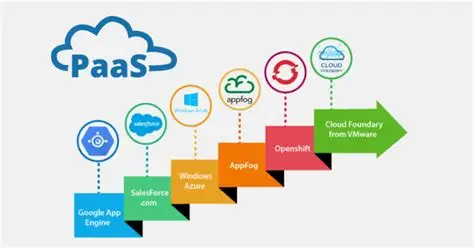
A curious paradox sits at the heart of most small businesses.
They need technology to grow.
But the more they grow, the less time they have to manage technology.
A ten-person company launching a new customer portal faces many of the same technical decisions as a multinational corporation. Applications still need hosting. Databases still require management. Security still matters. Downtime still frustrates customers.
The difference is that small businesses have fewer people, smaller budgets, and far less margin for distraction.
That reality explains why Platform as a Service (PaaS) has become an increasingly important option for entrepreneurs and growing companies.
Yet the conversation around PaaS often becomes overly technical. Discussions quickly drift toward deployment pipelines, container orchestration, runtime environments, and infrastructure abstraction layers.
Those details matter.
But they are not where the decision begins.
For small business owners, the real question is much simpler:
Does PaaS help us spend more time creating value and less time managing complexity?
The answer, for many organizations, is yes.
But not always.
And understanding the difference can save significant time, money, and frustration.
The Small Business Resource Constraint
Large enterprises can often solve problems by adding resources.
They hire specialists.
They build dedicated infrastructure teams.
They create separate departments for operations, security, compliance, and development.
Small businesses rarely have that luxury.
Instead, they operate under a different set of constraints.
A founder might simultaneously act as CEO, product manager, recruiter, and customer support representative.
A developer might build features, manage deployments, monitor performance, and troubleshoot production issues.
Everyone wears multiple hats.
Which means every hour matters.
That observation may sound obvious, but it fundamentally changes how technology decisions should be evaluated.
The question is not whether a small business can manage infrastructure internally.
The question is whether doing so represents the best use of limited resources.
Understanding PaaS Through a Business Lens
Platform as a Service provides a managed environment for developing, deploying, and running applications.
Rather than configuring servers, maintaining operating systems, installing middleware, or managing deployment infrastructure, businesses can focus on building applications and serving customers.
The platform provider handles much of the operational foundation.
Developers write code.
The platform handles much of the rest.
This distinction is important.
PaaS is not simply a technical solution.
It is an allocation-of-attention solution.
It allows organizations to redirect effort from infrastructure management toward business outcomes.
For small businesses, that trade-off can be particularly valuable.
Why Small Businesses Often Benefit More Than Large Enterprises
An interesting pattern emerges when observing successful technology adoption.
The organizations that gain the most value from simplification are often those with the fewest resources to spare.
Small businesses experience this dynamic repeatedly.
Limited Technical Staff
Many small companies operate with one developer, a small development team, or external contractors.
Maintaining infrastructure expertise across multiple domains can be challenging.
PaaS reduces the need for specialized operational knowledge.
Instead of hiring infrastructure experts, organizations can focus on hiring people who directly contribute to product development.
Faster Time to Market
Speed matters.
Not because speed is inherently valuable.
Because learning is valuable.
Small businesses frequently compete against larger, better-funded organizations.
Their advantage often comes from moving faster, testing ideas sooner, and adapting more quickly.
PaaS can shorten development cycles by eliminating many operational tasks that traditionally slow product delivery.
Reduced Operational Burden
Every system requires maintenance.
Servers need updates.
Security patches must be applied.
Databases require monitoring.
Infrastructure needs scaling.
PaaS transfers much of that responsibility to the platform provider.
The result is less operational overhead and greater organizational focus.
The Lesson I Learned Watching a Startup Scale
Several years ago, I worked with a founder whose company was growing rapidly.
The business had found product-market fit. Customer demand was increasing. New features were constantly being requested.
On the surface, this should have been an exciting period.
Instead, the team was exhausted.
Their lead developer spent significant time managing infrastructure issues rather than improving the product.
Server configurations became increasingly complicated. Deployment processes were fragile. Growth created technical stress rather than momentum.
Eventually, they migrated to a managed platform environment.
What changed was not merely the technology.
What changed was where the team directed its energy.
Customer requests moved higher on the priority list.
Infrastructure emergencies moved lower.
The lesson stayed with me because it highlighted a broader truth:
Growth often creates complexity. The smartest organizations find ways to prevent complexity from consuming their attention.
For that company, PaaS became a mechanism for preserving focus.
Where PaaS Delivers the Greatest Value
Not all benefits carry equal weight.
For small businesses, several advantages consistently stand out.
Simpler Application Deployment
Traditional deployments can involve multiple steps:
- Server provisioning
- Environment configuration
- Database setup
- Security management
- Monitoring implementation
PaaS streamlines much of this process.
Developers can often deploy applications with significantly fewer operational requirements.
That simplicity accelerates execution.
Built-In Scalability
Growth is rarely predictable.
A social media mention drives traffic.
A marketing campaign exceeds expectations.
A new partnership increases demand.
Traditional infrastructure often requires advance planning for these scenarios.
PaaS platforms typically provide automatic scaling features that adjust resources as demand changes.
This flexibility reduces both risk and administrative effort.
Lower Infrastructure Management Requirements
Small businesses often underestimate the hidden costs of infrastructure management.
The expenses are not limited to servers and software.
They include:
- Staff time
- Training
- Troubleshooting
- Security maintenance
- Monitoring
- Capacity planning
PaaS reduces many of these obligations.
Faster Experimentation
Successful small businesses frequently rely on experimentation.
New products.
New services.
New customer experiences.
The easier it becomes to launch and test ideas, the more opportunities a company has to discover growth drivers.
PaaS supports this process by lowering operational barriers.
Comparing Technology Approaches for Small Businesses
The decision becomes clearer when viewed alongside alternative infrastructure models.
| Evaluation Factor | Traditional Hosting | Infrastructure as a Service (IaaS) | Platform as a Service (PaaS) |
|---|---|---|---|
| Technical Complexity | High | Moderate to High | Low |
| Infrastructure Control | High | High | Moderate |
| Setup Time | Longer | Moderate | Fast |
| Operational Responsibility | Very High | High | Low |
| Scalability Management | Internal Team | Shared Responsibility | Platform Managed |
| Security Maintenance | Internal Team | Mostly Internal | Shared Responsibility |
| Development Speed | Moderate | Moderate | High |
| Required Expertise | Significant | Moderate | Lower |
| Cost Predictability | Variable | Variable | Often More Predictable |
| Best Fit | Specialized Requirements | Flexible Cloud Operations | Growth-Focused Businesses |
One observation stands out.
PaaS does not maximize control.
It maximizes focus.
For many small businesses, that distinction matters more than absolute infrastructure flexibility.
When PaaS Might Not Be the Best Choice
Technology decisions become problematic when presented as universally correct.
PaaS offers meaningful advantages, but certain situations warrant caution.
Highly Specialized Infrastructure Needs
Some applications require unusual hardware configurations, advanced networking setups, or extensive system customization.
These environments may exceed the flexibility offered by many PaaS providers.
Extreme Cost Sensitivity at Scale
Although PaaS often reduces operational expenses, very large workloads can sometimes become more cost-effective on customized infrastructure.
This situation is more common among mature organizations than early-stage businesses.
Strong Infrastructure Expertise Already Exists
Some businesses possess experienced infrastructure teams and established operational processes.
In these cases, the productivity gains from PaaS may be less pronounced.
The right choice depends on context.
Not trends.
Not vendor marketing.
Context.
The Hidden Economics of PaaS
Many discussions focus on visible costs.
Monthly platform fees.
Hosting expenses.
Software subscriptions.
These numbers matter.
But they tell only part of the story.
The more significant costs are often hidden.
A delayed product launch.
A missed market opportunity.
An exhausted developer.
A feature that never gets built because infrastructure demands consumed available capacity.
These costs rarely appear on financial statements.
Yet they can profoundly influence business outcomes.
PaaS frequently generates value by reducing these invisible costs.
That benefit is difficult to quantify.
It is also difficult to ignore.
The Psychological Impact of Simplicity
Technology discussions rarely acknowledge an important human factor.
Complexity creates stress.
Small teams feel this acutely.
Every infrastructure problem competes with customer needs.
Every operational issue interrupts momentum.
Every unexpected outage creates anxiety.
Simplification does more than improve efficiency.
It creates cognitive space.
Teams can focus on priorities rather than distractions.
For growing businesses, that psychological benefit can be surprisingly meaningful.
Questions Every Small Business Should Ask
Before adopting PaaS, decision-makers should evaluate several practical questions.
What Makes Our Business Different?
If customers choose the company because of its products, services, expertise, or customer experience—not because of infrastructure architecture—PaaS deserves consideration.
How Much Time Is Spent Managing Technology?
If infrastructure maintenance consumes significant attention, simplification may create immediate value.
How Important Is Speed?
Businesses operating in competitive markets often benefit from faster development and deployment cycles.
Do We Have Dedicated Operational Expertise?
Organizations without specialized infrastructure resources frequently realize greater benefits from managed platforms.
What Are We Trying to Optimize?
Control?
Flexibility?
Speed?
Focus?
Different objectives lead to different decisions.
The answer should align with strategic priorities.
The Bigger Question Behind the Technology Decision
It is tempting to frame the PaaS discussion as a debate about cloud architecture.
That framing misses something important.
The real issue is organizational focus.
Small businesses possess finite resources.
Finite capital.
Finite talent.
Finite attention.
Every decision about technology is also a decision about where those scarce resources should be invested.
Should the team spend time maintaining servers?
Or improving customer experiences?
Should developers configure infrastructure?
Or create features customers actually use?
Those questions sit at the center of the PaaS conversation.
Conclusion: Small Businesses Win Through Focus, Not Infrastructure
There is a tendency in business to admire complexity.
Complex systems can appear sophisticated.
Extensive infrastructure can feel impressive.
Technical control can seem inherently valuable.
Yet customers rarely reward complexity for its own sake.
They reward outcomes.
For many small businesses, PaaS provides a practical way to reduce operational burden, accelerate development, and preserve focus on activities that directly contribute to growth.
That does not mean every application belongs on a managed platform.
It does not mean infrastructure expertise lacks value.
It does mean that leaders should carefully examine whether maintaining infrastructure creates competitive advantage—or merely consumes attention.
Because for most small businesses, the scarcest resource is not computing power.
It is focus.
And any technology decision that protects focus deserves serious consideration.
- Arts
- Business
- Computers
- Oyunlar
- Health
- Home
- Kids and Teens
- Money
- News
- Personal Development
- Recreation
- Regional
- Reference
- Science
- Shopping
- Society
- Sports
- Бизнес
- Деньги
- Дом
- Досуг
- Здоровье
- Игры
- Искусство
- Источники информации
- Компьютеры
- Личное развитие
- Наука
- Новости и СМИ
- Общество
- Покупки
- Спорт
- Страны и регионы
- World

 English
 Russian
 French
 Spanish
 Portuguese
 Deutsch
 Dutch
Dutch
 Italiano
 Arabic
 Romaian
 Portuguese (Brazil)
 Greek
Greek