
Which PaaS Is Best for AI Applications?
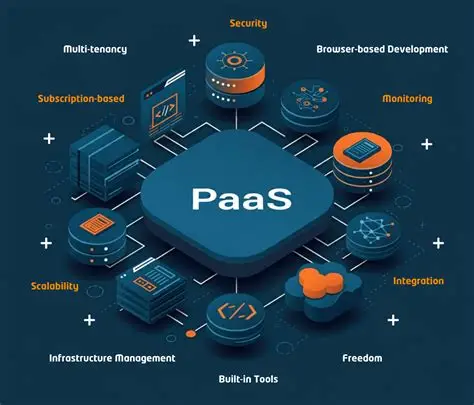
A fascinating shift is happening in technology.
For years, organizations asked questions like:
Which cloud platform is cheapest?
Which platform scales best?
Which platform offers the most infrastructure control?
Today, a different question is rapidly moving to the center of executive conversations:
Which platform gives us the fastest path to building AI-powered products?
It is a subtle change, but an important one.
Artificial intelligence has altered the criteria organizations use to evaluate technology platforms. Infrastructure still matters. Security still matters. Scalability still matters.
But increasingly, leaders are asking how quickly teams can move from an idea to an intelligent application that delivers measurable value.
That is why the discussion around Platform as a Service (PaaS) has become especially relevant.
AI projects are notoriously complex. They require data pipelines, model deployment frameworks, scalable compute resources, monitoring systems, APIs, development environments, and governance controls. Managing all those moving parts independently can slow progress dramatically.
PaaS promises something attractive:
A way to reduce operational complexity while accelerating AI development.
Yet this raises an inevitable question.
Which PaaS is actually best for AI applications?
The answer depends less on technical superiority and more on organizational priorities. Different platforms excel for different reasons. Understanding those distinctions is far more useful than searching for a single universal winner.
Why AI Changes the PaaS Conversation
Traditional application development focuses heavily on software delivery.
AI development introduces additional layers of complexity.
Organizations must manage:
- Model training
- Data preparation
- Feature engineering
- Inference workloads
- Monitoring and observability
- Governance and compliance
- Continuous model improvement
The result is an environment where operational overhead can grow rapidly.
A development team may begin with a promising AI concept and quickly discover that building the surrounding infrastructure consumes more time than building the application itself.
This is precisely where PaaS creates value.
Rather than assembling dozens of separate services, organizations can leverage integrated environments designed to simplify AI workflows.
The goal is not merely efficiency.
The goal is focus.
And focus becomes increasingly valuable as AI initiatives scale.
The Strategic Question Behind Platform Selection
Technology leaders often approach platform evaluation as a feature comparison exercise.
That approach can be misleading.
Because organizations rarely succeed with AI due to platform features alone.
They succeed because they choose a platform aligned with their business objectives.
The more useful question is not:
"Which PaaS has the most capabilities?"
It is:
"Which platform removes the most friction from our specific AI journey?"
That distinction changes everything.
Microsoft Azure AI: The Enterprise Favorite
Among large organizations, Azure has emerged as one of the most influential platforms for AI development.
Part of its appeal stems from familiarity.
Many enterprises already operate within the Microsoft ecosystem.
But familiarity alone does not explain its popularity.
Why Azure Performs Well for AI
Azure combines several important elements:
- Managed AI services
- Machine learning platforms
- Integrated security controls
- Enterprise governance frameworks
- Strong hybrid cloud support
Organizations can develop, train, deploy, and monitor AI applications without building extensive infrastructure from scratch.
Ideal Use Cases
Azure often excels when organizations need:
- Enterprise-scale AI deployments
- Regulatory compliance support
- Internal AI productivity tools
- Customer service automation
- Predictive analytics systems
Its strength lies not necessarily in specialization, but in comprehensiveness.
For many enterprises, that breadth is valuable.
Google Cloud AI Platform: Built Around Machine Learning DNA
If Azure's advantage comes from enterprise integration, Google Cloud's strength often comes from its deep roots in machine learning.
Artificial intelligence has long been central to Google's business model.
That heritage influences its cloud offerings.
Why Google Cloud Stands Out
Google provides extensive support for:
- Machine learning development
- Large-scale data processing
- AI model deployment
- Generative AI applications
- Advanced analytics
Many AI practitioners appreciate Google's emphasis on data science workflows and research-oriented capabilities.
Best-Fit Organizations
Google Cloud frequently appeals to:
- Data-centric companies
- AI-first startups
- Research-driven organizations
- Analytics-heavy businesses
Its appeal often stems from technical depth and machine learning maturity.
Amazon Web Services: Flexibility at Scale
AWS remains one of the largest cloud providers globally.
Its AI ecosystem reflects that scale.
AI Capabilities
AWS offers services supporting:
- Model training
- Model deployment
- Natural language processing
- Computer vision
- Generative AI development
- Data engineering
The breadth of available services is substantial.
The AWS Advantage
Many organizations choose AWS because of flexibility.
Rather than prescribing a single approach, AWS often provides multiple paths toward achieving similar outcomes.
This flexibility can be beneficial for experienced teams with complex requirements.
Potential Trade-Off
The same flexibility that creates opportunity can also introduce complexity.
Organizations may require stronger internal expertise to navigate the extensive service ecosystem effectively.
Google App Engine and Azure App Service: The AI Delivery Layer
When discussing AI platforms, attention often focuses on model development.
But many organizations overlook another critical requirement:
Application delivery.
Building an AI model is one challenge.
Delivering that model through customer-facing applications is another.
Platforms such as Google App Engine and Azure App Service play an important role here.
Real-World AI Scenario
Imagine a company creating an AI-powered customer support assistant.
The organization needs:
- A language model
- An application interface
- User authentication
- Scalable hosting
- Monitoring systems
Model development may occur elsewhere.
But application deployment often benefits from PaaS environments that simplify operational management.
These platforms become the bridge between AI capability and customer experience.
Databricks: The Emerging AI Powerhouse
Although often categorized differently than traditional PaaS offerings, Databricks increasingly deserves consideration in AI platform discussions.
Its popularity has grown alongside the rise of large-scale AI and data engineering initiatives.
Why Organizations Choose Databricks
Databricks combines:
- Data processing
- Machine learning workflows
- AI model development
- Analytics capabilities
The platform is particularly attractive for organizations treating AI as a data problem rather than merely an application problem.
That distinction matters.
Because successful AI initiatives often depend more on data quality than algorithm sophistication.
The Lesson I Learned Watching an AI Project Struggle
Several years ago, I observed a company investing heavily in artificial intelligence.
The leadership team had assembled talented engineers.
They had access to quality data.
The business case was compelling.
Everything appeared aligned for success.
Yet progress remained frustratingly slow.
The problem was not the model.
The problem was everything surrounding the model.
Data pipelines were fragile.
Deployment processes were cumbersome.
Infrastructure requirements expanded continuously.
Operational complexity consumed momentum.
Eventually, the organization migrated significant portions of the workflow onto managed platform services.
The improvement was immediate.
Not because the AI became smarter.
Because the team became more focused.
That experience reinforced a lesson that applies well beyond artificial intelligence:
Organizations often underestimate the cost of supporting complexity.
The right platform does not merely provide capabilities.
It removes distractions.
Comparing Leading PaaS Options for AI Applications
The strengths of each platform become clearer when viewed comparatively.
| Platform | AI Development Capabilities | Enterprise Readiness | Ease of Deployment | Data Processing Strength | Best Fit |
|---|---|---|---|---|---|
| Microsoft Azure AI | Very High | Very High | High | High | Enterprises |
| Google Cloud AI | Very High | High | High | Very High | AI-First Organizations |
| AWS AI Services | Very High | Very High | Moderate | High | Flexible Enterprise Environments |
| Azure App Service | Moderate | Very High | Very High | Moderate | AI Application Delivery |
| Google App Engine | Moderate | High | Very High | Moderate | Rapid AI Product Development |
| Databricks | Very High | High | Moderate | Very High | Data-Centric AI Initiatives |
The table reveals an important reality.
Different platforms solve different problems.
The best choice depends heavily on organizational priorities.
Which Platform Is Best for Startups?
Startups typically optimize for speed.
They need rapid experimentation.
Fast deployment.
Minimal operational burden.
For many AI startups, platforms such as Google Cloud, Azure App Service, and Google App Engine provide attractive combinations of simplicity and scalability.
The objective is rarely infrastructure optimization.
The objective is learning as quickly as possible.
Which Platform Is Best for Enterprises?
Large organizations face different challenges.
Governance.
Security.
Compliance.
Integration.
Operational consistency.
Azure frequently performs well because it aligns closely with these requirements.
AWS remains strong where flexibility is essential.
Databricks often excels when AI initiatives revolve around large-scale data ecosystems.
The answer depends on organizational context.
Not platform popularity.
The Hidden Factor Most Companies Ignore
Organizations often evaluate AI platforms based on visible features.
Model catalogs.
Training capabilities.
API availability.
Pricing.
These factors matter.
But one overlooked variable frequently determines success:
Organizational adoption.
A technically superior platform that developers struggle to use may create less value than a simpler platform that teams embrace enthusiastically.
The best AI platform is not necessarily the most advanced.
It is the one that enables sustained progress.
The Future of AI Platforms
An interesting trend is emerging.
The distinction between AI platforms and application platforms is beginning to blur.
Organizations increasingly expect a single environment to support:
- Data management
- Model development
- Application deployment
- Monitoring
- Governance
The platforms that simplify these workflows are likely to become increasingly influential.
Not because they offer more features.
Because they reduce complexity.
And complexity remains one of the most persistent barriers to AI adoption.
Conclusion: The Best PaaS Is the One That Lets You Focus on Outcomes
When leaders ask which PaaS is best for AI applications, they often hope for a definitive answer.
Azure.
Google Cloud.
AWS.
Databricks.
The reality is more nuanced.
Each platform offers compelling advantages.
Each serves different organizational needs.
And each can support successful AI initiatives when aligned with the right strategy.
The more important insight is this:
AI success rarely comes from selecting the most powerful platform.
It comes from selecting the platform that allows teams to focus on solving meaningful problems.
The organizations creating the most value with artificial intelligence are not necessarily the ones with the most sophisticated infrastructure.
They are the ones that remove enough operational friction to keep their attention where it belongs—on customers, outcomes, and continuous learning.
And from that perspective, the best PaaS for AI applications is not the platform with the longest feature list.
It is the platform that gives your team the shortest path from insight to impact.
- Arts
- Business
- Computers
- الألعاب
- Health
- الرئيسية
- Kids and Teens
- مال
- News
- Personal Development
- Recreation
- Regional
- Reference
- Science
- Shopping
- Society
- Sports
- Бизнес
- Деньги
- Дом
- Досуг
- Здоровье
- Игры
- Искусство
- Источники информации
- Компьютеры
- Личное развитие
- Наука
- Новости и СМИ
- Общество
- Покупки
- Спорт
- Страны и регионы
- World

 English
 Russian
 French
 Spanish
 Portuguese
 Deutsch
 Turkish
 Dutch
Dutch
 Italiano
 Romaian
 Portuguese (Brazil)
 Greek
Greek