
Does sleep improve memory?
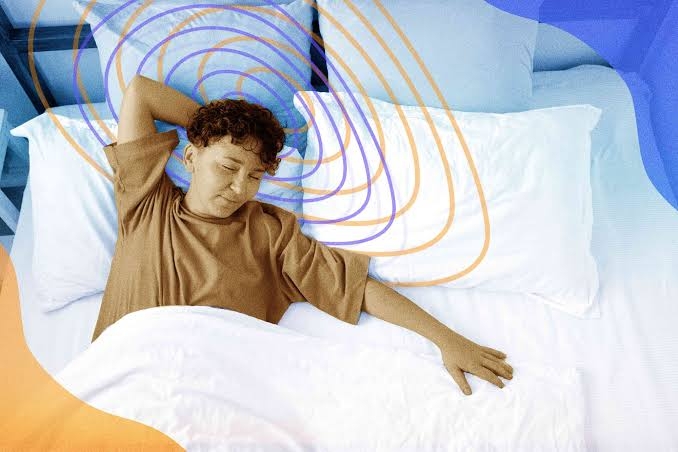
The mind is not a warehouse, and it is certainly not a hard drive. We operate under the stubborn, persistent delusion that our memories are finite—that we have a fixed capacity, a certain number of gigabytes of biological hard drive space that we slowly consume until we hit the inevitable, terrifying limit of a "full" brain. We treat the act of learning as a sprint, a frantic, waking dash to capture information before the opportunity escapes, ignoring the essential, dark hours that follow.
But this is not how the brain is built.
I remember standing in a drafty, cold auditorium in New York, surrounded by mental athletes who could scan a deck of shuffled cards and reproduce the sequence with unerring, terrifying precision. They were not creatures of exceptional biology. They were not born with "photographic" recall. They were, by their own admission, people of perfectly average intelligence who had spent their lives mastering a series of ancient, spatial tricks. They were not superhumans; they were architects. They had learned that the secret to a better memory wasn't to "train" the brain like a muscle in a gym—a strategy that is, in neurobiological terms, a recipe for frustration—but to respect the physiological architecture of consolidation.
Does sleep improve memory? The question itself is framed incorrectly. It suggests that sleep is a passive state, a period of simple dormancy where the brain shuts down its operations. Nothing could be further from the truth. Sleep is not the absence of work; it is the work itself.
The Illusion of Waking Proficiency
We live in a culture that treats sleep as an inconvenience, a biological tax on our productivity. We burn the candle at both ends, convinced that the time spent in bed is time stolen from our potential. Yet, the neuroscience of memory suggests that we have the sequence reversed. We are not "learning" when we study; we are merely exposing ourselves to information. The actual learning—the physical, structural transformation of the brain—happens when we are unconscious.
When you learn something new, you are creating a fragile, temporary neural trace. It is like writing in the sand at low tide. If you do not lock that information into place, the tide comes in, and the memory vanishes. Sleep is the act of turning that sand into stone.
During the deep, restorative phases of the sleep cycle, the brain replays the day's experiences, firing the same neural sequences in high-speed, accelerated bursts. It is a process of editing: pruning the trivial, reinforcing the vital, and binding new facts to the older, more permanent scaffolds of the mind.
| Sleep Phase | Neurobiological Function | Impact on Memory |
| Stage 1 & 2 (Light) | Transition into neural quiescence. | Minimal; mostly stabilization. |
| Stage 3 (Deep/SWS) | System consolidation; synaptic scaling. | High; critical for declarative memory. |
| REM Sleep | Emotional regulation; associative binding. | High; creative integration and procedural skills. |
| Sleep Deprivation | Neural inflammation; hippocampus impairment. | Catastrophic; total failure of consolidation. |
The Anatomy of the Forgetting Curve
If sleep is the bridge between experience and knowledge, what happens when we burn it? We enter a state of chronic, low-level cognitive fragility. I once spent a week on a project that required intense, late-night cramming, operating on four hours of sleep. I felt, in the moment, that I was gaining an advantage. I felt the adrenaline of the effort. But when I tried to retrieve the material forty-eight hours later, I hit a wall of absolute silence. The paths were not just overgrown; they had never been paved.
I had confused the effort of the day with the result of the night.
The hippocampus—the brain's primary gateway for new information—requires a specific neurochemical environment to function. When we are deprived of sleep, that environment turns toxic. We lose the ability to bind new information to existing knowledge structures, and the memory simply does not stick. We become efficient at processing information, but entirely incapable of storing it.
The Power of Integration
REM sleep, in particular, is the brain’s grand laboratory. It is here that we do not just store facts, but extract meaning. When we sleep, the brain is not just replaying the day’s events; it is interrogating them. It looks for patterns that were invisible when we were awake. It links the new information you learned in the morning to a childhood memory, or a professional challenge, or a philosophical inquiry. It is in the silence of sleep that the dots are connected.
The Discipline of the Night
If you want a better memory, you must reclaim the labor of the night. You must stop treating your sleep as a variable you can optimize away.
1. The Strategy of the Spaced Nap
If you are studying a particularly dense subject, a ninety-minute nap after a learning session can be more effective than two extra hours of study. You are allowing the brain to enter that accelerated replay mode while the trace is still fresh.
2. The Ritual of Completion
Do not study something new immediately before bed if you are not planning to give the brain the time to consolidate it. Instead, spend the last thirty minutes of your day reviewing what you have already learned. Use the final minutes of your waking life to prime the brain, telling it, in essence, "this is what I want you to work on tonight."
3. The Architecture of Rest
You are not a machine. You are a biological system that requires time to reset its chemical equilibrium. If you are not sleeping, you are not learning. You are merely spinning your wheels on the treadmill of the present.
The Provocative Conclusion: The Choice to Remember
Can sleep improve memory? It is the only thing that actually does. The study, the note-taking, the flashcards—these are merely the delivery methods. Sleep is the factory.
We are living in an era of unprecedented forgetfulness, not because our brains are failing, but because we have outsourced the labor of attention and sacrificed the necessity of rest. We have decided that remembering is something that the device should do for us, and that our biological limits are merely barriers to be shattered. We have surrendered our status as the architects of our own mental palaces in favor of a cheap, externalized storage locker.
If you want a better memory, you must reclaim the labor of the night. Pay attention to your cycles. Build the palaces during the day, but give them time to settle during the night. Be willing to endure the perceived "waste" of hours spent unconscious. You are not the sum of what you have experienced; you are the sum of what you have bothered to keep. And that, in the final analysis, is a choice you make, over and over again, every single moment you decide to look at the world and actually, truly, see it.
- Arts
- Business
- Computers
- Juegos
- Health
- Home
- Kids and Teens
- Money
- News
- Personal Development
- Recreation
- Regional
- Reference
- Science
- Shopping
- Society
- Sports
- Бизнес
- Деньги
- Дом
- Досуг
- Здоровье
- Игры
- Искусство
- Источники информации
- Компьютеры
- Личное развитие
- Наука
- Новости и СМИ
- Общество
- Покупки
- Спорт
- Страны и регионы
- World

 English
 Russian
 French
 Portuguese
 Deutsch
 Turkish
 Dutch
Dutch
 Italiano
 Arabic
 Romaian
 Portuguese (Brazil)
 Greek
Greek
