
What Is Retail? Understanding the Industry That Quietly Shapes Everyday Life
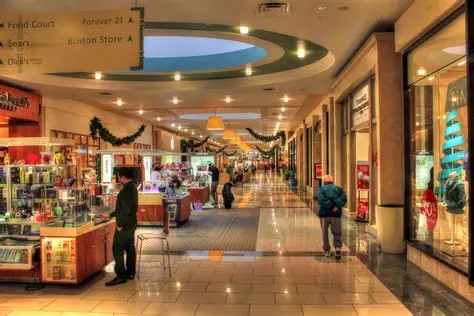
Retail is so familiar that it often becomes invisible.
Consider what happened today.
Perhaps you bought a coffee on the way to work. Maybe you ordered headphones from your phone during lunch. Perhaps you wandered through a grocery store comparing brands of pasta sauce, spending more time than expected deciding between familiar labels and unfamiliar promises.
None of those moments felt remarkable.
Yet each one represented the culmination of a vast economic system involving manufacturers, distributors, marketers, logistics providers, technology platforms, data scientists, store associates, and brand strategists. Retail sits at the intersection of all of them.
That is what makes retail such a fascinating subject. It appears simple on the surface. A customer purchases a product. Money changes hands. Transaction complete.
But the reality is considerably more intricate.
Retail is not merely the act of selling products. It is the discipline of connecting supply with demand, products with people, and increasingly, experiences with expectations. It is commerce, certainly. Yet it is also psychology, economics, technology, design, and culture operating simultaneously.
To understand retail is to understand how modern consumers make choices—and why those choices are rarely as rational as they seem.
Defining Retail: More Than Selling Products
At its most basic level, retail refers to the sale of goods or services directly to end consumers for personal use.
The retailer serves as the final link in the supply chain.
A manufacturer produces a product.
A wholesaler may distribute it.
A retailer places it in front of consumers.
The customer makes the purchase.
Simple enough.
Yet that definition barely scratches the surface.
Retailers do not merely move products. They curate assortments. They create environments. They influence perceptions of value. They shape purchasing decisions through pricing, placement, merchandising, convenience, and storytelling.
The difference between a successful retailer and an unsuccessful one often has less to do with inventory and more to do with understanding human behavior.
That distinction explains why retail remains one of the most dynamic sectors of the economy.
The Fundamental Role of Retail in the Economy
Retail occupies a unique position.
Unlike manufacturers, retailers interact directly with consumers.
Unlike suppliers, retailers witness purchasing behavior firsthand.
As a result, retailers function as interpreters.
They translate consumer preferences into market signals and market offerings into consumer experiences.
This role creates several important functions:
Product Accessibility
Retailers make products available when and where consumers want them.
Without retailers, consumers would need direct relationships with thousands of manufacturers.
Commerce would become extraordinarily inefficient.
Market Intelligence
Every purchase reveals information.
Retailers collect insights about preferences, trends, seasonality, pricing sensitivity, and demand patterns.
This information influences future product development across entire industries.
Value Creation
Retailers add value through:
- Product assortment
- Customer service
- Convenience
- Product expertise
- Delivery capabilities
- Experience design
The best retailers do far more than distribute goods.
They simplify decision-making.
The Evolution of Retail: From General Stores to Algorithmic Commerce
Retail has never been static.
For centuries, commerce revolved around local merchants serving nearby communities. Product selection was limited. Geographic constraints shaped consumer behavior.
Then came department stores.
Then shopping malls.
Then big-box retailers.
Then e-commerce.
Then mobile commerce.
And now, consumers move fluidly between physical and digital environments, often within the same transaction.
A customer might discover a product on social media, compare reviews online, examine it in a store, and complete the purchase through an app.
Retail no longer follows a straight line.
It resembles a network.
That shift has fundamentally changed how retailers compete.
Major Types of Retail Businesses
Retail encompasses a wide range of business models.
Each serves consumers differently.
Department Stores
Department stores offer broad product assortments across multiple categories.
Examples include apparel, home goods, beauty products, and accessories.
Their competitive advantage historically came from variety and convenience.
Specialty Retailers
Specialty retailers focus on specific categories.
Examples include:
- Sporting goods stores
- Electronics retailers
- Beauty chains
- Pet supply stores
Depth of expertise often differentiates these businesses.
Grocery Retailers
Grocery stores remain among the most frequently visited retail environments.
They operate on relatively thin margins while managing complex inventory systems.
Discount Retailers
These retailers compete primarily through price leadership.
Efficiency becomes their strategic weapon.
E-Commerce Retailers
Online retailers eliminate many physical constraints.
They can offer broader assortments, personalized recommendations, and streamlined fulfillment options.
Yet they face different challenges, including shipping costs and customer acquisition expenses.
Comparing Major Retail Formats
| Retail Format | Primary Strength | Typical Product Range | Customer Experience Focus | Cost Structure |
|---|---|---|---|---|
| Department Store | Variety | Broad | Discovery and convenience | High operational costs |
| Specialty Store | Expertise | Narrow but deep | Product knowledge | Moderate |
| Grocery Store | Necessity purchases | Food and essentials | Speed and convenience | Inventory-intensive |
| Discount Retailer | Low prices | Broad | Value-driven shopping | High efficiency requirements |
| E-Commerce Retailer | Convenience and selection | Extremely broad | Personalization and speed | Technology-driven |
| Warehouse Club | Bulk purchasing | Selective assortment | Membership value | Scale-based economics |
The table highlights an important reality.
Retail formats differ because consumer priorities differ.
No single model dominates every circumstance.
Retail Is Really About Consumer Psychology
One of the most persistent myths about retail is that consumers buy products solely because they need them.
Need certainly matters.
But it rarely tells the whole story.
People purchase products for reasons that extend beyond functionality.
They seek:
- Status
- Convenience
- Identity
- Confidence
- Comfort
- Belonging
Retailers understand this.
The most successful ones understand it exceptionally well.
A luxury handbag and a generic tote bag both carry belongings.
Yet consumers assign dramatically different meanings to each.
Retail operates at the intersection of practical utility and emotional significance.
That intersection is where much of the industry's value resides.
The Importance of Customer Experience
Several years ago, I visited two stores selling nearly identical products at comparable prices.
One store felt transactional.
The other felt inviting.
Associates were knowledgeable. Product displays were intuitive. The environment encouraged exploration rather than urgency.
I purchased from the second retailer.
Not because the merchandise was better.
Because the experience was.
That lesson remains surprisingly relevant.
Retailers frequently focus on inventory, pricing, and technology. Those elements matter. Yet customers often remember how a shopping experience felt long after they forget specific product details.
Experience has become a competitive asset.
Not an accessory.
An asset.
Technology's Expanding Role in Retail
Technology increasingly shapes every aspect of retail operations.
Consumers notice some innovations immediately.
Others remain largely invisible.
Visible Technologies
Examples include:
- Mobile applications
- Self-checkout systems
- Personalized recommendations
- Digital payments
- Loyalty programs
These tools directly influence customer interactions.
Invisible Technologies
Equally important are technologies operating behind the scenes:
- Inventory forecasting
- Supply chain analytics
- Demand prediction
- Pricing optimization
- Customer segmentation
The most sophisticated retailers combine both.
Customers see convenience.
Retailers see operational intelligence.
Omnichannel Retail: The New Consumer Expectation
Consumers rarely distinguish between channels.
Retailers once did.
Physical stores belonged to one division.
E-commerce belonged to another.
Mobile belonged somewhere else.
Consumers ignored those organizational boundaries.
They expected seamless experiences.
Today, successful retailers increasingly embrace omnichannel strategies that integrate:
- Physical stores
- Websites
- Mobile applications
- Social commerce
- Customer support channels
The objective is continuity.
Customers want flexibility without friction.
Retailers that deliver it gain a meaningful advantage.
Challenges Facing Modern Retailers
Retail remains a vibrant industry, but it is hardly an easy one.
Several challenges dominate strategic discussions.
Rising Consumer Expectations
Consumers increasingly expect:
- Fast delivery
- Competitive pricing
- Personalized experiences
- Product availability
- Frictionless returns
Meeting all those expectations simultaneously is difficult.
Margin Pressure
Competition remains intense.
Retailers constantly balance customer value against profitability.
Supply Chain Complexity
Global sourcing creates efficiency opportunities but also introduces vulnerabilities.
Disruptions ripple quickly across networks.
Data Privacy Concerns
Retailers possess vast amounts of customer information.
Managing that responsibility has become increasingly important.
Success requires balancing personalization with trust.
Why Retail Continues to Matter
Occasionally, commentators predict the decline of retail.
Usually, they are observing the decline of a specific format rather than the industry itself.
Retail does not disappear.
It adapts.
Consumers will always need products.
They will always seek convenience.
They will always evaluate alternatives.
The mechanisms may evolve.
The fundamental need remains.
What changes is how retailers respond.
History suggests that retail survives by reinventing itself.
Repeatedly.
The Future of Retail May Be More Human Than We Expect
There is an assumption that retail's future will be defined entirely by technology.
Artificial intelligence.
Automation.
Predictive analytics.
Autonomous fulfillment.
These developments undoubtedly matter.
Yet focusing exclusively on technology risks overlooking something essential.
Retail has always been about people.
Technology can improve efficiency.
It can enhance personalization.
It can reduce friction.
But consumers still make decisions through a distinctly human lens.
They respond to trust.
They respond to relevance.
They respond to experiences that feel meaningful.
The retailers that understand this duality—the importance of both technological sophistication and human connection—are likely to thrive.
Conclusion: Retail Is the Business of Understanding People
So, what is retail?
The conventional answer is straightforward: the sale of goods and services directly to consumers.
The more interesting answer is considerably broader.
Retail is a system for understanding people.
It observes preferences.
It interprets behavior.
It anticipates needs.
It creates environments designed to influence decisions.
Every product display, website recommendation, pricing strategy, loyalty program, and store layout reflects an attempt to answer one enduring question:
What does the customer value?
The most successful retailers never stop asking it.
That may be why retail remains endlessly fascinating. Products change. Technologies evolve. Channels multiply. Consumer expectations shift.
Yet the industry's central challenge remains remarkably consistent.
Not selling more things.
Understanding why people choose them in the first place.
And that challenge, unlike any particular store format or technology trend, is unlikely to disappear.
- Arts
- Business
- Computers
- Jeux
- Health
- Domicile
- Kids and Teens
- Argent
- News
- Personal Development
- Recreation
- Regional
- Reference
- Science
- Shopping
- Society
- Sports
- Бизнес
- Деньги
- Дом
- Досуг
- Здоровье
- Игры
- Искусство
- Источники информации
- Компьютеры
- Личное развитие
- Наука
- Новости и СМИ
- Общество
- Покупки
- Спорт
- Страны и регионы
- World

 English
 Russian
 Spanish
 Portuguese
 Deutsch
 Turkish
 Dutch
Dutch
 Italiano
 Arabic
 Romaian
 Portuguese (Brazil)
 Greek
Greek
