
What Is Retail Automation? The Quiet Revolution Happening Behind the Sales Floor
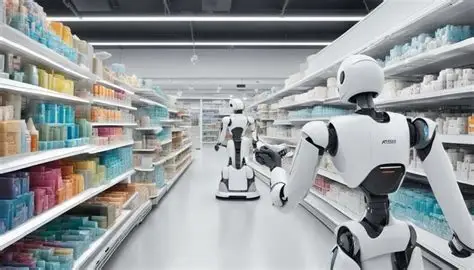
A customer walks into a store, finds a product, checks availability on a mobile app, receives a personalized promotion, pays without waiting in line, and leaves with a digital receipt.
The experience feels effortless.
Almost natural.
Yet beneath that seemingly simple transaction, dozens of processes may have occurred automatically.
Inventory levels updated.
A replenishment order was triggered.
Customer loyalty points were applied.
Sales reports refreshed.
Demand forecasts adjusted.
Marketing systems recorded behavioral signals.
No frantic phone calls. No manual spreadsheets. No associate counting stock in a back room.
The remarkable thing is that customers rarely notice any of this.
Nor should they.
The best retail systems tend to disappear into the background.
This is the essence of retail automation.
Not robots roaming store aisles. Not science-fiction retail environments. Not technology for technology's sake.
Retail automation is fundamentally about reducing friction—both for customers and for the businesses serving them.
And increasingly, it has become one of the defining forces shaping modern commerce.
What Is Retail Automation?
Retail automation refers to the use of technology to perform retail tasks, workflows, and operational processes with minimal human intervention.
The goal is straightforward.
Reduce repetitive work.
Increase accuracy.
Improve efficiency.
Enhance customer experiences.
The phrase encompasses a surprisingly broad collection of technologies.
Retail automation may include:
- Automated inventory management
- Self-checkout systems
- Automated pricing updates
- Customer service chatbots
- Demand forecasting tools
- Marketing automation platforms
- Warehouse robotics
- AI-powered recommendations
- Automated replenishment systems
- Smart shelf technology
Notice what connects these applications.
They all address routine processes.
Tasks that once required significant human effort become faster, more consistent, and often more accurate through automation.
That does not mean humans disappear.
Quite the opposite.
The most effective retail automation initiatives tend to elevate human work rather than eliminate it.
Why Retailers Turn to Automation
Retail has always been a business of coordination.
Products move through supply chains.
Customers move through stores.
Information moves through systems.
The complexity is immense.
A single retailer may manage:
- Thousands of SKUs
- Multiple locations
- E-commerce operations
- Loyalty programs
- Vendor relationships
- Workforce schedules
Historically, many of these functions depended on manual oversight.
The problem is not that people are incapable.
The problem is scale.
As retail complexity increases, manual processes become increasingly difficult to sustain.
Automation helps retailers manage complexity without proportionally increasing labor requirements.
That distinction matters.
Automation is not simply about reducing costs.
It is about increasing capability.
The Evolution of Retail Automation
Retail automation did not arrive all at once.
It evolved gradually.
The first wave focused on transactions.
Cash registers became electronic.
Point-of-sale systems digitized purchases.
Inventory records moved from paper to software.
The second wave expanded into operations.
Retailers automated replenishment, forecasting, and reporting.
Data became more accessible.
Decision-making became more informed.
Today, a third wave is emerging.
Artificial intelligence, machine learning, computer vision, and predictive analytics are enabling more sophisticated forms of automation.
Systems no longer merely record activity.
They increasingly recommend actions and initiate responses.
That progression is significant.
Retail technology has evolved from documentation to orchestration.
Inventory Automation: The Foundation of Modern Retail
If there is a single area where automation delivers outsized value, it is inventory management.
Inventory errors create cascading problems.
Products go out of stock.
Customers become frustrated.
Sales opportunities disappear.
Excess inventory accumulates.
Margins shrink.
Retail automation addresses these issues through continuous monitoring.
Modern systems can automatically:
- Track inventory movement
- Update stock counts
- Generate replenishment alerts
- Forecast future demand
- Coordinate transfers between stores
The result is improved visibility.
And visibility remains one of retail's most valuable assets.
A retailer cannot optimize inventory it cannot accurately see.
Automated Replenishment: Preventing Empty Shelves
For decades, replenishment often depended on periodic reviews.
Managers examined reports.
Orders were placed.
Adjustments were made.
The process worked.
But it was reactive.
Automated replenishment shifts the model.
Inventory systems continuously monitor stock levels.
When products reach predefined thresholds, replenishment workflows activate automatically.
This creates several advantages:
- Reduced stockouts
- Faster response times
- Improved inventory turnover
- Lower carrying costs
The process appears simple.
Its impact can be substantial.
Self-Checkout and Frictionless Commerce
Few forms of retail automation are more visible to customers than self-checkout.
The concept reflects a broader retail trend.
Consumers increasingly value convenience and speed.
Self-checkout systems allow shoppers to:
- Scan products
- Process payments
- Complete transactions independently
Retailers benefit through improved throughput and operational flexibility.
Customers benefit through reduced waiting.
Of course, self-checkout remains controversial in some circles.
Not every customer enjoys the experience.
Not every retailer implements it effectively.
Yet its growth reflects a broader principle:
Automation often succeeds when it gives customers greater control.
Retail Automation Comparison Table
| Automation Type | Primary Purpose | Business Impact | Customer Impact | Common Technologies |
|---|---|---|---|---|
| Inventory Automation | Stock visibility | Reduced stockouts | Better product availability | RFID, inventory software |
| Automated Replenishment | Restocking efficiency | Lower inventory costs | Fewer out-of-stock experiences | AI forecasting systems |
| Self-Checkout | Transaction efficiency | Labor optimization | Faster checkout | POS systems, kiosks |
| Marketing Automation | Customer engagement | Higher campaign ROI | More relevant offers | CRM platforms |
| Chatbots & Virtual Assistants | Customer support | Lower service costs | Faster responses | AI and NLP tools |
| Dynamic Pricing | Pricing optimization | Margin improvement | Competitive pricing | AI pricing engines |
| Warehouse Automation | Fulfillment speed | Operational efficiency | Faster delivery | Robotics and automation |
| Workforce Automation | Labor scheduling | Improved productivity | Better service coverage | Scheduling software |
The comparison highlights something important.
Retail automation is not one technology.
It is an ecosystem.
Different solutions address different operational challenges.
The strongest retailers understand how these systems work together.
Marketing Automation: Scaling Personalization
Retail marketing once relied heavily on broad audience segments.
Customers were grouped by demographics.
Campaigns were distributed widely.
The approach was efficient.
It was not particularly personal.
Marketing automation changes that dynamic.
Retailers can now automate:
- Email campaigns
- Loyalty communications
- Product recommendations
- Promotional offers
- Customer retention initiatives
These systems respond to customer behavior rather than static assumptions.
A shopper browsing athletic apparel receives different messaging than someone purchasing home décor.
The communication becomes more relevant.
Relevance tends to improve performance.
AI and Automated Decision-Making
One of the most fascinating developments in retail automation involves decision-making itself.
Historically, automation handled repetitive actions.
Now, increasingly, it influences strategic choices.
Artificial intelligence enables systems to:
- Forecast demand
- Optimize pricing
- Predict customer churn
- Recommend inventory allocations
- Identify operational inefficiencies
I witnessed this firsthand during a retail transformation project several years ago.
Leadership believed promotional performance was the organization's primary challenge.
The analytics platform told a different story.
Pricing and promotions were relatively effective.
Inventory imbalances were not.
Certain stores consistently carried excess stock while others faced shortages.
The issue wasn't customer demand.
It was inventory distribution.
The lesson was illuminating.
Retailers often focus on visible symptoms.
Automation frequently reveals underlying causes.
And those causes are not always where leaders expect to find them.
Customer Service Automation
Consumers increasingly expect immediate answers.
Not tomorrow.
Not next week.
Now.
Retail automation helps address this expectation through:
- Chatbots
- Virtual assistants
- Automated order tracking
- Self-service portals
Many customer inquiries are straightforward.
Where is my package?
What are your store hours?
Is this item available?
Automation handles these interactions efficiently.
Human employees can then focus on more nuanced customer needs.
This balance is important.
The objective is not replacing human service.
The objective is reserving human expertise for situations where it matters most.
Warehouse Automation and Fulfillment
The rise of e-commerce has transformed fulfillment expectations.
Customers increasingly expect:
- Faster shipping
- Greater visibility
- Higher accuracy
Meeting these expectations manually becomes challenging.
Warehouse automation addresses this challenge through:
- Robotics
- Automated sorting systems
- Picking technologies
- Inventory tracking solutions
The benefits extend beyond speed.
Automation often improves accuracy and consistency as well.
Errors become less frequent.
Operations become more predictable.
Predictability creates value.
Workforce Automation: A Less Obvious Opportunity
Labor scheduling rarely attracts headlines.
Yet it represents a significant operational challenge.
Retail traffic fluctuates.
Demand changes.
Employee availability varies.
Workforce automation helps retailers align staffing with anticipated demand.
Systems can analyze:
- Historical traffic patterns
- Sales forecasts
- Seasonal trends
- Promotional events
Schedules become more precise.
Service levels improve.
Labor costs become easier to manage.
The impact may not be dramatic from a customer's perspective.
From an operational perspective, it can be highly meaningful.
The Challenges of Retail Automation
Retail automation offers substantial advantages.
It also introduces complexities.
Upfront Investment
Technology requires capital.
Hardware, software, integration, and training all carry costs.
Change Management
Employees often need new skills and workflows.
Adoption requires thoughtful leadership.
Data Quality
Automation depends on accurate information.
Poor data limits effectiveness.
Customer Perception
Not every customer embraces automation equally.
Retailers must balance efficiency with human connection.
That balance remains crucial.
The Future of Retail Automation
Retail automation is becoming increasingly intelligent.
Systems are moving beyond task execution toward adaptive decision-making.
Future developments may include:
- More predictive inventory management
- Autonomous replenishment
- Enhanced personalization
- Smarter fulfillment networks
- Greater integration across retail ecosystems
Interestingly, the future may feel less technological than many expect.
The most successful automation often becomes invisible.
Customers simply experience better service.
Employees encounter fewer operational frustrations.
Retailers make better decisions.
The technology fades into the background.
The outcomes remain visible.
Conclusion: Retail Automation Is Really About Human Attention
The public conversation around automation often focuses on machines.
Retail suggests a different narrative.
The most valuable outcome of automation is not technological efficiency.
It is human attention.
When repetitive tasks are automated, employees gain time.
Time to assist customers.
Time to solve problems.
Time to build relationships.
Time to focus on judgment rather than routine administration.
That distinction matters because retail has never been solely about transactions.
It has always been about experiences.
Automation does not eliminate the human element.
At its best, it strengthens it.
By reducing operational friction, improving visibility, and streamlining routine processes, retail automation allows people to concentrate on the aspects of commerce that machines struggle to replicate: empathy, creativity, adaptability, and trust.
And perhaps that is the most surprising conclusion of all.
The technology reshaping retail is not fundamentally about replacing people.
It is about helping people do what they do best.
- Arts
- Business
- Computers
- Jeux
- Health
- Domicile
- Kids and Teens
- Argent
- News
- Personal Development
- Recreation
- Regional
- Reference
- Science
- Shopping
- Society
- Sports
- Бизнес
- Деньги
- Дом
- Досуг
- Здоровье
- Игры
- Искусство
- Источники информации
- Компьютеры
- Личное развитие
- Наука
- Новости и СМИ
- Общество
- Покупки
- Спорт
- Страны и регионы
- World

 English
 Russian
 Spanish
 Portuguese
 Deutsch
 Turkish
 Dutch
Dutch
 Italiano
 Arabic
 Romaian
 Portuguese (Brazil)
 Greek
Greek
