
Memory improvement techniques
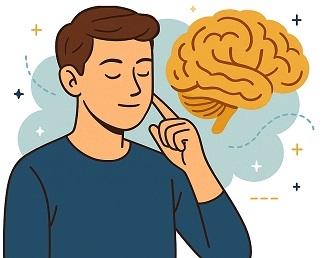
The mind is not a warehouse, and it is certainly not a hard drive. We operate under the stubborn, persistent delusion that if we can just find the right technique—the perfect mnemonic, the optimal interval for repetition, or the most sophisticated digital interface—we can turn the act of retention into an act of storage. We treat the brain as a container that must be filled, convinced that if we simply push enough information through the funnel, some of it will eventually lodge in the permanent archives.
But this is not how the brain is built.
I remember sitting in the back of a sterile, fluorescent-lit lecture hall during my research into the world’s memory champions, trying to understand how a human being could store thousands of digits without the assistance of a device. I was repeating the same sequences until they blurred into white noise, convinced that the repetition was a substitute for understanding. I failed. I failed because I was treating my brain as a passive file cabinet rather than an active builder. It wasn't until I abandoned the rote repetition and started building a mental map—connecting those cold, abstract digits to the vibrant, grotesque, and deeply personal imagery of the places I knew best—that the information became impossible to forget. I was no longer holding data; I was creating architecture.
What are the best memory improvement techniques? The question is framed as if we are looking for a more efficient way to save. We are not. Remembering is not an act of input; it is an act of creation. It is the persistent, often uncomfortable process of anchoring the new to the old, transforming the abstract into the concrete, and turning the static page into a living, breathing model of the world.
The Ecology of the Anchored Trace
We live in a culture that encourages the immediate, the transient, and the disposable. We are told to capture, to record, and to sync, all while believing that the act of externalized capture is synonymous with the act of knowledge. We ignore the fundamental biological truth that the brain is a filter, not a storage locker. It only keeps what it deems essential, and it decides what is essential based on the intensity of the engagement.
Think of your memory as a forest. If you walk the same path every single day—reading the same notes, repeating the same lines—the path becomes a road. It is efficient, frictionless, and utterly predictable. But it is also where growth stops. True memory, the kind that survives the passage of years and becomes a part of who you are, requires you to abandon the road and cut a new trail. It requires friction.
The Biological Sorting Mechanism
When we try to cement a memory, we are competing against a system designed to prune the irrelevant. The hippocampus—the brain's primary staging ground for new information—serves as a temporary clipboard. It is efficient, nimble, and quick to write upon, but it has a cruelly small capacity. If you do not actively force the transfer of that data to the permanent architecture of the neocortex, you will eventually overwrite the lessons of the morning with the noise of the afternoon.
| Technique | Neurobiological Mechanism | Retention Efficacy |
| Rote Repetition | Minimal synaptic firing | Low; high illusion of competence |
| Elaborative Interrogation | Building novel associative links | High; deep semantic encoding |
| Active Recall/Testing | Long-Term Potentiation (LTP) | Very High; optimizes synaptic trace |
| Spatial Mnemonics | Visual-spatial scaffolding | Extremely High; builds durable architecture |
The Lesson of the Empty Hallway
I once spent a month trying to memorize the layout of an entire city, determined to master the streets, the shops, and the historical markers by rote recitation of a map. I felt the sharp, electric fatigue of a brain being pushed past its comfort zone. I wanted to reach for a summary, to outsource the labor to a pre-written guide that would do the thinking for me.
The lesson I learned was not about the city. It was about the threshold of the struggle. By forcing myself to stop and visualize the layout as if I were physically walking the paths—by forcing myself to place the markers in the rooms of my own childhood home—I wasn't just learning the geography. I was forcing my brain to allocate more cortical territory to the information. When I finally walked those streets, the experience was not a retrieval of facts; it was a walk through a memory palace I had built with my own labor.
This is the distinction we often ignore: we are rarely failing because our brains are insufficient. We are failing because we are using our time to protect ourselves from the work of understanding.
The Discipline of the Architect
If you want to improve your memory, you must reclaim the labor of the mind. You must stop treating your cognitive life as a variable you can optimize away.
1. The Strategy of Elaboration
The brain does not care about the familiar. You can read the same book for forty years and you will not create a new, plastic trace. You must pursue the unknown. The most effective memory happens when you force yourself to explain a concept in your own words, to someone who knows nothing, using analogies that force the brain to bridge the gap between the known and the new.
2. The Ritual of "Difficult" Retrieval
Do not lean on the easy path. When you are trying to remember, do not immediately consult your notes. Force the brain to struggle for the retrieval. That discomfort—that specific, electric sensation of searching for a connection that isn't quite there—is the feeling of the dendrites reaching out and reconnecting.
3. The Architecture of Rest
You are not a machine. You are a biological system. Long-term storage is a massive, metabolic endeavor. If you are not sleeping, you are not building. The deepest stages of rest are not wasted time; they are the moments when the brain is most active, binding the day’s fragile, plastic traces into the permanent structures of the mind.
The Provocative Conclusion: The Choice to Remember
How do we improve memory? By realizing that "improvement" does not mean "ease." It means aligning your habits with the way your biology evolved. It means moving your body to feed your brain with oxygen and growth factors. It means prioritizing the silence of sleep, where the brain does its quiet, essential work of binding yesterday to today. It means using the natural architecture of your own life—the stories you tell, the images you create, the connections you force—as the scaffolding for your knowledge.
We are living in an era of unprecedented cognitive neglect, not because our brains are failing, but because we have outsourced the labor of attention to a world that ignores the basic, biological requirements of the mind. We have decided that our cognitive limits are something to be bypassed or ignored until they can no longer be hidden. We have surrendered our status as the architects of our own mental palaces in favor of a cheap, externalized storage locker that eventually leaks.
If you are concerned, do not look for a digital shortcut. Look for the pattern of your own engagement. Be willing to endure the discomfort of self-scrutiny. You are not the sum of what you have experienced; you are the sum of what you have bothered to keep. And that, in the final analysis, is a choice you make, over and over again, every single moment you decide to look at the world and actually, truly, see it.
- Arts
- Business
- Computers
- Jeux
- Health
- Domicile
- Kids and Teens
- Argent
- News
- Personal Development
- Recreation
- Regional
- Reference
- Science
- Shopping
- Society
- Sports
- Бизнес
- Деньги
- Дом
- Досуг
- Здоровье
- Игры
- Искусство
- Источники информации
- Компьютеры
- Личное развитие
- Наука
- Новости и СМИ
- Общество
- Покупки
- Спорт
- Страны и регионы
- World

 English
 Russian
 Spanish
 Portuguese
 Deutsch
 Turkish
 Dutch
Dutch
 Italiano
 Arabic
 Romaian
 Portuguese (Brazil)
 Greek
Greek
