
What are the different types of inflation?
What Are the Different Types of Inflation?
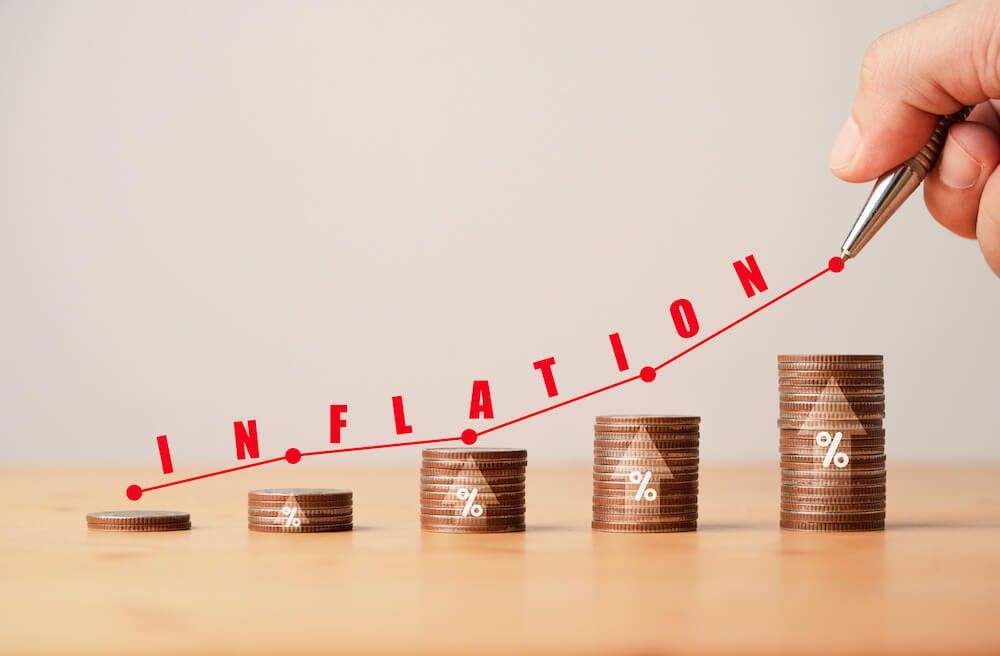
Inflation is the sustained increase in the general price level of goods and services in an economy over time. When inflation occurs, the purchasing power of money declines, meaning consumers can buy fewer goods and services with the same amount of money. Inflation is a normal feature of most growing economies, but when it becomes too high or unpredictable, it can create serious economic challenges.
Economists classify inflation into different types based on its causes, speed, and effects. Understanding these types helps governments, businesses, and individuals better respond to changes in prices and economic conditions.
1. Demand-Pull Inflation
Demand-pull inflation occurs when the demand for goods and services grows faster than the economy’s ability to produce them. In simple terms, too much money is chasing too few goods. When consumers, businesses, or governments increase their spending, producers may struggle to meet the rising demand, causing prices to increase.
Several factors can cause demand-pull inflation:
-
Increased consumer spending: When people have higher incomes or easier access to credit, they may spend more, pushing up demand.
-
Government spending: Large increases in public spending can raise overall demand in the economy.
-
Expansion of money supply: If more money enters circulation, consumers may have more purchasing power, increasing demand.
-
Strong economic growth: During periods of rapid growth, businesses may face pressure to raise prices due to high demand.
For example, if a country experiences a sudden increase in demand for housing but there are not enough homes available, property prices may rise significantly. Demand-pull inflation is often associated with strong economic activity and low unemployment.
2. Cost-Push Inflation
Cost-push inflation occurs when the costs of production increase, forcing businesses to raise prices to maintain profitability. Unlike demand-pull inflation, this type of inflation begins with supply-side problems rather than increased demand.
Common causes of cost-push inflation include:
-
Higher wages: If labor costs rise significantly, companies may increase prices to cover higher expenses.
-
Rising raw material prices: Increases in the cost of resources such as oil, metals, or agricultural products can raise production costs.
-
Supply chain disruptions: Shortages or transportation problems can make goods more expensive to produce and deliver.
-
Higher taxes or regulations: Increased business costs may be passed on to consumers.
A common example is an increase in oil prices. Since oil is used in transportation, manufacturing, and energy production, higher oil prices can increase the cost of many goods and services. Businesses may respond by raising prices, leading to inflation across the economy.
3. Built-In Inflation
Built-in inflation, also known as wage-price inflation, occurs when people expect prices to continue rising and adjust their behavior accordingly. Workers demand higher wages to maintain their purchasing power, and businesses increase prices to cover higher labor costs. This creates a cycle of rising wages and prices.
The process often works as follows:
-
Workers expect inflation and negotiate higher wages.
-
Businesses face increased labor costs.
-
Companies raise prices to protect profits.
-
Consumers face higher prices and demand further wage increases.
Expectations play an important role in built-in inflation. If workers and businesses believe inflation will continue, their decisions can contribute to maintaining inflation over time.
4. Creeping Inflation
Creeping inflation refers to a slow and gradual increase in prices, usually at a low rate. Many economists consider mild inflation to be normal and even beneficial for economic growth.
A small level of inflation can encourage:
-
Consumer spending instead of saving money for too long.
-
Business investment due to expectations of future growth.
-
Economic expansion.
For example, an annual inflation rate of around 1–3% is often viewed as manageable in many developed economies. However, even slow inflation reduces purchasing power over time if wages do not increase at the same pace.
5. Walking Inflation
Walking inflation occurs when prices rise at a faster but still manageable rate. Inflation rates in this category may reach several percentage points per year and begin to create noticeable effects on consumers and businesses.
During walking inflation:
-
Consumers may notice regular increases in the cost of living.
-
Businesses may need to adjust prices more frequently.
-
Savings may lose value if interest rates do not keep pace with inflation.
Although walking inflation is not usually considered a severe economic crisis, it can become harmful if it continues unchecked.
6. Running Inflation
Running inflation describes a situation where prices increase rapidly, often at double-digit annual rates. This level of inflation can seriously affect economic stability.
The effects of running inflation include:
-
Reduced purchasing power.
-
Increased uncertainty for businesses.
-
Lower consumer confidence.
-
Difficulty planning investments and savings.
People may rush to spend money quickly before prices rise further, which can increase demand and worsen inflation. Governments and central banks often respond by raising interest rates or reducing money supply to control it.
7. Hyperinflation
Hyperinflation is the most extreme form of inflation, where prices rise at an extremely rapid rate and money loses value quickly. There is no universally agreed definition, but economists often describe hyperinflation as inflation exceeding 50% per month.
Hyperinflation can occur due to:
-
Excessive money creation by governments.
-
Severe economic crises.
-
Loss of confidence in a country’s currency.
-
Major political instability or war.
Historical examples include Germany in the 1920s, Zimbabwe in the late 2000s, and Venezuela in the 2010s. During hyperinflation, people may need large amounts of money to purchase basic goods, and the economy can become severely disrupted.
8. Deflation (Negative Inflation)
Although not a type of inflation in the traditional sense, deflation is closely related because it involves changes in overall price levels. Deflation occurs when prices fall over an extended period.
Deflation can happen because of:
-
Reduced consumer demand.
-
Excess production capacity.
-
Falling wages.
-
Economic recessions.
While lower prices may seem beneficial, deflation can create serious problems. Consumers may delay purchases because they expect prices to fall further, reducing business revenues and investment. This can lead to job losses and slower economic growth.
9. Imported Inflation
Imported inflation occurs when a country experiences rising prices due to increases in the cost of imported goods and services. This type of inflation is especially common in countries that rely heavily on foreign energy, food, or raw materials.
Examples include:
-
A rise in global oil prices increasing fuel costs.
-
A weaker domestic currency making imports more expensive.
-
Higher international commodity prices affecting local markets.
Because imported inflation comes from external sources, governments may have limited ability to control it directly.
10. Sectoral Inflation
Sectoral inflation occurs when prices increase significantly in specific industries or sectors rather than across the entire economy. This may happen because of supply shortages, increased demand, or changes affecting a particular market.
Examples include:
-
Rising housing prices due to limited housing supply.
-
Higher food prices caused by poor harvests.
-
Increased technology prices due to shortages of key components.
Sectoral inflation may eventually spread to other parts of the economy if the affected goods or services are widely used.
11. Repressed Inflation
Repressed inflation occurs when governments attempt to control inflation by limiting price increases through policies such as price controls, subsidies, or restrictions. While official prices may remain stable, shortages and unofficial markets may develop.
Signs of repressed inflation include:
-
Empty store shelves.
-
Long waiting periods for goods.
-
Black-market trading.
-
Hidden increases in costs.
When price controls are removed, accumulated inflationary pressure may appear through sudden price increases.
Conclusion
Inflation can take many forms depending on its causes, speed, and economic impact. Demand-pull inflation results from excessive demand, while cost-push inflation comes from rising production costs. Other types, such as built-in inflation, imported inflation, and hyperinflation, show how different economic forces can influence price levels.
A moderate amount of inflation is often considered a normal part of economic growth, but high or uncontrolled inflation can reduce living standards and create uncertainty. Understanding the different types of inflation helps policymakers design effective strategies and helps individuals make better financial decisions in changing economic conditions.
- Arts
- Business
- Computers
- Jocuri
- Health
- Home
- Kids and Teens
- Money
- News
- Personal Development
- Recreation
- Regional
- Reference
- Science
- Shopping
- Society
- Sports
- Бизнес
- Деньги
- Дом
- Досуг
- Здоровье
- Игры
- Искусство
- Источники информации
- Компьютеры
- Личное развитие
- Наука
- Новости и СМИ
- Общество
- Покупки
- Спорт
- Страны и регионы
- World

 English
 Russian
 French
 Spanish
 Portuguese
 Deutsch
 Turkish
 Dutch
Dutch
 Italiano
 Arabic
 Portuguese (Brazil)
 Greek
Greek
