
How to improve memory while studying?
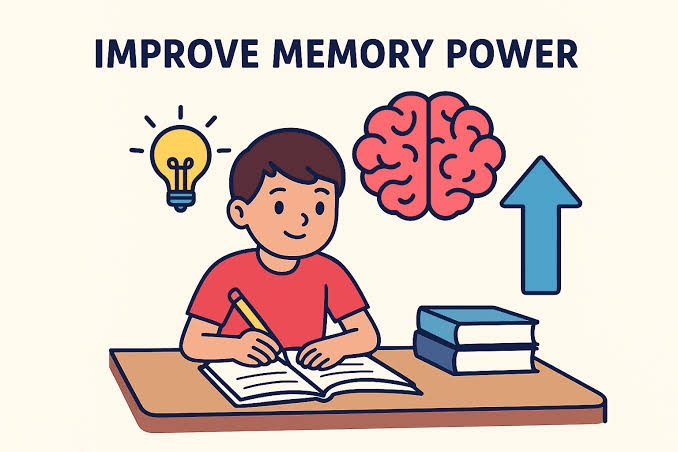
You highlight paragraphs until the page looks like a neon crime scene. You reread the same textbook chapter four times, watching the words blur into an indistinguishable wall of gray ink. Then, you close the cover, look away for ten seconds, and realize you cannot recall a single substantive idea.
And right on cue, the frustration spikes.
Why isn't this sticking? Am I just bad at learning?
Let’s cut through the noise right out of the gate: your memory isn't broken, and your brain isn't defective. What is failing you is your strategy. When students struggle to retain what they study, they treat the mind like a passive bucket that needs to be filled with repeated viewings. They think studying is an act of exposure. It isn't. Studying is an act of construction.
If you want to remember what you study, you have to stop relying on passive consumption, eliminate the emotional interference of study panic, and build a systematic framework for encoding information under pressure.
The Mental Anatomy of a Study Failure
Think about what actually happens when you sit down to study while stressed, rushed, or mentally fatigued.
Under optimal conditions, your working memory evaluates incoming data, translates it through the prefrontal cortex, and wires it into existing mental models. But introduce a looming exam deadline, low-grade performance anxiety, or the sheer boredom of repetitive reading, and the system instantly fractures.
The emotional brain—specifically the amygdala—hijacks your cognitive bandwidth. It floods your system with subtle, background static. Suddenly, your working memory is jammed with micro-distractions: worries about whether you'll pass, frustration over how slow your progress is, or physical restlessness. When a complex concept arrives on the page, there is literally no unoccupied mental RAM available to process it. You didn't forget the material because your retention is weak. You missed it because your attention was already occupied by emotional interference.
I learned this reality the hard way during my graduate studies. I had convinced myself that discipline meant brute force. I would lock myself in a room for eight-hour stretches, staring at dense theoretical texts, highlighting every other line, and punishing myself mentally whenever my focus drifted. By hour four, I was retaining almost nothing. I would read an entire page and realize I hadn't absorbed a single word, forcing me to start over.
It wasn't until I stopped treating study fatigue as a lack of willpower and started analyzing my mental execution that things changed. I realized I was entering a state of mild panic the moment a concept got difficult. That panic triggered avoidance behaviors—like mindless rereading—which created an illusion of studying while actively preventing any real encoding. Once I learned to spot the early physical signs of that frustration spike and forced myself to shift from passive reading to active, structured questioning, my retention skyrocketed. The problem was never my intelligence. The problem was my lack of a systematic mental process.
Mapping the Study Failure Points
To fix your study memory, you have to map the exact moment the system breaks down. Memory failure during learning typically manifests in one of three distinct phases: Encoding, Integration, or Retrieval.
| Failure Phase | Psychological Driver | Behavioral Manifestation | Corrective Strategy |
| Encoding Blockade | Passive rereading; low cognitive friction | Reading whole chapters without retaining a single concept. | Active recall, self-testing, and forced summarization. |
| Integration Failure | Disjointed note-taking; lack of mental models | Memorizing isolated facts without understanding how they connect. | Concept mapping, elaborative interrogation, teaching back. |
| Retrieval Breakdown | Exam panic; high-arousal trigger loops | Going blank on test day despite studying the material for hours. | Simulated pressure testing, controlled breathing, error logging. |
If you fail at the encoding stage—meaning you rely on passive methods like highlighting or rereading—you are building your academic foundation out of sand. No amount of test-day luck will save you.
Step-by-Step Correction: Building a Systematic Study Framework
You cannot out-think a disorganized study habit with more hours at your desk. You need structural control. Here is how you systematically dismantle forgetfulness by changing how you interact with study material.
1. Identify Your Frustration Thresholds
Keep an execution log for three days while you study. Every time you catch your mind wandering, every time you find yourself rereading a paragraph for the third time, or every time you feel that familiar spike of frustration, write down your exact internal state.
-
The Goal: Find the pattern. You will quickly notice that distraction and memory loss don't happen randomly. They happen when your cognitive load crosses a specific threshold or when a concept feels too difficult, triggering an unconscious desire to escape the friction. Spotting that threshold allows you to catch the mental slip before your working memory drops the data.
2. Eliminate Passive Rereading Permanently
Rereading is the most dangerous trap in education. It creates a powerful illusion of competence: the text feels familiar because you've seen it twice, so your brain tricks you into thinking you've learned it. Familiarity is not mastery.
-
The Practice: Ban rereading entirely. Read a section once with total, undivided attention. Then, close the book, look away, and force yourself to explain the core concept out loud in your own words. If you stumble or leave gaps, that is your actual data—not the text on the page. Force your brain to reconstruct the information from scratch. That friction is what builds long-term neural traces.
3. Implement Elaborative Interrogation
Memory is sticky when it is attached to things you already understand. If you try to memorize a definition in isolation, your brain treats it as foreign debris and prunes it at the first opportunity.
-
The Practice: Whenever you encounter a new concept or formula, immediately stop and ask yourself two specific questions: Why is this true? and How does this connect to what I already know? Force yourself to construct an analogy or a mental model. By linking new data to pre-existing neural architecture, you bypass the fragile working memory bottlenecks and anchor the information deep into your long-term framework.
4. Debug Exam Panic and Retrieval Failure
Many students study effectively at home, only to freeze up during an exam. This happens because the emotional state during testing (high panic, high arousal) is entirely different from the state during studying (low stress, comfortable room).
-
The Practice: Introduce managed pressure into your study routine. Do not practice testing under comfortable, open-book conditions. Set a timer, clear your desk, put away all notes, and force yourself to take practice exams under strict, uncomfortable constraints. When you make mistakes during these practice runs, log them systematically. Analyze why you missed the question: was it a knowledge gap, or did panic cloud your retrieval? Training your nervous system to stay calm under simulated pressure ensures your recall remains intact when it counts.
The Provocative Reality of Study Mastery
Let’s dismantle the comforting myth of the "natural student"—the idea that some people just read a textbook once and magically retain everything forever.
People who remember what they study are not blessed with superior biological hardware. They are simply ruthless executioners of process. They do not hide behind the comforting illusion of highlighting text or logging empty hours at a desk. They embrace the deep, uncomfortable friction of active recall, they monitor their emotional state for signs of avoidance, and they treat studying as an active engineering challenge rather than a passive chore.
When you forget what you study, you are revealing a profound mismatch between your effort and your method. You are working hard, but you are working blindly, letting frustration dictate your focus and allowing passive habits to sabotage your retention.
Stop looking for the magic note-taking app, the perfect study playlist, or the ultimate productivity hack to fix your academic performance. Your brain is fine. What needs fixing is the lack of structural rigor in how you process information. If you want to remember everything you study, you have to step up as the active director of your own attention. Notice the mental friction, abandon the comfort of passive reading, and take absolute ownership of the cognitive labor required to make knowledge stick.
- Arts
- Business
- Computers
- Oyunlar
- Health
- Home
- Kids and Teens
- Money
- News
- Personal Development
- Recreation
- Regional
- Reference
- Science
- Shopping
- Society
- Sports
- Бизнес
- Деньги
- Дом
- Досуг
- Здоровье
- Игры
- Искусство
- Источники информации
- Компьютеры
- Личное развитие
- Наука
- Новости и СМИ
- Общество
- Покупки
- Спорт
- Страны и регионы
- World

 English
 Russian
 French
 Spanish
 Portuguese
 Deutsch
 Dutch
Dutch
 Italiano
 Arabic
 Romaian
 Portuguese (Brazil)
 Greek
Greek
