
Why are mental skills important?
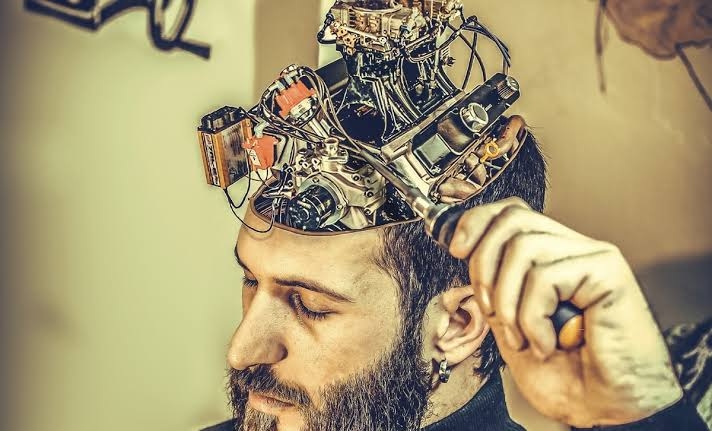
You blow a gasket over a minor error, watch your focus evaporate under pressure, or stare blankly at a screen while your brain actively refuses to cooperate.
And immediately, the self-judgment rolls in.
What is wrong with my discipline? Why can't I just control my mind?
Let’s cut through the noise right out of the gate: your lack of mental control is not a character flaw, and your inability to stay calm isn't proof that you lack willpower. What you are experiencing is a systemic breakdown in your mental skills. For decades, culture has treated mental performance like a personality trait—you either have it, or you don't. You are either born "mentally tough" or you are destined to crack under pressure.
That view is dangerously outdated.
Mental skills are not innate gifts. They are mechanical, highly structured capabilities that can be mapped, diagnosed, measured, and systematically trained just like any physical muscle. Why are mental skills important? Because without them, your technical knowledge, your hard-earned experience, and your raw intelligence are entirely useless the moment the stakes get high. If you want to stop sabotaging your own performance, you have to stop treating your mind like a mysterious black box and start treating it like a technical system that requires rigorous engineering.
The Anatomy of Mental Breakdown
Think about how you learned physical skills. If you pick up a tennis racket for the first time, you don't just step onto the court and expect to hit a professional-grade backhand. You break the movement down. You analyze your grip, your footwork, your swing path, and your follow-through. When you miss, you don't scream at yourself; you look at the technical breakdown.
Yet, when it comes to the mind, we abandon all logic.
We expect ourselves to remain perfectly calm during a high-stakes crisis, maintain laser focus for ten hours straight without a break, and process complex data while drowning in emotional frustration. And when we inevitably implode, we beat ourselves up for failing a test we never actually trained for.
Mental skills—things like emotional regulation, working memory containment, attention shifting, and performance state control—operate on exact neurological feedback loops. When you lack these skills, your emotional brain (the amygdala) hijacks your executive function (the prefrontal cortex) the second pressure spikes. You aren't weak; you are simply unskilled at managing your internal processing under load.
The Lesson of the Unraveling Professional
I learned this reality years ago while working with a high-stakes trader who was utterly baffled by his own performance drops. On paper, he was brilliant. He understood his domain inside and out, possessed world-class technical knowledge, and worked eighty-hour weeks. Yet, the moment a trade went sideways or unexpected volatility hit, he would completely lose his composure. He would chase losses, violate every risk rule he had written, and spiral into deep frustration.
For years, he tried to fix this by reading self-help books and telling himself to "stay positive." He treated his outbursts like a lack of moral fortitude.
When we finally sat down and mapped his mental execution, we discovered something entirely different. He wasn't failing because he lacked discipline. He was failing because he had zero technical awareness of his own emotional escalation curve. He had no early-warning system to catch the subtle physical tension—the tight jaw, the shallow breathing—that happened twenty minutes before an emotional explosion. He was waiting until his brain was completely flooded with adrenaline before trying to apply logic. That is like trying to put out a forest fire with a glass of water.
Once we built a structured protocol to spot his early emotional thresholds, name the specific mental error occurring in real-time, and execute a systematic reset, his entire performance profile changed. The volatility didn't stop, but his response to it became completely mechanical. That is why mental skills matter. They are the difference between reacting like a victim to your environment and executing like an engineer of your own behavior.
The True Cost of Ignoring Mental Skills
Why are mental skills important? Because technical competence has a hard ceiling if your internal operating system is riddled with bugs. When pressure rises, your brain reverts to its default evolutionary programming: fight, flight, or freeze. Without trained mental skills, you are structurally defenseless against your own survival instincts.
| Performance Domain | Unskilled Approach (Relying on "Willpower") | Skilled Approach (Systematic Execution) | Result Under Pressure |
| High-Stakes Crisis | Panic, emotional flooding, tunnel vision. | Physiological grounding, interrupter breathing, data isolation. | Maintained prefrontal access, clear decision-making. |
| Error Recovery | Ruminating on mistakes, compounding errors, rage. | Objective error logging, emotional detachment, prompt reset. | Rapid adaptation, minimal performance drag. |
| Long-Term Focus | Brute force, fighting distractions until burnout. | Attention shifting, working memory dumps, structured rest. | Sustainable energy, high retention, zero cognitive leaks. |
Notice the disparity? The unskilled individual relies entirely on hope and adrenaline. The skilled individual relies on mechanics. When adrenaline inevitably fades or spikes too high, the unskilled individual collapses.
Core Reason 1: Protection Against the Amygdala Hijack
The human brain is an evolutionary masterpiece designed primarily to keep you alive in a prehistoric wilderness, not to optimize your output in complex, high-pressure environments. When you encounter a stressful deadline, a financial loss, or a difficult interpersonal conflict, your brain treats it as a literal threat to your physical survival.
The amygdala floods your system with cortisol and adrenaline. Blood flow instantly drains away from the prefrontal cortex—the seat of logic, planning, and long-term memory—and rushes to your limbs. Your IQ effectively drops twenty points in a matter of seconds.
If you do not possess the mental skill of emotional regulation, you are entirely helpless during this biological hijack. You will say things you regret, make impulsive choices, and wonder why your brilliant strategies dissolved the moment things got hard. Mental skills give you an emergency brake to halt that biological cascade before it destroys your execution.
Core Reason 2: Elimination of Cognitive Leaks
Most people think their primary problem is a lack of information. They read more books, take more courses, and buy more tools, convinced that the missing piece is just one more data point.
They are dead wrong.
Your problem isn't a lack of information; it's a catastrophic leak of cognitive bandwidth. When your mind is cluttered with unresolved frustrations, background anxieties, and poor attention management, your working memory fills up with static. You are trying to run a high-performance program on a computer running fifty background applications of emotional noise.
Mental skills like attention shifting and working memory containment act as a firewall. They teach you how to strip away the mental clutter, isolate the immediate objective, and direct 100% of your available processing power toward the task at hand. Without these skills, you can study for ten hours and retain nothing, or work all day and produce nothing of value.
Core Reason 3: Building True Consistency Under Load
Anyone can perform well when conditions are ideal. Anyone can stay calm when the project is easy, the timeline is wide open, and everything is going according to plan. That is not competence; that is just comfort.
The true test of a professional is what they look like when everything goes wrong.
When the timeline collapses, the market turns against you, or the unexpected crisis hits, your baseline habits evaporate. You do not rise to the occasion; you sink to the level of your training. If your mental skills are unbuilt, you will fold under that weight every single time. Mental skills provide the structural scaffolding that keeps your performance stable when the external environment becomes chaotic. They ensure your floor is high, even when your ceiling feels out of reach.
The Provocative Reality of Mental Mastery
Let’s dismantle the ultimate comforting illusion: the belief that you are a helpless victim of your own psychology.
When people struggle with consistency, focus, or emotional control under pressure, they love to blame their wiring. They say things like, "That's just how my brain is built," or "I've always been an anxious person." That is a cop-out. It is a psychological defense mechanism designed to protect you from the uncomfortable labor of taking absolute responsibility for your own mind.
Mental skills require maintenance. They require sweat, failure, and the brutal honesty of looking at your own mistakes without making excuses. If your car engine starts sputtering, you don't stare at the dashboard and say, "Well, I guess this car just has a bad personality." You pop the hood, look for the oil leak, and fix the mechanical failure.
It is time to pop the hood on your own thinking. Stop waiting for motivation to strike, stop hoping that confidence will magically descend upon you, and stop treating your mental lapses as moral failures. Understand why mental skills matter, build them through deliberate practice, and take absolute ownership of the internal machinery. Watch how quickly the external results begin to change when you finally master the mind that drives them.
- Arts
- Business
- Computers
- Oyunlar
- Health
- Home
- Kids and Teens
- Money
- News
- Personal Development
- Recreation
- Regional
- Reference
- Science
- Shopping
- Society
- Sports
- Бизнес
- Деньги
- Дом
- Досуг
- Здоровье
- Игры
- Искусство
- Источники информации
- Компьютеры
- Личное развитие
- Наука
- Новости и СМИ
- Общество
- Покупки
- Спорт
- Страны и регионы
- World

 English
 Russian
 French
 Spanish
 Portuguese
 Deutsch
 Dutch
Dutch
 Italiano
 Arabic
 Romaian
 Portuguese (Brazil)
 Greek
Greek
