
What Are the Biggest Expenses in Retail?
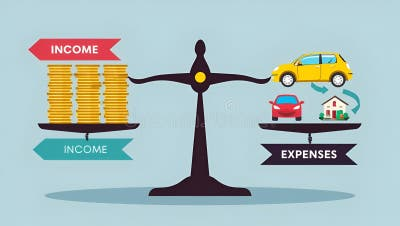
Walk into almost any retail store and the costs are invisible.
Customers see neatly arranged merchandise. They notice attractive displays, friendly employees, polished websites, mobile apps, convenient checkout experiences, and perhaps a carefully curated soundtrack playing softly overhead.
What they do not see is the economic machinery operating behind the scenes.
The inventory arriving before dawn.
The warehouse leases.
The payroll obligations.
The software subscriptions.
The shipping invoices.
The returns processing centers.
The utility bills.
Retail has always been a business of visible simplicity and hidden complexity.
That complexity matters because retail profitability is often determined not by how much a retailer sells but by how effectively it manages its expenses. Revenue attracts attention. Expenses determine survival.
This is one of the most persistent misconceptions in retail. When a shopper sees a product selling for $100, the assumption is often that the retailer keeps most of that amount. In reality, that $100 may already have dozens of competing claims against it before any profit materializes.
The retailer must pay for the merchandise itself. Then labor. Then rent. Then marketing. Then technology. Then logistics. Then returns. Then administrative functions. And the list continues.
Understanding retail expenses is not merely an accounting exercise. It is a way of understanding how retail businesses actually work.
And perhaps more importantly, why some retailers thrive while others struggle despite generating similar levels of revenue.
Why Retail Expenses Matter More Than Ever
Retail has always operated within narrow margins.
That reality creates a unique challenge.
Small shifts in expenses can have disproportionately large effects on profitability.
Imagine a retailer operating with a net profit margin of 4%.
If operating expenses increase by just two percentage points of revenue, profitability can be cut in half.
The math becomes unforgiving remarkably quickly.
This is why experienced retail leaders spend as much time managing costs as they do pursuing growth.
Growth attracts headlines.
Expense management sustains businesses.
The most successful retailers understand both.
The Largest Retail Expense Categories
While cost structures vary by category, format, and business model, most retailers allocate spending across several major areas.
The relative importance of each category differs, but together they shape overall profitability.
Comparison of Major Retail Expense Categories
| Expense Category | Typical Share of Revenue | Strategic Importance |
|---|---|---|
| Cost of Goods Sold (COGS) | 50%–80% | Extremely High |
| Labor Costs | 10%–25% | Extremely High |
| Rent & Occupancy | 3%–15% | High |
| Marketing & Advertising | 2%–12% | High |
| Logistics & Fulfillment | 3%–15% | Increasingly High |
| Technology & Software | 1%–8% | Growing |
| Returns & Reverse Logistics | 1%–10% | Growing |
| Administrative Expenses | 1%–5% | Moderate |
What stands out immediately is that retail profitability is influenced by far more than merchandise costs.
Retailers succeed when they manage the entire ecosystem effectively.
Not just one component.
Cost of Goods Sold: The Largest Expense
For most retailers, the largest expense by far is the cost of goods sold, commonly known as COGS.
This represents the direct cost of acquiring or producing merchandise.
COGS typically includes:
- Wholesale merchandise costs
- Manufacturing expenses
- Freight-in charges
- Import duties
- Supplier fees
The relationship between sales and COGS determines gross margin.
And gross margin often establishes the financial foundation upon which everything else rests.
A retailer with weak product economics begins every month at a disadvantage.
Conversely, retailers with strong sourcing capabilities often enjoy meaningful competitive advantages.
Why COGS Varies So Widely
Not all retail categories operate under the same economics.
Luxury retailers often maintain gross margins exceeding 60%.
Grocery retailers may operate with margins closer to 25%.
Both can be successful.
The difference lies in volume, customer expectations, and pricing power.
Customers purchasing designer handbags are evaluating very different value propositions than customers purchasing milk and bread.
The economics follow accordingly.
Labor: Retail’s Most Human Expense
Labor represents one of retail’s largest and most complex expenses.
Unlike inventory, labor directly influences customer experience.
Reducing labor costs may improve short-term profitability.
But it can also damage service quality, conversion rates, and customer loyalty.
That tension makes labor management particularly challenging.
Labor Costs Include:
- Store associates
- Managers
- Distribution center staff
- Customer service representatives
- Corporate employees
- Benefits and payroll taxes
Retailers must continuously balance efficiency with service.
Too many employees create unnecessary expense.
Too few create customer frustration.
The optimal point is rarely obvious.
The Productivity Question
One of the most interesting shifts in modern retail involves measuring labor productivity rather than labor cost alone.
Highly productive employees often generate value that exceeds their compensation.
The focus therefore becomes:
How much revenue, loyalty, and customer satisfaction does labor create?
That is a more useful question than simply asking how much labor costs.
Rent and Occupancy Expenses
Retail remains deeply connected to physical space.
Even retailers with substantial e-commerce operations often maintain stores, warehouses, offices, or fulfillment centers.
Occupancy costs include:
- Lease payments
- Property taxes
- Insurance
- Maintenance
- Utilities
- Common area charges
Historically, store location represented one of retail’s most powerful competitive advantages.
Prime real estate drove traffic.
Traffic drove sales.
Today, the equation has become more nuanced.
Retailers increasingly evaluate whether physical locations contribute sufficient value relative to their costs.
The question is no longer simply, “Can we afford this location?”
The question is, “Does this location create enough value to justify its expense?”
Marketing: The Cost of Being Discovered
Retailers cannot sell products customers never encounter.
Marketing therefore remains essential.
Yet marketing has become increasingly expensive and increasingly measurable.
Major marketing expenses include:
- Digital advertising
- Search marketing
- Social media campaigns
- Email programs
- Influencer partnerships
- Traditional media
- Loyalty programs
The challenge is not spending money.
The challenge is spending it effectively.
Customer Acquisition Costs Matter
Many retailers focus heavily on revenue generated through marketing.
The more revealing metric is often customer acquisition cost.
If acquiring a customer costs nearly as much as the customer ultimately spends, profitability suffers regardless of revenue growth.
Sophisticated retailers therefore evaluate marketing through a profitability lens rather than a visibility lens.
Logistics and Fulfillment: The Quiet Giant
For years, logistics remained largely invisible to consumers.
Today it has become central to retail economics.
Customers expect:
- Fast shipping
- Reliable delivery
- Flexible fulfillment options
- Convenient returns
Meeting those expectations requires substantial investment.
Logistics expenses often include:
- Warehousing
- Transportation
- Packaging
- Distribution networks
- Last-mile delivery
These costs can escalate quickly.
Particularly when retailers compete aggressively on speed and convenience.
The Fulfillment Paradox
Customers appreciate fast shipping.
They rarely want to pay for it.
This creates one of retail’s most interesting challenges.
Retailers must absorb significant fulfillment expenses while maintaining competitive prices.
Balancing those objectives remains difficult.
Technology: The Growing Expense Category
Technology once occupied a relatively small portion of retail budgets.
That is no longer true.
Modern retailers depend on extensive technology ecosystems.
Common technology expenses include:
- E-commerce platforms
- Point-of-sale systems
- Inventory management software
- Data analytics tools
- Customer relationship management systems
- Cybersecurity investments
- Artificial intelligence applications
Technology improves efficiency.
It also introduces ongoing costs.
The question is not whether retailers should invest.
The question is whether those investments generate meaningful returns.
Returns: Retail’s Hidden Profitability Challenge
Returns represent one of retail’s most underestimated expenses.
Many customers view returns as simple transactions.
For retailers, they are often remarkably costly.
A returned item may require:
- Transportation
- Inspection
- Repackaging
- Restocking
- Markdown adjustments
Sometimes returned merchandise cannot be resold at full price.
Sometimes it cannot be resold at all.
Why Returns Matter More Today
E-commerce has increased return activity substantially.
Customers often purchase multiple sizes, colors, or options with the intention of returning some portion of the order.
This behavior creates convenience for shoppers.
It creates costs for retailers.
Managing returns efficiently has become a significant profitability driver.
Administrative and Corporate Expenses
Not every retail expense directly touches customers.
Corporate functions support operations behind the scenes.
These expenses include:
- Finance departments
- Human resources
- Legal teams
- Executive leadership
- Compliance programs
- Strategic planning
While these costs may appear indirect, they remain necessary.
The challenge lies in ensuring organizational complexity does not outpace organizational value.
Large administrative structures can create inefficiencies if not managed carefully.
A Lesson I Learned About Retail Expenses
Several years ago, I analyzed two retailers operating within the same category.
At first glance, their performance appeared remarkably similar.
Revenue levels were comparable.
Store counts were similar.
Customer demographics overlapped.
Yet one retailer consistently produced stronger profits.
The difference was not merchandise.
It was expense discipline.
The more profitable retailer maintained tighter inventory controls, better labor productivity, and lower fulfillment costs. None of these advantages generated headlines. Customers rarely noticed them.
But collectively, they transformed financial performance.
That experience reinforced an important lesson.
Retail success often depends less on dramatic strategic moves and more on managing hundreds of operational details exceptionally well.
Profitability emerges from accumulation.
Not magic.
Why Cutting Expenses Is Not Always the Answer
When profitability comes under pressure, retailers often look first to cost reductions.
Sometimes that response is appropriate.
Sometimes it is destructive.
Consider customer service.
Reducing staffing may lower expenses.
It may also increase wait times, reduce conversion rates, and weaken loyalty.
Similarly, reducing marketing budgets may improve short-term earnings while undermining future growth.
The most effective retailers distinguish between expenses that create value and expenses that merely consume resources.
The objective is optimization.
Not indiscriminate reduction.
The Most Profitable Retailers Manage Expense Tradeoffs
This is where retail becomes especially fascinating.
Every major expense category involves tradeoffs.
Higher labor costs may improve service.
Greater technology investment may increase efficiency.
Additional marketing spending may strengthen customer acquisition.
More inventory may improve availability.
Less inventory may improve cash flow.
There are rarely perfect answers.
Instead, retailers continuously balance competing priorities.
The winners are often those that understand these tradeoffs more clearly than competitors.
Conclusion: Retail Expenses Tell the Real Story
Customers experience retail through products, prices, and service.
Retail executives experience retail through economics.
And economics begins with expenses.
The provocative truth is that most retail failures are not caused by a lack of revenue. They are caused by an inability to manage the costs required to generate that revenue. A retailer can attract customers, expand locations, and increase sales while simultaneously undermining profitability through inefficient operations.
That reality makes expense management one of retail’s most important disciplines.
Not because retailers should obsessively cut costs. Quite the opposite. The goal is understanding which expenses create value and which do not. Inventory should generate sales. Labor should improve experiences. Marketing should acquire profitable customers. Technology should enhance efficiency.
When expenses align with value creation, profitability follows.
When they do not, growth becomes increasingly fragile.
And perhaps that is the central lesson of retail economics: revenue may reveal how much business a retailer does, but expenses reveal how well that business is actually run.
- Arts
- Business
- Computers
- Jocuri
- Health
- Home
- Kids and Teens
- Money
- News
- Personal Development
- Recreation
- Regional
- Reference
- Science
- Shopping
- Society
- Sports
- Бизнес
- Деньги
- Дом
- Досуг
- Здоровье
- Игры
- Искусство
- Источники информации
- Компьютеры
- Личное развитие
- Наука
- Новости и СМИ
- Общество
- Покупки
- Спорт
- Страны и регионы
- World

 English
 Russian
 French
 Spanish
 Portuguese
 Deutsch
 Turkish
 Dutch
Dutch
 Italiano
 Arabic
 Portuguese (Brazil)
 Greek
Greek
