
Does printing money cause inflation?
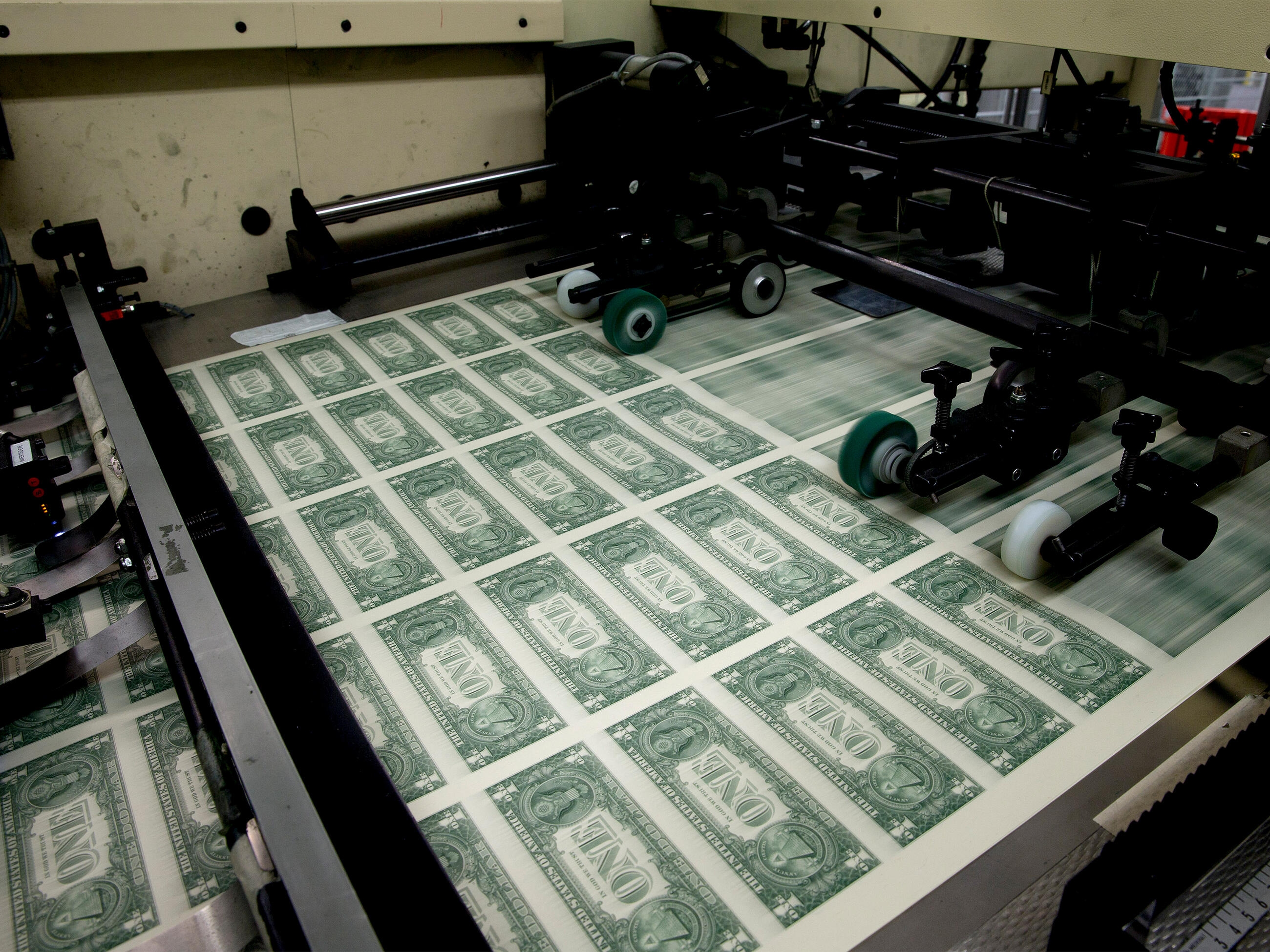
Does Printing Money Cause Inflation?
Inflation is one of the most discussed topics in economics, and a common belief is that simply "printing money" causes prices to rise. While there is truth to this idea, the relationship is more complex than many people realize. Whether printing money leads to inflation depends on how much money is created, why it is created, and the overall condition of the economy.
This article explains what printing money means, how it affects inflation, and why it does not always result in higher prices.
What Does "Printing Money" Mean?
The phrase "printing money" originally referred to physically producing more paper currency. Today, however, most money is created electronically by central banks. When a central bank wants to increase the money supply, it typically buys government bonds or other financial assets from banks and investors. This process injects new money into the financial system.
Modern central banks, such as the U.S. Federal Reserve, the European Central Bank, and the Bank of England, use this ability to support economic growth, stabilize financial markets, and achieve their inflation targets.
The Basic Theory
According to economic theory, increasing the money supply faster than the economy's ability to produce goods and services can cause inflation.
Here's the basic logic:
-
More money enters the economy.
-
Consumers and businesses have more money to spend.
-
Demand for goods and services increases.
-
If supply cannot keep up, businesses raise prices.
-
Overall inflation rises.
This idea is summarized by the famous saying, "Too much money chasing too few goods."
When Printing Money Causes Inflation
Printing money is most likely to create inflation when:
The Economy Is Already Operating at Full Capacity
If factories, workers, and resources are already fully employed, producing more goods becomes difficult. Additional money mainly increases demand rather than supply, pushing prices upward.
Money Creation Is Excessive
Small increases in the money supply are often manageable. However, creating money at an extremely rapid pace can overwhelm the economy and sharply reduce the purchasing power of the currency.
Government Spending Is Financed by Newly Created Money
If governments repeatedly fund large budget deficits by having the central bank create new money instead of borrowing or raising taxes, inflationary pressures can build quickly.
Hyperinflation: An Extreme Example
History provides several examples where excessive money creation caused hyperinflation.
Germany (1920s)
After World War I, Germany printed enormous amounts of money to pay war reparations and government expenses. Prices rose so rapidly that workers were often paid multiple times per day, and money lost value almost as quickly as it was received.
Zimbabwe (2000s)
Zimbabwe experienced one of history's worst hyperinflation episodes after the government dramatically expanded the money supply while economic production collapsed. Prices doubled at astonishing rates, rendering the national currency nearly worthless.
Venezuela (2010s)
Economic decline, falling oil revenues, and extensive money creation contributed to severe inflation. As confidence in the currency disappeared, people increasingly relied on foreign currencies for everyday transactions.
These cases demonstrate that uncontrolled money creation can indeed trigger devastating inflation.
Why Printing Money Doesn't Always Cause Inflation
Although excessive money creation can cause inflation, it does not always do so.
Weak Demand
During recessions, households often save more and spend less. Businesses may delay investment, and banks may lend cautiously. In these situations, newly created money may remain within the financial system instead of circulating rapidly through the economy.
Unused Productive Capacity
If factories are idle and unemployment is high, businesses can increase production without raising prices significantly. More goods and services help meet additional demand.
Low Money Velocity
Money velocity measures how quickly money changes hands.
Even if the money supply increases, inflation may remain low if consumers and businesses hold onto cash instead of spending it. After the 2008 global financial crisis, many developed countries expanded their money supply substantially, yet inflation remained relatively modest for years because economic activity was weak.
Quantitative Easing and Inflation
One modern form of money creation is quantitative easing (QE).
Under QE, central banks purchase government bonds and other financial assets to lower interest rates and encourage lending and investment.
Many people expected QE programs after the 2008 financial crisis to produce high inflation. Instead, inflation stayed relatively low in many advanced economies for over a decade.
Why?
-
Banks held large reserves instead of aggressively increasing lending.
-
Consumers remained cautious after the financial crisis.
-
Global competition helped keep prices low.
-
Productivity improvements offset some inflationary pressures.
This experience showed that increasing the money supply alone does not automatically create high inflation.
The COVID-19 Pandemic
The COVID-19 pandemic offers another useful example.
Many governments introduced massive fiscal stimulus while central banks expanded their balance sheets through asset purchases. Initially, inflation remained relatively low because lockdowns reduced spending opportunities.
As economies reopened, however, several factors combined:
-
Strong consumer demand.
-
Large household savings accumulated during lockdowns.
-
Supply chain disruptions.
-
Labor shortages.
-
Higher energy prices.
The combination of increased demand and constrained supply led to elevated inflation across many countries.
Although money creation played a role, it was only one factor among several contributing causes.
The Importance of Expectations
Inflation also depends on public expectations.
If businesses believe costs will continue rising, they may increase prices in advance. Workers who expect higher inflation often demand larger wage increases. These behaviors can reinforce inflation over time.
For this reason, central banks work hard to maintain public confidence that inflation will remain under control.
Central Banks Aim for Moderate Inflation
Most central banks do not try to eliminate inflation entirely. Instead, many target around 2% annual inflation.
A small amount of inflation can:
-
Encourage spending and investment.
-
Reduce the risk of deflation.
-
Support economic growth.
-
Provide flexibility for wages and prices to adjust.
When inflation rises too far above the target, central banks usually respond by increasing interest rates and slowing money growth.
Other Causes of Inflation
Printing money is only one possible cause of inflation. Other important factors include:
-
Rising production costs, such as higher wages or energy prices.
-
Supply chain disruptions.
-
Strong consumer demand.
-
Currency depreciation, making imports more expensive.
-
Natural disasters or geopolitical events that reduce supply.
Inflation often results from several forces acting simultaneously rather than a single cause.
Common Misconceptions
"Any increase in the money supply causes inflation."
Not necessarily. If economic output grows alongside the money supply, inflation may remain stable.
"Central banks can print unlimited money without consequences."
They technically can create large amounts of money, but doing so excessively risks undermining confidence in the currency and generating high inflation.
"Inflation is always caused by governments."
While government policies can contribute, inflation can also arise from private-sector demand, supply shocks, global commodity prices, and international events.
Conclusion
Printing money can cause inflation, but it is not an automatic or immediate outcome. Inflation generally occurs when the money supply grows faster than the economy's ability to produce goods and services. If additional money leads to greater spending while supply remains limited, prices tend to rise.
However, during periods of weak demand, high unemployment, or low lending activity, expanding the money supply may have little effect on inflation. The experiences following the 2008 financial crisis and during the COVID-19 pandemic demonstrate that money creation interacts with many other economic forces.
Ultimately, inflation depends not only on how much money is created but also on how people spend it, how businesses respond, the economy's productive capacity, and public confidence in the currency. Responsible monetary policy seeks to balance these factors, supporting economic growth while keeping inflation under control.
- Arts
- Business
- Computers
- Spellen
- Health
- Home
- Kids and Teens
- Money
- News
- Personal Development
- Recreation
- Regional
- Reference
- Science
- Shopping
- Society
- Sports
- Бизнес
- Деньги
- Дом
- Досуг
- Здоровье
- Игры
- Искусство
- Источники информации
- Компьютеры
- Личное развитие
- Наука
- Новости и СМИ
- Общество
- Покупки
- Спорт
- Страны и регионы
- World

 English
 Russian
 French
 Spanish
 Portuguese
 Deutsch
 Turkish
 Italiano
 Arabic
 Romaian
 Portuguese (Brazil)
 Greek
Greek
