
What causes inflation?
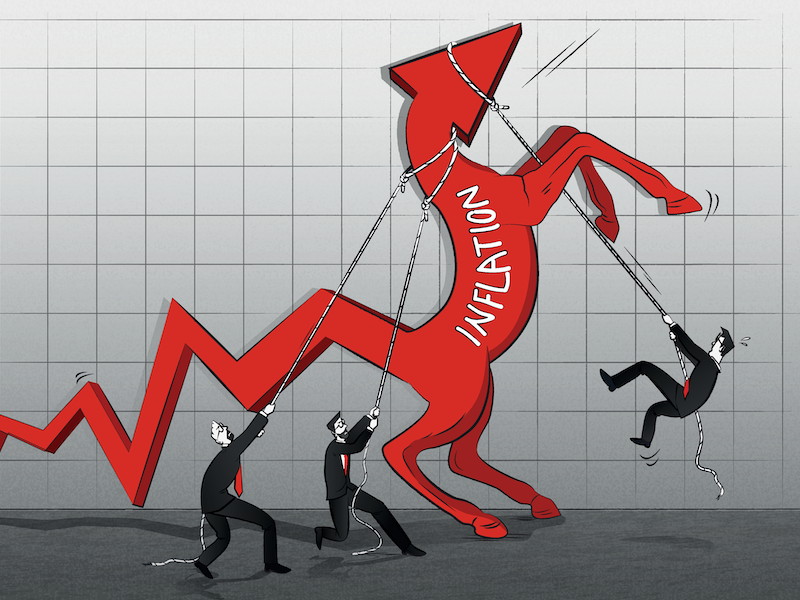
What Causes Inflation?
Inflation is the rate at which the general level of prices for goods and services rises over time, reducing the purchasing power of money. While moderate inflation is a normal feature of a healthy economy, high or unpredictable inflation can create financial uncertainty for households, businesses, and governments. Understanding what causes inflation helps explain why prices change and how policymakers respond.
In reality, inflation rarely has a single cause. Instead, it often results from a combination of economic forces, including changes in demand, production costs, money supply, and expectations.
Demand-Pull Inflation
One of the most common causes of inflation is demand-pull inflation, which occurs when demand for goods and services grows faster than the economy's ability to produce them.
When consumers have more disposable income, businesses invest more, or governments increase spending, total demand rises. If manufacturers and service providers cannot increase supply quickly enough, prices begin to increase.
For example, imagine an economy where consumers suddenly spend more because wages have increased or borrowing has become cheaper due to lower interest rates. Retailers may sell out of products faster than they can restock them, leading to higher prices.
Common triggers of demand-pull inflation include:
-
Strong economic growth
-
Rising household incomes
-
Low interest rates
-
Increased government spending
-
High consumer confidence
Demand-pull inflation is often associated with expanding economies and low unemployment.
Cost-Push Inflation
Inflation can also occur when the cost of producing goods and services increases. This is known as cost-push inflation.
Businesses facing higher production costs often pass those expenses on to customers through higher prices.
Several factors can increase production costs:
Rising Wage Costs
When workers receive significant wage increases that are not matched by productivity gains, businesses experience higher labor costs.
For example, restaurants, manufacturers, and retailers may increase menu prices or product prices to offset higher payroll expenses.
Higher Raw Material Prices
The prices of essential commodities such as oil, natural gas, metals, and agricultural products can significantly affect inflation.
Oil is especially important because it influences transportation, manufacturing, electricity generation, and logistics. When oil prices rise sharply, the costs of many goods and services tend to increase.
Supply Chain Disruptions
Events such as pandemics, wars, natural disasters, or shipping bottlenecks can reduce the availability of products and raw materials.
Limited supply combined with steady demand pushes prices upward.
For example, shortages of computer chips have previously increased the prices of automobiles and electronics.
Expansion of the Money Supply
Another important cause of inflation is rapid growth in the money supply.
According to monetary theory, if the amount of money in circulation grows faster than the production of goods and services, more money competes for the same quantity of products. This imbalance can push prices higher.
Central banks influence the money supply by:
-
Setting interest rates
-
Buying or selling government securities
-
Adjusting reserve requirements for banks
-
Using other monetary policy tools
While increasing the money supply can support economic growth during recessions, excessive expansion over long periods may contribute to inflation.
Inflation Expectations
Inflation is also influenced by what people expect to happen in the future.
If businesses believe prices will continue rising, they may increase prices today to protect future profits.
Similarly, workers expecting higher living costs may demand larger wage increases. Businesses then raise prices to cover higher wages, potentially creating a wage-price spiral.
Because expectations can become self-reinforcing, central banks place significant importance on maintaining public confidence that inflation will remain under control.
Exchange Rate Changes
A country's exchange rate can affect inflation, particularly if it imports large quantities of goods.
When a nation's currency weakens against foreign currencies:
-
Imported goods become more expensive.
-
Businesses pay more for imported raw materials.
-
Consumers face higher prices on foreign products.
These higher import costs can spread throughout the economy, increasing overall inflation.
Conversely, a stronger currency can help reduce imported inflation by making foreign goods cheaper.
Government Policies
Government actions can also contribute to inflation.
Increased Public Spending
Large government spending programs can stimulate economic demand. If spending grows faster than the economy's productive capacity, inflationary pressures may emerge.
Higher Taxes
Taxes on businesses, fuel, imports, or products can increase production costs, which businesses may pass on through higher prices.
Regulations
New regulations that significantly increase compliance or production costs may also contribute to inflation, although their effects are usually smaller than broader economic forces.
Supply Shocks
Unexpected events that reduce supply are known as supply shocks.
Examples include:
-
Natural disasters
-
Wars and geopolitical conflicts
-
Energy shortages
-
Crop failures
-
Global pandemics
These events reduce the availability of goods while demand remains relatively stable, causing prices to rise.
The energy crises of the 1970s are classic examples of supply-shock inflation, as rapidly rising oil prices affected nearly every sector of the economy.
Imported Inflation
Countries that rely heavily on imports can experience inflation originating from abroad.
If foreign manufacturers increase prices or transportation costs rise, importing countries may pay more for:
-
Food
-
Electronics
-
Clothing
-
Machinery
-
Energy
These higher import costs often reach consumers through higher retail prices.
Excessive Credit Growth
Easy access to credit can encourage households and businesses to spend more.
When banks lend aggressively and borrowing costs remain low, consumers may purchase more homes, cars, and other goods. Increased spending can boost overall demand and contribute to inflation if supply cannot keep pace.
This is one reason central banks often raise interest rates when inflation becomes too high: higher borrowing costs tend to reduce spending and slow price increases.
Sector-Specific Shortages
Sometimes inflation begins in only one part of the economy.
Housing shortages, labor shortages, or limited production capacity in certain industries can cause prices to rise rapidly in those sectors.
Over time, these higher costs may spread to other industries, contributing to broader inflation.
For example:
-
Limited housing supply raises rents.
-
Higher rents increase business operating costs.
-
Businesses raise prices for goods and services.
Global Factors
Modern economies are highly interconnected.
Inflation can spread across countries due to:
-
Rising global commodity prices
-
International shipping costs
-
Trade restrictions
-
Exchange rate movements
-
Geopolitical tensions
Because businesses source materials worldwide, disruptions in one region can affect prices globally.
Multiple Causes Often Occur Together
Inflation is rarely driven by a single factor. More commonly, several forces reinforce each other.
For example:
-
Consumers increase spending after receiving higher wages.
-
Energy prices rise because of geopolitical tensions.
-
Supply chains experience disruptions.
-
Businesses raise prices to offset higher costs.
-
Workers request additional wage increases.
-
Inflation expectations become entrenched.
Together, these factors can produce sustained inflation that is difficult to reduce quickly.
How Central Banks Respond
Most central banks aim to keep inflation low and stable, often targeting around 2% annually.
To control inflation, they may:
-
Raise interest rates
-
Reduce money supply growth
-
Slow credit expansion
-
Communicate future policy to influence expectations
Higher interest rates generally reduce borrowing and spending, easing demand and helping bring inflation back toward target.
Conclusion
Inflation arises from a complex interaction of supply, demand, monetary conditions, production costs, and public expectations. Demand-pull inflation occurs when spending outpaces production, while cost-push inflation results from rising production expenses such as wages, energy, and raw materials. Other contributors include money supply growth, exchange rate movements, supply shocks, government policies, imported inflation, and changing expectations.
Understanding these causes is essential for consumers, investors, businesses, and policymakers. Although some inflation is considered normal in a growing economy, keeping it under control is crucial for maintaining purchasing power, economic stability, and long-term sustainable growth.
- Arts
- Business
- Computers
- Juegos
- Health
- Home
- Kids and Teens
- Money
- News
- Personal Development
- Recreation
- Regional
- Reference
- Science
- Shopping
- Society
- Sports
- Бизнес
- Деньги
- Дом
- Досуг
- Здоровье
- Игры
- Искусство
- Источники информации
- Компьютеры
- Личное развитие
- Наука
- Новости и СМИ
- Общество
- Покупки
- Спорт
- Страны и регионы
- World

 English
 Russian
 French
 Portuguese
 Deutsch
 Turkish
 Dutch
Dutch
 Italiano
 Arabic
 Romaian
 Portuguese (Brazil)
 Greek
Greek
