
How do I eliminate distractions?
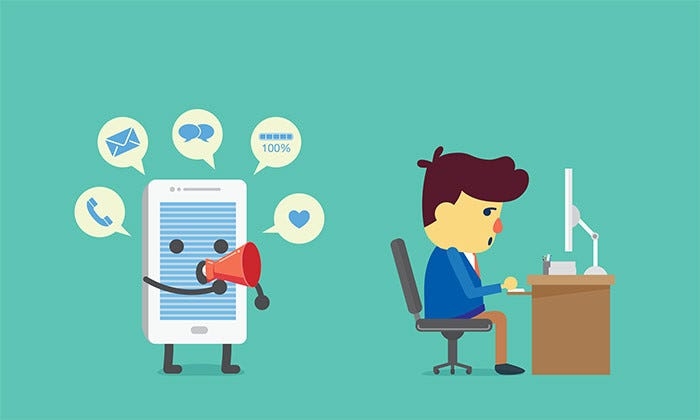
You sit down at your desk with grand intentions of conquering a complex task, ready to lock into deep work. You open the document. You type three words. Then, as if possessed by an invisible force, your thumb twitches, your hand reaches for your phone, and five minutes vanish into an endless scroll of algorithmic noise.
You snap back, cursing your own lack of discipline.
What is wrong with my willpower? Why can't I just block out all these distractions?
Let’s cut through the noise right out of the gate: your inability to eliminate distractions is not a character flaw, and your constant vulnerability to interruption is not proof that you lack moral fiber. For decades, culture has treated distraction like an external enemy—a swarm of notifications, social media pings, and environmental noise that you must fight off with an ironclad shield of pure grit.
That view is dangerously backward.
Distraction is not an external plague. It is an internal symptom. It is the mechanical output of an unmanaged emotional threshold, a leaky working memory, and a poorly engineered operational environment. If you want to stop sabotaging your output, you have to stop treating your mind like a mysterious black box and start treating it like a technical system that requires rigorous architecture. How do you eliminate distractions? Let's break down the foundational engineering required to stop reacting to the static and start executing with absolute precision.
The Anatomy of an External Illusion
Think about how you evaluate a physical space when it keeps malfunctioning. If a factory assembly line keeps jamming, you don't stand at the end of the belt and angrily swat away the broken parts as they fly past. You trace the jam back to its source. You look at the gears, the calibration, the sensors, and the flow of materials. You recognize that the chaos at the end of the line is merely a downstream result of a mechanical failure upstream.
Yet, when it comes to human attention, we completely abandon all logic.
We sit at a desk with our phones face-up, thirty browser tabs open, email notifications chiming every ninety seconds, and our working memory overloaded with twenty half-formed tasks. And when our concentration inevitably splinters, we blame the notifications. We scream at the phone. We curse the apps. We treat the distraction as an external attacker rather than an invited guest.
Distractions operate on exact neurological feedback loops. When you lack structural boundary control, your emotional brain (the amygdala) and your novelty-seeking reward pathways hijack your executive function (the prefrontal cortex) the second a task crosses a threshold of friction or exhaustion. You aren't weak; you are simply leaving your front door wide open and wondering why the wind keeps blowing through your house.
The Lesson of the Overwhelmed Analyst
I learned this reality years ago while working with a senior financial analyst who was utterly convinced that his office environment was destroying his career. On paper, he was brilliant. He understood complex modeling inside and out, possessed world-class technical knowledge, and worked eighty-hour weeks. Yet, every time he tried to build a major valuation model, he would get hijacked. A Slack message would pop up, an email notification would chime, or a coworker would drop by his desk. He would pivot instantly, abandoning his model to fight the new fire, and spend the entire day reacting to everybody else's priorities.
For years, he tried to fix this by wearing noise-canceling headphones, putting a "Do Not Disturb" sign on his cubicle, and writing angry notes in his journal about his coworkers' lack of respect for his time. He treated his distraction problem entirely as an external management issue.
When we finally sat down and mapped his mental execution, we discovered something entirely different. He wasn't failing because his environment was loud. He was failing because his own nervous system was actively seeking those interruptions. The moment his valuation model hit a complex, ambiguous hurdle, his brain experienced a subtle spike of negative emotion—boredom, frustration, or fear of making an error. That emotional friction triggered an immediate escape reflex. The Slack ping wasn't an interruption; it was a lifeboat. It gave his brain a socially acceptable excuse to run away from the difficult cognitive work.
Once we built a structured protocol to spot that emotional friction point, establish hard environmental perimeters, and name the specific avoidance occurring in real-time, his entire output profile changed. The notifications didn't stop coming, but his response to them became completely mechanical. That is what true distraction elimination actually looks like in action.
The Taxonomy of Distraction Mechanics
To understand how to eliminate distractions, you have to look past vague productivity hacks and examine concrete behavioral and environmental mechanics. Here is how the core elements of distraction compare across different operational approaches.
| Distraction Dimension | The Unskilled Approach (Willpower-Dependent) | The Skilled Approach (Mechanically Engineered) | Corrective Technical Protocol |
| Environmental Control | Keeping phone nearby while trying to rely on "mental discipline" to ignore it. | Stripping the environment of all alternate stimuli before starting execution. | Physical relocation, device lockdown apps, phone placed in another room. |
| Handling Internal Resistance | Blaming notifications or coworkers when focus breaks under stress. | Recognizing emotional avoidance as a data point; pausing and staying with the task. | Threshold mapping, friction pauses, process documentation. |
| Working Memory Management | Keeping twenty browser tabs open to "reference later" while working. | Maintaining a strict single-channel execution rule with zero open loops. | Brain dumps, single-window workflows, capture pads. |
| Communication Boundaries | Being perpetually accessible and reactive to every inbound ping. | Operating in asynchronous communication blocks with defined availability windows. | Scheduled communication slots, explicit team agreements, auto-responders. |
Notice the structural divide? The unskilled approach relies entirely on hope and brute-force resistance. The skilled approach relies on environmental and systemic architecture. When stress spikes or fatigue sets in, the brute-force method collapses instantly.
Step-by-Step Protocol: Engineering Your Environment
You cannot read your way into an undistracted life. You have to build it through deliberate, unyielding structural changes. Here is how you systematically upgrade your operational environment to eliminate distractions at the root.
1. Map Your Distraction Triggers and Emotional Textures
You cannot eliminate what you do not measure. Most people go through the workday reacting blindly to interruptions, treating every distraction as a random act of God.
-
The Practice: For three days, keep an execution log. Whenever you get distracted—whether by a phone notification, a wandering thought, or a sudden urge to check the news—write down three things: the exact minute mark, the physical tool or thought that caught your attention, and your internal emotional state right before the split (boredom, confusion, fatigue, anxiety).
-
The Goal: Find your patterns. Distraction is remarkably predictable. Once you can predict when and why you reach for escape, you can stop fighting the symptom and fix the upstream trigger.
2. Implement Radical Environmental Quarantine
If you keep your phone on your desk face-up, you are losing cognitive bandwidth even if it never rings. The mere presence of a smartphone demands constant, low-grade executive inhibition from your prefrontal cortex as it forces itself not to look at it.
-
The Practice: Before you begin a deep work session, execute a mandatory physical quarantine of your workspace. Your phone goes into a drawer in another room on silent. Your browser is stripped down to a single window containing only the application required for the task. All communication apps are closed entirely. You do not negotiate with yourself about keeping one tab open "just in case." You engineer a pristine, sterile environment where distraction is physically impossible without getting up out of your chair.
3. Externalize Working Memory to Prevent Internal Loops
As you attempt to work without external interruptions, your own brain will often become your worst distributor of noise. Random thoughts about groceries, household chores, or unrelated projects will bubble up to the surface, trying to hijack your attention.
-
The Practice: Keep a physical capture pad sitting directly beside your keyboard. The instant an intrusive thought or a non-urgent task enters your mind during execution, write it down on the pad in three words or less, and immediately return your eyes to the primary task. Do not process it, do not act on it. By outsourcing internal noise to paper, you prevent your own working memory from generating self-inflicted distractions.
4. Build a Friction Pause for Inbound Urgency
When an inbound distraction hits—a coworker stopping by your desk, an urgent email dropping into your inbox, a sudden ping on an internal chat—your knee-jerk reaction is to pivot immediately. You treat every inbound signal as an absolute emergency.
-
The Practice: Create a mandatory three-second circuit breaker before responding to any unexpected interruption. Stop your hands. Take one deliberate exhale. Ask yourself objectively: "Is the building actively on fire, or is this simply someone else's emergency that they are attempting to outsource to my cognitive bandwidth?" Train yourself to pause, evaluate, and consciously choose whether to engage or hold your ground.
The Provocative Reality of Distraction Elimination
Let’s dismantle the ultimate comforting illusion: the belief that you are a helpless victim of a hyper-connected, noisy world.
When people struggle to eliminate distractions, they love to blame external culprits. They point fingers at tech companies, modern workplace culture, notification algorithms, and social media architects, casting themselves as innocent victims in a war for attention. That is a cop-out. It is a psychological defense mechanism designed to protect you from the uncomfortable labor of taking absolute responsibility for your own boundaries.
Eliminating distractions requires maintenance. It requires sweat, structural redesign, and the brutal honesty of looking at your own internal impulses without making excuses. If your house keeps flooding because you refuse to fix the leaky roof, you don't spend all your time buying more buckets. You climb up the ladder and patch the holes.
It is time to patch the holes in your operational architecture. Stop waiting for the world to quiet down, stop hoping that external productivity tricks will magically grant you ironclad focus, and stop treating your susceptibility to distraction as a moral failure. Redesign your environment, master your internal friction points, and take absolute ownership of your attention machinery. Watch how quickly the noise fades into the background when you stop fighting the symptoms and start engineering the silence.
- Arts
- Business
- Computers
- Giochi
- Health
- Home
- Kids and Teens
- Money
- News
- Personal Development
- Recreation
- Regional
- Reference
- Science
- Shopping
- Society
- Sports
- Бизнес
- Деньги
- Дом
- Досуг
- Здоровье
- Игры
- Искусство
- Источники информации
- Компьютеры
- Личное развитие
- Наука
- Новости и СМИ
- Общество
- Покупки
- Спорт
- Страны и регионы
- World

 English
 Russian
 French
 Spanish
 Portuguese
 Deutsch
 Turkish
 Dutch
Dutch
 Arabic
 Romaian
 Portuguese (Brazil)
 Greek
Greek
