
How Is AI Changing Retail? The Quiet Reinvention of Consumer Commerce
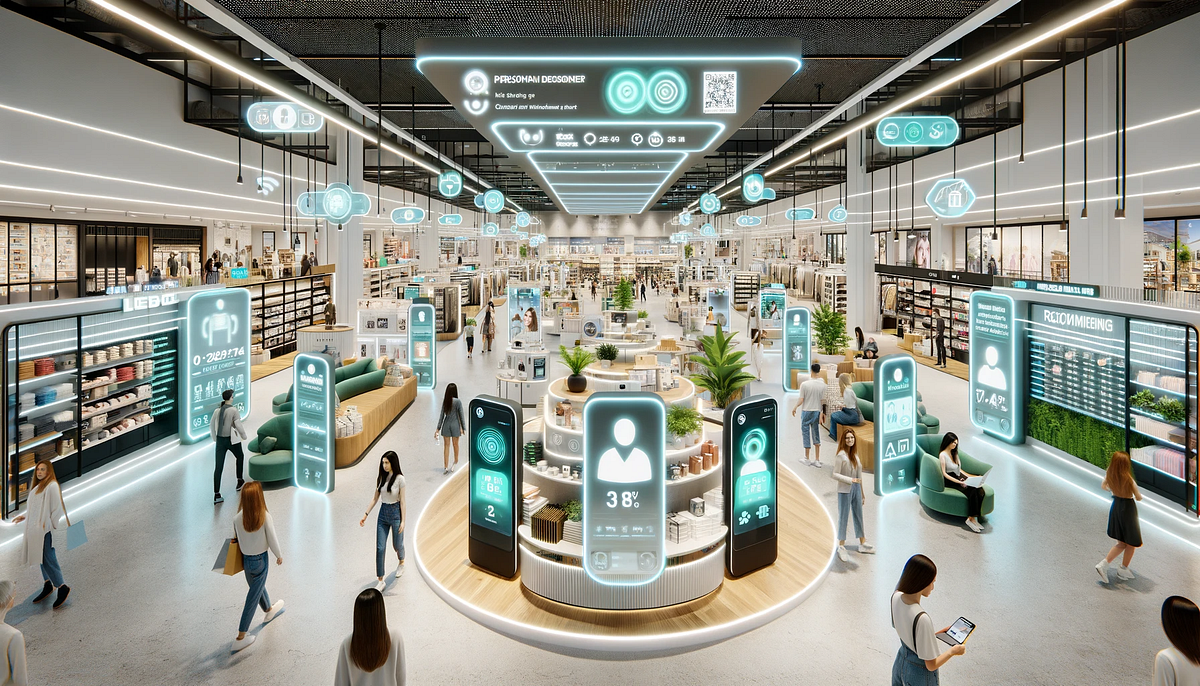
Retail executives have always chased a deceptively simple goal: understand what customers want before customers themselves can fully articulate it.
That ambition is hardly new.
What is new is the growing ability to act on it at scale.
Artificial intelligence has entered retail not with the dramatic flourish often associated with technological breakthroughs, but with something far more consequential: incremental improvements that compound. A recommendation becomes slightly more relevant. A forecast becomes slightly more accurate. A customer service interaction becomes slightly faster. A supply chain becomes slightly more efficient.
Individually, these improvements appear modest.
Collectively, they are reshaping the economics of retail.
What's fascinating is that AI is not merely changing how retailers operate. It is changing how retailers think. Historically, retail decisions often relied on intuition informed by experience. The best merchants possessed a near-mythical ability to anticipate consumer demand. They knew which products would resonate, which trends would fade, and which promotions would succeed.
Today, those instincts increasingly coexist with algorithms.
The result is not the replacement of human judgment. Rather, it is the emergence of a new model—one where machine intelligence and human insight work together to create more responsive, more personalized, and more profitable retail experiences.
The real story of AI in retail is not about technology.
It is about decision-making.
AI Is Turning Retail Into a Predictive Business
For decades, retailers operated largely in reaction mode.
A product sold well, so they reordered it.
Sales slowed, so they discounted inventory.
Customers complained, so they adjusted policies.
AI is changing that dynamic.
Modern machine-learning systems analyze vast streams of information—purchase histories, browsing patterns, weather forecasts, social conversations, inventory levels, economic indicators—and identify patterns invisible to traditional analysis.
The objective is prediction.
And prediction creates advantage.
A retailer that accurately anticipates demand can stock the right products before competitors react. It can avoid costly markdowns. It can improve margins while simultaneously increasing customer satisfaction.
This shift from reactive management to predictive management may be one of AI's most significant contributions to retail.
Not because consumers notice it directly.
Because they notice its outcomes.
Products are available when they want them. Recommendations feel relevant. Deliveries arrive on time.
The technology disappears into the experience.
That invisibility is often where the greatest value resides.
The Personalization Revolution Is Accelerating
Personalization has been a retail objective for years.
AI is making it operational.
The traditional approach relied on broad customer segments. Retailers grouped shoppers into categories and delivered similar experiences to everyone within those segments.
AI allows for something much more granular.
Instead of marketing to a demographic group, retailers increasingly market to individuals.
Product recommendations evolve in real time. Promotional offers adapt based on behavior. Search results change according to preferences. Content becomes more relevant with every interaction.
The difference may sound subtle.
It isn't.
Consumers compare every experience to the best experience they've ever had anywhere. As personalized interactions become commonplace, generic experiences feel increasingly outdated.
From Assortment to Relevance
Retailers historically competed by expanding product assortments.
More choice was assumed to create more value.
But behavioral research repeatedly demonstrates a paradox: too much choice can overwhelm consumers.
AI addresses this challenge by helping shoppers navigate abundance.
Instead of asking customers to sort through thousands of options, algorithms surface the products most likely to match individual needs.
This represents a profound shift.
The competitive advantage is no longer having the most products.
It is helping customers find the right products.
Inventory Management Is Becoming Smarter
One of retail's oldest challenges involves balancing supply and demand.
Order too much inventory and markdowns erode profits.
Order too little and customers leave empty-handed.
Neither outcome is desirable.
AI significantly improves inventory planning by analyzing historical sales data alongside external variables that influence purchasing behavior.
Retailers can now forecast demand with greater precision than ever before.
Consider how many factors affect consumer purchasing decisions:
- Weather patterns
- Local events
- Economic conditions
- Social trends
- Competitor promotions
- Seasonal fluctuations
Traditional forecasting systems struggled to account for this complexity.
AI thrives on it.
As predictive capabilities improve, retailers gain greater confidence in purchasing decisions while reducing operational waste.
The implications extend beyond profitability.
Improved inventory management often translates into better customer experiences and more sustainable operations.
AI Is Reshaping Customer Service
Customer service has historically represented a tension between quality and cost.
Providing personalized support required significant human resources.
Reducing costs often compromised service quality.
AI is altering that equation.
Virtual assistants, intelligent chatbots, and automated service platforms now handle routine inquiries with increasing sophistication. Customers receive immediate responses to common questions, while human representatives focus on more complex issues.
Yet the most effective implementations share an important characteristic.
They do not attempt to eliminate human interaction.
They reserve it for moments where empathy, judgment, and creativity matter most.
Retailers frequently misunderstand this distinction.
Consumers rarely object to automation itself.
They object to poorly designed automation.
When AI reduces friction, customers embrace it.
When it creates obstacles, frustration follows quickly.
The lesson is straightforward: automation should simplify the customer journey, not complicate it.
The Rise of Generative AI in Retail
The newest chapter in retail's AI story involves generative AI.
Unlike earlier systems focused primarily on prediction and optimization, generative AI creates content, conversations, and recommendations.
Its applications are expanding rapidly.
Retailers now use generative AI to:
- Create product descriptions
- Develop marketing campaigns
- Generate customer communications
- Produce visual merchandising concepts
- Assist shopping decisions
- Support employee training
What's particularly interesting is how generative AI changes the nature of customer interactions.
Search, for example, becomes conversational.
Rather than entering keywords, consumers increasingly describe needs.
A shopper might ask:
"I need a comfortable blazer for a business conference in Chicago during winter."
The system interprets context, evaluates preferences, and generates recommendations accordingly.
The interaction feels less like searching.
More like consulting.
AI and Retail Performance: A Comparative View
The operational impact of AI becomes clearer when comparing traditional retail approaches with AI-enhanced systems.
| Retail Function | Traditional Approach | AI-Enhanced Approach | Primary Benefit |
|---|---|---|---|
| Demand Forecasting | Historical sales analysis | Predictive modeling using multiple variables | Higher forecast accuracy |
| Product Recommendations | Broad segmentation | Individual-level personalization | Improved conversion |
| Inventory Management | Periodic adjustments | Continuous optimization | Reduced stockouts |
| Customer Service | Human-only support | Hybrid AI-human support | Faster resolution |
| Pricing Strategy | Manual updates | Dynamic pricing analysis | Margin improvement |
| Marketing Campaigns | Mass targeting | Behavioral targeting | Greater relevance |
| Product Search | Keyword-based | Conversational and contextual | Better discovery |
| Supply Chain Planning | Static planning cycles | Real-time optimization | Increased efficiency |
| Merchandising Decisions | Experience-driven | Data-informed decision-making | Better assortment planning |
| Content Creation | Manual production | AI-assisted generation | Faster execution |
The pattern is unmistakable.
AI consistently enhances speed, accuracy, and responsiveness.
But technology alone does not guarantee success.
Execution remains decisive.
A Lesson I Learned Watching AI in Action
Several years ago, I attended a retail innovation demonstration where executives showcased a sophisticated AI platform designed to optimize nearly every aspect of the customer journey.
The presentation was impressive.
Forecasting models. Personalized recommendations. Automated merchandising tools.
Everything seemed meticulously engineered.
Then I visited the stores.
Employees hadn't been adequately trained on the new systems. Recommendations occasionally conflicted with in-store promotions. Customers encountered inconsistent experiences across channels.
The technology was powerful.
The implementation was not.
That experience reinforced a lesson I have seen repeatedly throughout retail history: competitive advantage rarely comes from technology alone. It comes from integrating technology into a coherent strategy.
AI can generate insights.
People still need to act on them.
Retailers that recognize this reality tend to outperform those that view technology as a standalone solution.
AI Is Changing How Products Are Developed
Retailers once relied heavily on historical sales patterns and periodic market research to guide product development.
AI introduces a more dynamic approach.
Consumer reviews, social conversations, search behavior, and purchase patterns provide continuous feedback about evolving preferences.
Retailers can identify emerging trends earlier.
They can refine products more quickly.
They can respond to changing consumer expectations with greater agility.
This acceleration matters because trend cycles continue to compress.
Consumer preferences evolve rapidly.
Retailers capable of detecting subtle shifts gain meaningful advantages.
AI essentially functions as an always-on listening system.
And listening, perhaps more than predicting, has become a critical retail competency.
Ethical Questions Are Becoming More Important
As AI becomes more influential, new challenges emerge.
Consumers increasingly care about transparency.
How is data collected?
How are recommendations generated?
How are pricing decisions made?
Retailers face growing pressure to answer these questions clearly.
Trust remains central to retail success.
An algorithm may improve efficiency, but if customers perceive the system as unfair or opaque, trust deteriorates quickly.
This is particularly relevant in areas such as personalization and dynamic pricing.
Consumers appreciate relevance.
They are less enthusiastic about feeling manipulated.
The retailers that navigate this balance effectively will be better positioned for long-term success.
Human Creativity Still Matters
One misconception about AI is that it diminishes the importance of human creativity.
The opposite may be true.
As algorithms increasingly handle analytical tasks, human contributions become more valuable in areas where emotional intelligence, storytelling, and strategic thinking matter.
Retail remains fundamentally human.
Brands succeed because they connect with aspirations, identities, and emotions.
Algorithms can optimize those connections.
They do not create them independently.
The strongest retail organizations are therefore combining technological sophistication with deeply human capabilities.
Data informs decisions.
People provide meaning.
The distinction is essential.
Conclusion: AI Is Not Replacing Retail—It Is Redefining It
Much of the public conversation surrounding artificial intelligence focuses on replacement.
Will machines replace workers?
Will algorithms replace decision-makers?
Will automation replace human interaction?
These questions, while understandable, may miss the more interesting story.
AI is not replacing retail.
It is redefining how retail functions.
The most important transformation is not technological. It is organizational. Retailers are moving from intuition-driven models toward intelligence-driven models. Decisions that once relied primarily on experience now incorporate predictive insights generated at extraordinary speed and scale.
Yet amid all this change, one principle remains remarkably stable.
Consumers still want value.
They still want convenience.
They still want trust.
They still want experiences that feel relevant and meaningful.
AI helps retailers deliver those outcomes more effectively. But it does not change the underlying objective.
That is why the future of retail will not belong solely to the companies with the most advanced algorithms. It will belong to the organizations that combine technological capability with customer understanding.
The technology may be evolving rapidly.
Human expectations are evolving more slowly.
And that gap—between innovation and human need—is precisely where the next generation of retail competition will be won.
- Arts
- Business
- Computers
- Jocuri
- Health
- Home
- Kids and Teens
- Money
- News
- Personal Development
- Recreation
- Regional
- Reference
- Science
- Shopping
- Society
- Sports
- Бизнес
- Деньги
- Дом
- Досуг
- Здоровье
- Игры
- Искусство
- Источники информации
- Компьютеры
- Личное развитие
- Наука
- Новости и СМИ
- Общество
- Покупки
- Спорт
- Страны и регионы
- World

 English
 Russian
 French
 Spanish
 Portuguese
 Deutsch
 Turkish
 Dutch
Dutch
 Italiano
 Arabic
 Portuguese (Brazil)
 Greek
Greek
