
What Is the Future of Retail? Why the Next Era Will Be More Human, Not Less
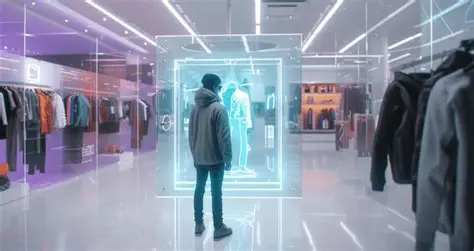
Retail has always been remarkably easy to underestimate.
Every decade seems to produce a new prediction about its future. Department stores would replace local merchants. Shopping malls would dominate commerce indefinitely. E-commerce would eliminate physical stores. Mobile technology would fundamentally rewrite consumer behavior. Artificial intelligence would automate much of the buying process.
Each prediction contained some truth.
None told the whole story.
That is because retail is often misunderstood. People frequently assume retail is about products, stores, websites, or technology. It is not. Those are mechanisms. Retail's true purpose is connecting consumers with solutions to their needs, wants, aspirations, and identities.
And human motivations tend to evolve far more slowly than technology.
This is why forecasting the future of retail requires caution. The tools will change. The channels will change. Consumer expectations will change. Yet the underlying psychology driving purchasing decisions remains surprisingly durable.
People still seek convenience.
They still seek value.
They still seek trust.
They still seek belonging.
The future of retail will be shaped not by replacing those motivations, but by serving them more effectively.
That distinction matters because many discussions about retail focus excessively on technology and insufficiently on people.
The next chapter of retail is likely to be defined by the intersection of both.
The Future of Retail Is Not Online or Offline
One of the most persistent retail debates asks whether digital commerce will eventually surpass physical retail in importance.
The question itself may be outdated.
Consumers do not think in channels.
Retailers often do.
A customer researching a product on a smartphone, visiting a store to evaluate it, and completing the purchase later through an app experiences a single journey.
Retailers see multiple channels.
Consumers see a purchase decision.
The future of retail therefore belongs to organizations capable of eliminating boundaries between physical and digital experiences.
This concept is frequently described as omnichannel retail.
Yet even that terminology feels increasingly insufficient.
Omnichannel implies multiple channels working together.
Consumers simply expect one seamless experience.
The distinction may seem semantic.
Strategically, it is significant.
Why Friction Is Becoming the Ultimate Competitor
Retailers once competed primarily against other retailers.
Increasingly, they compete against friction.
Every inconvenience carries a cost.
Slow websites.
Complicated returns.
Inventory uncertainty.
Long checkout lines.
Confusing navigation.
Consumers have become extraordinarily sensitive to effort.
The future of retail will favor organizations that systematically reduce complexity throughout the customer journey.
Convenience is no longer a differentiator.
It is an expectation.
And expectations rarely move backward.
Artificial Intelligence Will Become Invisible
Much attention has focused on AI's role in retail.
The most interesting aspect of AI may not be what consumers notice.
It may be what they do not notice.
Artificial intelligence increasingly influences:
- Product recommendations
- Inventory management
- Demand forecasting
- Customer service
- Pricing optimization
- Supply chain planning
- Marketing personalization
Consumers rarely celebrate algorithms.
They appreciate outcomes.
Products are available.
Recommendations feel relevant.
Deliveries arrive on time.
Experiences become easier.
The most successful retail technologies often disappear into the background.
Their presence is felt through improved performance rather than visible complexity.
This pattern has repeated throughout retail history.
The future of AI in retail is not greater visibility.
It is greater integration.
Personalization Will Move Beyond Marketing
Retailers have spent years personalizing promotions and recommendations.
The next phase is broader.
Future personalization will influence nearly every aspect of the customer experience.
Assortments will become increasingly localized.
Pricing strategies will become more adaptive.
Loyalty programs will become more individualized.
Store experiences will become more relevant.
Consumers have grown accustomed to environments that reflect their preferences.
As expectations rise, generic experiences become less effective.
Yet personalization introduces an important challenge.
Consumers want relevance.
They do not want intrusion.
The retailers that navigate this balance successfully will possess meaningful advantages.
The objective is not knowing everything about customers.
It is using information responsibly to create value.
Stores Are Becoming Experience Platforms
For years, physical retail was evaluated primarily through sales productivity metrics.
Increasingly, stores are being assessed through a broader lens.
Traffic generation.
Brand engagement.
Community building.
Customer education.
Content creation.
Experience delivery.
All are becoming important functions.
The future store will likely serve multiple purposes simultaneously.
Part showroom.
Part fulfillment center.
Part event venue.
Part service hub.
Part brand expression.
This evolution reflects an important reality.
If consumers can purchase products anywhere, stores must offer something more.
Many already do.
The Rise of Experiential Retail
Experiential retail continues gaining momentum because it aligns with something fundamental about human behavior.
People remember experiences.
They share experiences.
They discuss experiences.
Products remain important.
Experiences create emotional attachment.
Retailers increasingly understand that transactions generate revenue, while experiences generate relationships.
The strongest brands pursue both.
Sustainability Will Become Operational Rather Than Aspirational
Sustainability has moved far beyond corporate messaging.
Increasingly, it is becoming integrated into retail operations.
Future retail strategies will likely emphasize:
- Circular business models
- Product repair services
- Resale ecosystems
- Sustainable sourcing
- Waste reduction initiatives
- Supply chain transparency
Consumers increasingly demand evidence rather than promises.
Retailers face growing pressure to demonstrate measurable progress.
Interestingly, many sustainability initiatives improve business performance alongside environmental outcomes.
Reducing waste often lowers costs.
Improving efficiency frequently reduces resource consumption.
The alignment between sustainability and profitability may become one of retail's most important competitive advantages.
Community Will Become More Valuable Than Scale
Historically, larger retailers enjoyed significant advantages.
Scale improved purchasing power.
Distribution capabilities.
Marketing reach.
Operational efficiency.
Those advantages remain important.
Yet community is emerging as an equally powerful asset.
Consumers increasingly connect with brands through shared interests, values, and experiences.
Communities generate:
- Loyalty
- Advocacy
- Trust
- Engagement
- Word-of-mouth growth
Unlike advertising, community participation often feels authentic.
Unlike discounts, it is difficult for competitors to replicate.
The future of retail may belong not only to the largest organizations but also to those most capable of cultivating meaningful customer relationships.
The Future Retail Model: A Comparative View
Examining key dimensions reveals how retail continues evolving.
| Retail Dimension | Traditional Retail Model | Future Retail Model |
|---|---|---|
| Customer Journey | Channel-specific | Seamless and integrated |
| Product Discovery | Search-driven | Discovery and recommendation-driven |
| Personalization | Broad segmentation | Individualized experiences |
| Store Function | Transaction-focused | Experience-focused |
| Customer Service | Reactive support | Predictive assistance |
| Inventory Management | Historical forecasting | AI-powered prediction |
| Sustainability | Compliance-oriented | Strategic priority |
| Loyalty Programs | Rewards-based | Relationship-based |
| Marketing Approach | Mass communication | Contextual engagement |
| Competitive Advantage | Scale and assortment | Relevance and connection |
The shift is unmistakable.
Retail is moving toward greater responsiveness, relevance, and customer centricity.
The Consumer Is Becoming More Powerful
One trend underlies nearly every other development.
Consumer influence continues expanding.
Information is more accessible.
Choices are more abundant.
Switching costs are lower.
Transparency is greater.
Consumers can compare products instantly, evaluate reviews, research alternatives, and share opinions at unprecedented scale.
Retailers no longer control information flows.
They participate in them.
This reality creates both opportunities and challenges.
Brands that earn trust can build powerful relationships.
Brands that disappoint may face immediate public scrutiny.
The future retail environment rewards authenticity.
And punishes inconsistency.
A Lesson I Learned Watching Retail Predictions Fail
Years ago, I attended a conference where industry experts confidently predicted that physical stores would soon become largely irrelevant.
The arguments seemed compelling.
E-commerce was expanding rapidly.
Technology was improving.
Consumer behavior was shifting.
Many forecasts appeared inevitable.
Then something unexpected happened.
The strongest retailers adapted.
Stores evolved.
Experiences improved.
Consumers continued visiting physical locations for reasons extending beyond transactions.
That experience reinforced an important lesson.
Retail rarely moves in straight lines.
The future seldom involves replacement.
More often, it involves integration.
New capabilities emerge alongside existing behaviors.
Technology changes retail.
Human needs anchor it.
The retailers that understand both tend to outperform those focused exclusively on one.
Retail Media and Attention Economies Will Expand
Another important trend involves the growing convergence of commerce and media.
Retailers increasingly monetize customer attention through advertising platforms and retail media networks.
This development reflects a broader shift.
Attention itself has become a valuable commercial asset.
Retailers possess first-party customer data, shopping insights, and engagement opportunities that many advertisers find highly attractive.
As privacy regulations evolve and traditional advertising becomes less precise, retail media's importance is likely to grow.
The retailer of the future may function simultaneously as merchant, media company, and technology platform.
That combination creates intriguing possibilities.
Human Employees Will Become More Important, Not Less
One common misconception about retail's future assumes automation will diminish the importance of people.
Evidence increasingly suggests the opposite.
As technology handles routine tasks, human contributions become more valuable in areas requiring:
- Empathy
- Judgment
- Creativity
- Relationship building
- Problem solving
Consumers appreciate efficiency.
They also appreciate meaningful human interactions.
The future retail workforce will likely focus less on transactions and more on consultation, education, and engagement.
Technology handles repetition.
People provide connection.
The combination is powerful.
Conclusion: The Future of Retail Is a Return to Its Origins
The irony of retail's future is that many emerging trends point back toward some of retail's oldest principles.
Yes, artificial intelligence will become more sophisticated.
Yes, personalization will become more precise.
Yes, technology will continue reshaping operations.
But beneath these developments lies something remarkably familiar.
Consumers still want to feel understood.
They still want convenience.
They still want trust.
They still want value.
The retailers that succeed in the coming decade will not necessarily be those with the most advanced technology. Nor will they be those with the largest store networks or the broadest assortments.
Success will belong to organizations that combine innovation with empathy.
Efficiency with engagement.
Data with understanding.
Technology enables those outcomes.
It does not replace them.
That may be the most important insight about the future of retail.
For all the discussion surrounding algorithms, automation, and digital transformation, retail remains fundamentally human. It always has been.
The tools continue evolving.
The motivations endure.
And the retailers that recognize that distinction will be best positioned to shape what comes next.
- Arts
- Business
- Computers
- Juegos
- Health
- Home
- Kids and Teens
- Money
- News
- Personal Development
- Recreation
- Regional
- Reference
- Science
- Shopping
- Society
- Sports
- Бизнес
- Деньги
- Дом
- Досуг
- Здоровье
- Игры
- Искусство
- Источники информации
- Компьютеры
- Личное развитие
- Наука
- Новости и СМИ
- Общество
- Покупки
- Спорт
- Страны и регионы
- World

 English
 Russian
 French
 Portuguese
 Deutsch
 Turkish
 Dutch
Dutch
 Italiano
 Arabic
 Romaian
 Portuguese (Brazil)
 Greek
Greek
