
How Do Retailers Increase Basket Size? The Psychology Behind Bigger Purchases
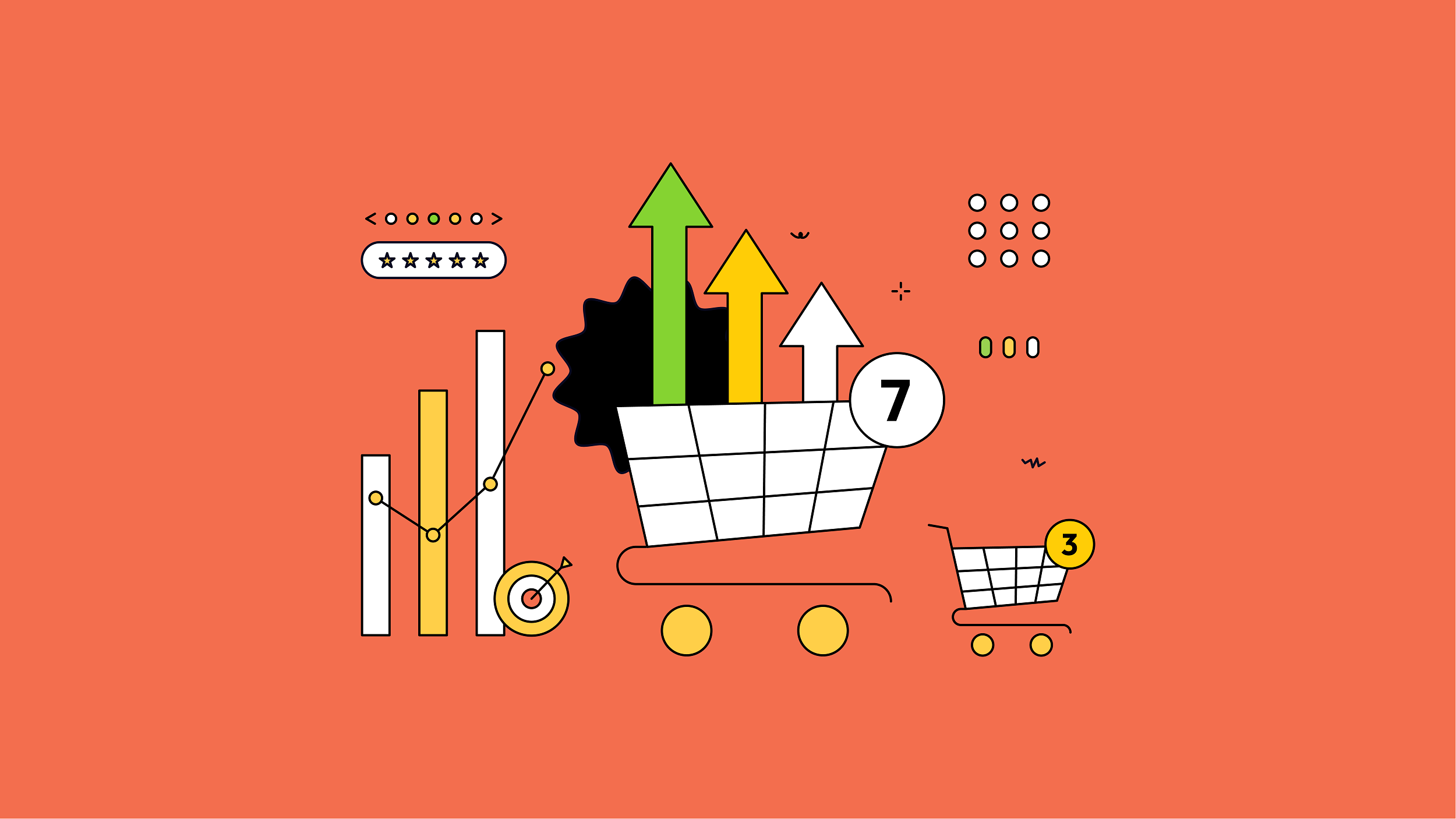
Retailers often focus on a question that appears simple.
How do we get more customers?
It is an important question.
But another question may be even more valuable.
How do we help each customer purchase more?
That question sits at the center of basket size strategy.
A customer entering a store or visiting a website has already made a decision to engage. The retailer has overcome one of the most difficult challenges in commerce: earning attention. The next challenge is turning that attention into greater value—for both the customer and the business.
Increasing basket size is not simply about encouraging consumers to spend more money.
At its best, it is about helping customers discover additional value.
A shopper buying a camera may need a memory card.
A customer purchasing running shoes may benefit from athletic socks.
Someone buying a laptop may need accessories that improve the experience.
The strongest retailers understand this distinction.
They do not merely add items to transactions.
They solve more customer needs.
That difference separates sophisticated basket-building strategies from aggressive selling tactics.
Because consumers are not opposed to buying more.
They are opposed to feeling manipulated.
The retailers that successfully increase basket size understand the psychology behind purchasing decisions. They know when to suggest, when to personalize, when to simplify, and when to step back.
The objective is not a larger basket at any cost.
The objective is a better basket.
Understanding Basket Size and Why It Matters
Basket size refers to the total value or number of items included in a customer's purchase.
Retailers typically measure basket size through metrics such as:
- Average order value
- Items per transaction
- Revenue per customer visit
- Units per basket
These measurements provide insight into purchasing behavior.
A retailer can increase revenue through three primary methods:
- Acquire more customers.
- Increase purchase frequency.
- Increase the value of each transaction.
The third approach is often overlooked.
Customer acquisition requires significant investment.
Increasing basket size allows retailers to generate additional revenue from existing customer relationships.
This makes basket optimization a powerful strategic tool.
Yet the challenge is balancing business objectives with customer value.
A larger basket that creates regret can damage loyalty.
A larger basket that improves the customer experience creates long-term value.
The Psychology Behind Larger Purchases
Consumers rarely build baskets randomly.
Purchasing decisions follow patterns.
Retailers increase basket size most effectively when they understand those patterns.
One of the strongest influences is context.
When consumers enter a shopping environment, they create a mental framework around their purchase.
A customer buying a home office desk is already thinking about productivity.
A retailer that suggests a desk lamp, organizer, or ergonomic chair is not necessarily increasing spending.
It is completing the solution.
This approach works because the additional items make sense within the customer's original intention.
The retailer is not creating a new need.
It is revealing an existing one.
The Difference Between Add-On Selling and Value Creation
Many consumers dislike traditional upselling because it often feels disconnected.
“Would you like fries with that?”
The question itself is not problematic.
The problem occurs when the suggestion lacks relevance.
Effective basket-building strategies focus on complementarity.
The additional product should enhance the original purchase.
A protective case improves the value of a smartphone.
A sauce recommendation improves a meal.
A warranty provides reassurance for a major purchase.
The strongest suggestions answer an unspoken question:
“What else will help me succeed with this purchase?”
Cross-Selling: The Art of Product Connections
Cross-selling is one of the most common methods retailers use to increase basket size.
The concept is straightforward.
Recommend related products that complement the customer's initial purchase.
Successful cross-selling depends on understanding relationships between products.
Examples include:
- Shoes paired with care products
- Coffee machines paired with coffee supplies
- Printers paired with ink
- Cameras paired with accessories
- Furniture paired with home décor
The challenge is relevance.
Too many recommendations create noise.
Too few create missed opportunities.
The best retailers identify the natural relationship between products and present suggestions at the right moment.
Timing matters.
A customer choosing a product is often more receptive to related suggestions during the decision process than after completing the purchase.
Product Bundling Creates Perceived Value
Bundling works because consumers often evaluate groups of products differently than individual items.
A bundle simplifies decision-making.
Instead of asking:
“What products do I need?”
The customer sees:
“Here is a complete solution.”
Bundles are especially effective when they reduce uncertainty.
A beginner buying photography equipment may appreciate a starter package.
A new homeowner may appreciate a curated collection.
A traveler may appreciate a complete packing solution.
Bundling succeeds because it transforms complexity into convenience.
However, poorly designed bundles can create the opposite effect.
Consumers quickly recognize when retailers combine unwanted products simply to increase sales.
Value must be visible.
The customer should feel helped, not pressured.
Personalization Makes Recommendations More Effective
Modern retailers increasingly use customer data to create personalized recommendations.
Personalization improves basket size because relevance increases purchase probability.
Retailers analyze:
- Previous purchases
- Browsing behavior
- Customer preferences
- Location
- Seasonal patterns
- Shopping frequency
The goal is not simply showing more products.
The goal is showing the right products.
A customer who frequently purchases outdoor equipment may respond positively to hiking accessories.
The same recommendation may feel irrelevant to someone with different interests.
Personalization works because consumers appreciate assistance.
They do not want more options.
They want better options.
The Role of Store Design and Digital Experience
Basket size is influenced by environment.
Physical stores have long understood this principle.
Product placement matters.
Displays matter.
Traffic flow matters.
A well-designed store naturally encourages exploration.
Impulse items near checkout.
Complementary products placed together.
Seasonal displays.
These strategies influence purchasing behavior.
Digital retail environments use similar principles.
Online retailers increase basket size through:
- Recommended products
- “Frequently bought together” suggestions
- Personalized homepages
- Smart search results
- Cart recommendations
The environment shapes behavior.
This has always been true in retail.
Technology simply provides new ways to apply the principle.
Basket-Building Strategies Compared
Different approaches influence basket size in different ways.
| Strategy | How It Works | Consumer Benefit | Retailer Impact |
|---|---|---|---|
| Cross-Selling | Suggest related products | More complete solutions | Higher transaction value |
| Bundling | Combine products into packages | Simplified decisions | Increased average order value |
| Personalization | Tailor recommendations | Greater relevance | Improved conversion |
| Loyalty Rewards | Encourage additional purchases | Earned benefits | Higher engagement |
| Store Layout | Influence product discovery | Easier shopping | More impulse purchases |
| Subscription Offers | Encourage recurring purchases | Convenience and savings | Predictable revenue |
| Limited-Time Offers | Create urgency | Opportunity for value | Faster purchasing decisions |
| Premium Options | Offer upgraded choices | Better performance or experience | Higher margins |
| Education-Based Selling | Explain product benefits | Increased confidence | Stronger purchase intent |
| Complementary Services | Add support or protection | Reduced risk | Additional revenue |
The strongest retailers rarely rely on one strategy.
They combine multiple approaches while maintaining customer trust.
A Lesson I Learned Watching Shopping Behavior
Several years ago, I observed customers navigating a retail environment where product recommendations were intentionally redesigned.
The retailer had invested heavily in technology and analytics.
Initially, I expected the most important changes to involve digital tools.
They did not.
What stood out was the improved logic behind recommendations.
Products were grouped around customer goals rather than inventory categories.
A customer buying a grill saw tools, cleaning supplies, and outdoor accessories nearby.
A customer purchasing a camera saw options for protecting and using the equipment.
The experience felt natural.
Customers were not being pushed toward additional purchases.
They were being helped to think more completely about their original purchase.
That experience reinforced a lesson that applies broadly across retail.
Basket size grows most sustainably when retailers understand the customer's mission.
The best sales strategy is often better customer understanding.
Loyalty Programs Can Increase Basket Size
Loyalty programs influence purchasing behavior by creating incentives for larger transactions.
Retailers use:
- Spending thresholds
- Bonus rewards
- Member-exclusive offers
- Tier benefits
- Personalized incentives
For example, encouraging customers to spend slightly more to unlock a reward can increase average transaction value.
However, the psychology behind these programs matters.
Consumers respond when the goal feels achievable and valuable.
Artificial thresholds often create frustration.
Effective loyalty programs align retailer objectives with customer benefits.
The customer should feel rewarded, not manipulated.
Convenience Encourages Larger Purchases
Convenience is another powerful driver of basket growth.
Consumers often purchase more when the process feels simple.
Examples include:
- One-click checkout
- Saved preferences
- Subscription options
- Easy reordering
- Personalized recommendations
When retailers reduce friction, customers have more mental capacity to consider additional purchases.
Complexity narrows attention.
Convenience expands it.
This is why many successful retailers invest heavily in making the entire shopping journey easier.
The Risk of Increasing Basket Size Incorrectly
There is a temptation in retail to view every transaction as an opportunity to maximize revenue.
That mindset can create problems.
Aggressive recommendations.
Irrelevant offers.
Excessive promotions.
Poorly timed suggestions.
All can reduce customer trust.
Consumers recognize when retailers prioritize their own objectives over customer needs.
The most sustainable basket growth comes from alignment.
The retailer succeeds because the customer succeeds.
That principle is easy to state.
It is harder to execute.
But it remains the foundation of effective retail strategy.
Conclusion: Bigger Baskets Begin With Better Understanding
Increasing basket size is often described as a sales objective.
That description is incomplete.
The most effective basket-building strategies are really customer-understanding strategies.
Retailers succeed when they recognize what customers are trying to accomplish and help them accomplish it more effectively.
The additional purchase becomes natural.
The recommendation becomes useful.
The transaction becomes more valuable.
This is why the future of basket growth will not depend solely on better promotions, more aggressive selling, or endless product suggestions.
It will depend on relevance.
Consumers do not resist buying more.
They resist buying more without reason.
The retailers that understand this distinction will continue to increase basket size while strengthening customer relationships.
Because the largest baskets are not created by pushing customers further.
They are created by helping customers go further.
- Arts
- Business
- Computers
- الألعاب
- Health
- الرئيسية
- Kids and Teens
- مال
- News
- Personal Development
- Recreation
- Regional
- Reference
- Science
- Shopping
- Society
- Sports
- Бизнес
- Деньги
- Дом
- Досуг
- Здоровье
- Игры
- Искусство
- Источники информации
- Компьютеры
- Личное развитие
- Наука
- Новости и СМИ
- Общество
- Покупки
- Спорт
- Страны и регионы
- World

 English
 Russian
 French
 Spanish
 Portuguese
 Deutsch
 Turkish
 Dutch
Dutch
 Italiano
 Romaian
 Portuguese (Brazil)
 Greek
Greek
