
What is hyperinflation?
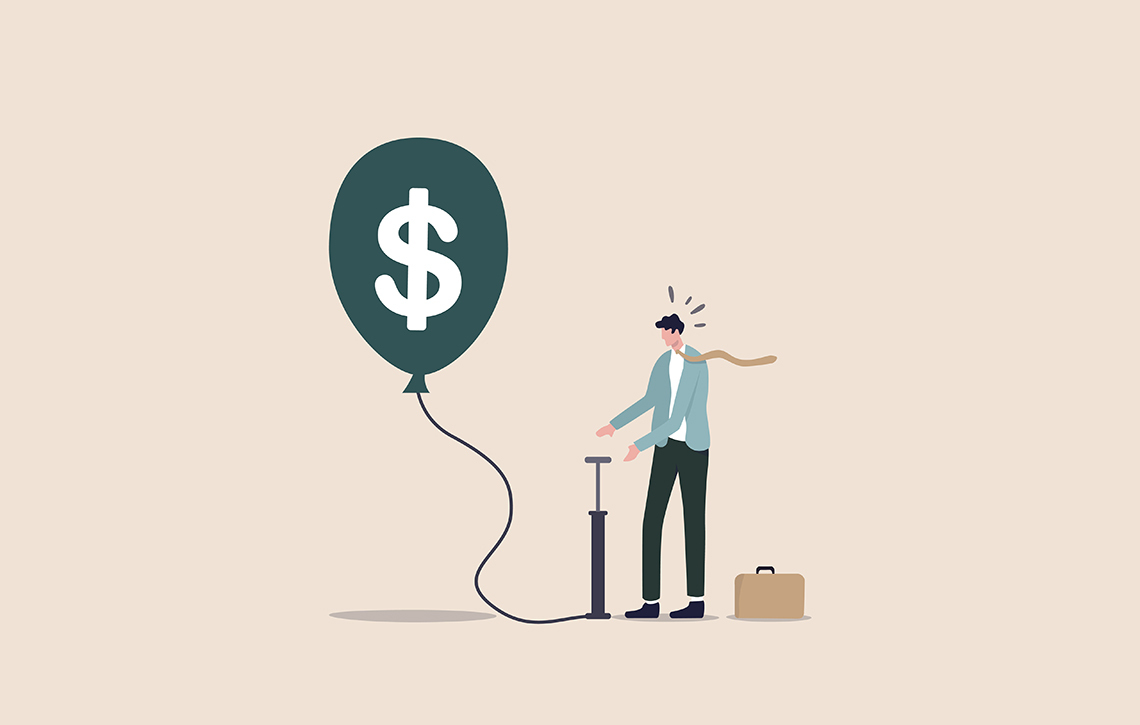
What Is Hyperinflation?
Hyperinflation is one of the most extreme forms of economic instability. It occurs when prices for goods and services rise at an exceptionally rapid and uncontrollable rate, causing a country's currency to lose its value in a very short period. Unlike normal inflation, which is a gradual increase in prices over time, hyperinflation can make everyday necessities unaffordable within days—or even hours.
This article explains what hyperinflation is, what causes it, its effects on individuals and businesses, historical examples, and how countries recover from it.
Understanding Hyperinflation
Inflation is a normal part of most economies. Central banks often aim for a low and stable inflation rate, typically around 2% annually, to encourage spending and investment.
Hyperinflation, however, is far beyond normal inflation. Economists commonly define hyperinflation as a monthly inflation rate exceeding 50%, although there is no universally accepted threshold. At this pace, prices can double within weeks, rapidly eroding purchasing power.
During hyperinflation:
-
The value of money falls dramatically.
-
Prices change constantly, sometimes multiple times per day.
-
Savings lose value quickly.
-
Businesses struggle to set prices.
-
People often seek alternative currencies or barter systems.
What Causes Hyperinflation?
Hyperinflation usually results from a combination of severe economic and political problems rather than a single event.
1. Excessive Money Printing
One of the primary causes is a government creating large amounts of new money to finance its spending without corresponding economic growth.
When significantly more money circulates while the supply of goods and services remains limited, prices rise rapidly because too much money is chasing too few goods.
2. Government Budget Deficits
Persistent government deficits can contribute to hyperinflation if policymakers rely on printing money instead of raising taxes or borrowing responsibly.
This creates a cycle where increasing money supply further reduces the currency's value.
3. Economic Collapse
Wars, natural disasters, sanctions, or major financial crises can sharply reduce production. As fewer goods become available, shortages push prices higher.
If governments respond by printing more money, inflation can accelerate into hyperinflation.
4. Loss of Confidence
Hyperinflation often worsens because people lose faith in the currency.
Instead of saving money, consumers spend it immediately before prices rise further. Businesses increase prices in anticipation of future inflation, creating a self-reinforcing cycle.
5. Political Instability
Weak governments, corruption, civil conflict, or poor economic management can undermine confidence in public institutions, making it difficult to control inflation.
Characteristics of Hyperinflation
Hyperinflation has several distinctive features:
Extremely Rapid Price Increases
Prices may rise daily or even hourly. A loaf of bread that costs $2 today might cost $3 tomorrow and $5 next week.
Currency Devaluation
The national currency loses purchasing power rapidly. Large amounts of cash become necessary to buy basic necessities.
Declining Savings
Money held in savings accounts loses value quickly, reducing the wealth of households.
Rising Interest Rates
Financial institutions often increase interest rates to compensate for inflation, making borrowing expensive.
Shift to Foreign Currencies
People frequently begin using more stable foreign currencies or precious metals instead of the local currency.
Effects on Individuals
Hyperinflation can dramatically change daily life.
Reduced Purchasing Power
People can afford fewer goods and services as prices rise faster than incomes.
Loss of Savings
Cash savings accumulated over years may become nearly worthless.
Income Uncertainty
Workers may demand frequent wage increases, but salaries often fail to keep pace with rising prices.
Financial Stress
Households struggle to budget because prices change constantly.
Increased Poverty
Fixed-income retirees and low-income families are particularly vulnerable because their earnings often do not adjust quickly enough.
Effects on Businesses
Companies also face significant challenges during hyperinflation.
Pricing Difficulties
Businesses may need to update prices several times each day, creating administrative challenges.
Inventory Problems
Holding inventory can become risky because replacement costs rise rapidly.
Reduced Investment
Economic uncertainty discourages businesses from making long-term investments.
Supply Chain Disruptions
Suppliers may refuse local currency or require immediate payment, making operations more difficult.
Lower Consumer Demand
Consumers often limit purchases to essential items, reducing sales for many businesses.
Effects on the Economy
Hyperinflation affects nearly every part of an economy.
-
Economic growth slows or reverses.
-
Unemployment often rises.
-
Tax revenues become less predictable.
-
Financial markets become unstable.
-
International investors lose confidence.
-
Banks may experience liquidity problems.
In severe cases, economic activity shifts toward informal markets where goods are exchanged using foreign currencies or barter.
Historical Examples of Hyperinflation
Germany (1921–1923)
After World War I, Germany experienced one of history's most famous hyperinflation episodes.
To meet war-related obligations and government expenses, large amounts of money were printed. Prices rose so quickly that workers were paid multiple times per day and rushed to spend their wages before they lost value.
Zimbabwe (Late 2000s)
Zimbabwe experienced extreme hyperinflation driven by economic decline, falling agricultural production, and rapid money creation.
Prices increased at extraordinary rates, leading the government to issue banknotes with increasingly large denominations before eventually abandoning its currency in favor of foreign currencies.
Venezuela (2010s)
Venezuela suffered prolonged hyperinflation due to declining oil revenues, economic mismanagement, and excessive money creation.
The country's currency lost much of its value, prompting many businesses and consumers to rely on the U.S. dollar for transactions.
How Governments Fight Hyperinflation
Stopping hyperinflation usually requires decisive policy changes.
Tightening Monetary Policy
Central banks reduce money creation and may significantly raise interest rates to restore confidence.
Fiscal Reform
Governments reduce budget deficits by controlling spending, improving tax collection, or restructuring public finances.
Currency Reform
Some countries introduce a new currency or remove zeros from existing banknotes while implementing broader economic reforms.
Restoring Confidence
Strong institutions, transparent policies, and political stability help rebuild trust in the national currency.
International Assistance
Countries may receive financial support and technical guidance from international organizations to stabilize their economies.
Can Hyperinflation Be Prevented?
While hyperinflation is rare, governments can reduce its likelihood by:
-
Maintaining responsible fiscal policies.
-
Preserving central bank independence.
-
Avoiding excessive money creation.
-
Supporting economic growth and productivity.
-
Maintaining public confidence through transparent policymaking.
Countries with stable institutions and disciplined monetary policies are generally much less likely to experience hyperinflation.
Hyperinflation vs. High Inflation
Although the terms are sometimes used interchangeably, they are different.
| High Inflation | Hyperinflation |
|---|---|
| Prices rise rapidly but remain manageable. | Prices rise uncontrollably. |
| Currency generally retains some confidence. | Confidence in the currency largely disappears. |
| Businesses can usually continue operating normally. | Normal business operations become extremely difficult. |
| Monetary policy may control inflation gradually. | Emergency economic reforms are often required. |
Final Thoughts
Hyperinflation is an economic crisis in which prices rise at an extraordinary pace, severely reducing the value of money and disrupting everyday life. It typically results from excessive money creation combined with deep economic, fiscal, and political problems.
The consequences can be devastating for households, businesses, and governments. Savings lose value, purchasing power collapses, investment declines, and economic uncertainty spreads throughout society.
Although hyperinflation is uncommon, historical experiences in Germany, Zimbabwe, and Venezuela demonstrate how damaging it can be. Strong fiscal management, responsible monetary policy, and public confidence in economic institutions remain the most effective safeguards against this extreme form of inflation.
- Arts
- Business
- Computers
- Juegos
- Health
- Home
- Kids and Teens
- Money
- News
- Personal Development
- Recreation
- Regional
- Reference
- Science
- Shopping
- Society
- Sports
- Бизнес
- Деньги
- Дом
- Досуг
- Здоровье
- Игры
- Искусство
- Источники информации
- Компьютеры
- Личное развитие
- Наука
- Новости и СМИ
- Общество
- Покупки
- Спорт
- Страны и регионы
- World

 English
 Russian
 French
 Portuguese
 Deutsch
 Turkish
 Dutch
Dutch
 Italiano
 Arabic
 Romaian
 Portuguese (Brazil)
 Greek
Greek
