
What is stagflation?
What Is Stagflation?
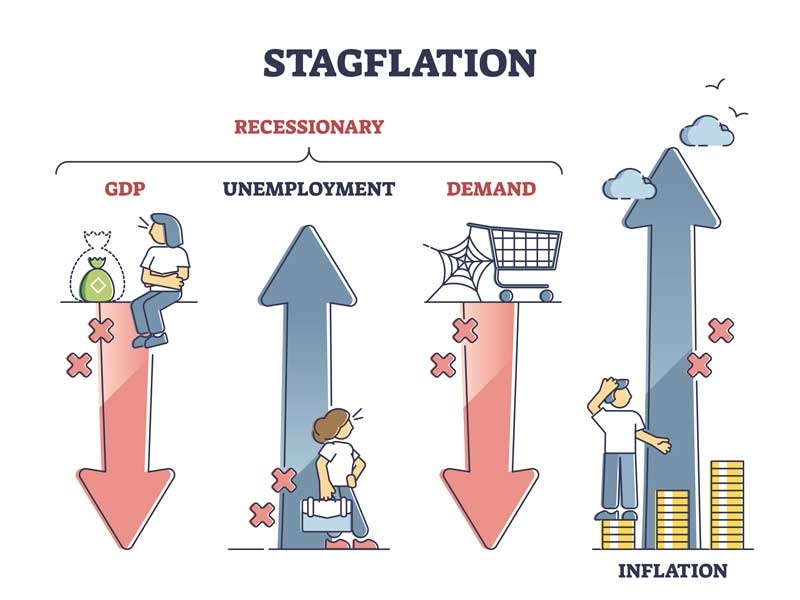
Stagflation is one of the most challenging economic conditions a country can experience. It combines three major problems at the same time: slow or stagnant economic growth, high unemployment, and high inflation. Normally, inflation and unemployment tend to move in opposite directions, but during stagflation, they rise together, creating a difficult situation for governments, businesses, and households.
Understanding stagflation is important because it affects the cost of living, job opportunities, investment decisions, and overall economic stability. This article explains what stagflation is, what causes it, how it impacts people and businesses, and how governments attempt to solve it.
Understanding Stagflation
The term stagflation is a combination of the words "stagnation" and "inflation." It describes an economy where:
-
Economic growth is weak or negative.
-
Inflation remains high.
-
Unemployment increases.
Under normal economic conditions, inflation often occurs when demand is strong and businesses hire more workers. During recessions, inflation usually falls because consumers spend less. Stagflation breaks this typical relationship by combining weak growth with rising prices.
This unusual combination makes stagflation particularly difficult to manage.
What Causes Stagflation?
Several factors can contribute to stagflation, often occurring together.
1. Supply Shocks
One of the most common causes is a sudden increase in the cost of essential goods such as oil, natural gas, or food. When production costs rise sharply, businesses increase prices to maintain profits while cutting production or reducing hiring.
For example, a major disruption in global oil supplies can increase transportation and manufacturing costs across nearly every industry.
2. Poor Economic Policies
Government or central bank policies can also contribute to stagflation. If policymakers increase the money supply too aggressively while economic production remains weak, inflation may rise without creating sustainable economic growth.
Similarly, policies that reduce productivity or discourage investment may slow economic expansion while prices continue climbing.
3. Supply Chain Disruptions
Natural disasters, pandemics, geopolitical conflicts, or trade restrictions can interrupt supply chains. When fewer goods are available, prices rise while businesses struggle to produce enough products, slowing economic activity.
4. Declining Productivity
If workers and businesses become less productive, the economy produces fewer goods and services. Limited production combined with steady or increasing demand can create inflation while slowing overall growth.
Historical Example of Stagflation
The most well-known example occurred during the 1970s.
Several oil-producing countries sharply reduced oil exports, causing energy prices to soar worldwide. Higher fuel costs increased production expenses for businesses across many industries. At the same time, economic growth slowed and unemployment rose.
Many countries experienced years of high inflation alongside weak economic performance, forcing governments and central banks to adopt aggressive measures to restore stability.
How Stagflation Affects Consumers
Stagflation can significantly reduce household financial security.
Higher Cost of Living
Inflation causes prices of groceries, fuel, housing, healthcare, and utilities to increase. Families need more money just to maintain their existing lifestyle.
Reduced Employment Opportunities
Businesses facing weaker demand and higher costs often freeze hiring or lay off employees. Finding a new job becomes more difficult.
Lower Purchasing Power
If wages fail to keep up with inflation, each paycheck buys fewer goods and services. Even employed workers may feel financially worse off.
Greater Financial Stress
Higher living expenses combined with uncertain employment can force households to reduce spending, postpone major purchases, or increase debt.
Impact on Businesses
Companies also face serious challenges during stagflation.
Rising Operating Costs
Businesses often pay more for:
-
Raw materials
-
Transportation
-
Energy
-
Labor
-
Financing
These higher costs reduce profit margins.
Weak Consumer Demand
Although prices are rising, consumers often spend less because their budgets are stretched. Lower sales make it harder for businesses to grow.
Investment Delays
Companies may postpone expansion, hiring, or new product development because future economic conditions are uncertain.
Lower Profits
Businesses may struggle to pass all increased costs to customers without reducing sales, leading to declining profitability.
Impact on Investors
Stagflation creates uncertainty across financial markets.
Stock Market
Corporate earnings often weaken during stagflation, putting downward pressure on stock prices. Some industries, however, may perform better than others, particularly companies producing essential goods.
Bonds
Persistent inflation reduces the real value of future bond payments, making fixed-income investments less attractive.
Real Assets
Some investors seek assets like real estate, commodities, or precious metals because they may better preserve value during periods of high inflation. However, their performance can vary depending on broader economic conditions.
Why Stagflation Is Difficult to Solve
Stagflation presents policymakers with conflicting challenges.
To reduce inflation, central banks often raise interest rates. Higher borrowing costs slow spending and investment, helping reduce price increases.
However, raising interest rates can also weaken economic growth further and increase unemployment.
On the other hand, policies that stimulate economic growth—such as lower interest rates or increased government spending—can boost demand but may worsen inflation.
Balancing these competing objectives is one of the greatest challenges in economic policymaking.
How Governments and Central Banks Respond
Although no solution works immediately, policymakers typically use a combination of strategies.
Tightening Monetary Policy
Central banks may increase interest rates to slow inflation by reducing borrowing and spending.
Improving Supply Conditions
Governments may invest in infrastructure, encourage domestic production, reduce trade barriers, or improve supply chains to increase the availability of goods and services.
Supporting Productivity
Policies that encourage innovation, workforce training, and business investment can improve long-term economic growth.
Responsible Fiscal Policy
Governments may carefully target spending toward productive investments while avoiding excessive deficits that could fuel additional inflation.
How Individuals Can Prepare for Stagflation
While individuals cannot control the economy, they can strengthen their financial position.
Some practical strategies include:
-
Building an emergency savings fund.
-
Reducing high-interest debt.
-
Diversifying investments.
-
Developing valuable job skills.
-
Creating multiple income sources when possible.
-
Maintaining a realistic household budget.
Preparing ahead of time can improve financial resilience during periods of economic uncertainty.
Can Stagflation Be Prevented?
Completely preventing stagflation is difficult because many causes—such as wars, natural disasters, or global supply disruptions—are unpredictable.
However, governments and central banks can reduce the risk by:
-
Maintaining stable monetary policy.
-
Encouraging long-term productivity growth.
-
Investing in infrastructure.
-
Diversifying energy sources.
-
Supporting efficient supply chains.
-
Monitoring inflation expectations carefully.
Strong economic institutions can help economies recover more quickly when unexpected shocks occur.
Conclusion
Stagflation is an uncommon but serious economic condition characterized by high inflation, weak economic growth, and rising unemployment. Unlike typical economic cycles, it creates competing challenges that make policy decisions especially difficult.
For consumers, stagflation means higher living costs and fewer job opportunities. Businesses face rising expenses and weaker demand, while investors must navigate greater uncertainty across financial markets.
Although eliminating stagflation is rarely easy, sound economic policies, improved productivity, and resilient supply chains can help restore stability over time. Understanding how stagflation works enables individuals, businesses, and investors to make more informed financial decisions during periods of economic uncertainty.
- Arts
- Business
- Computers
- Παιχνίδια
- Health
- Κεντρική Σελίδα
- Kids and Teens
- Money
- News
- Personal Development
- Recreation
- Regional
- Reference
- Science
- Shopping
- Society
- Sports
- Бизнес
- Деньги
- Дом
- Досуг
- Здоровье
- Игры
- Искусство
- Источники информации
- Компьютеры
- Личное развитие
- Наука
- Новости и СМИ
- Общество
- Покупки
- Спорт
- Страны и регионы
- World

 English
 Russian
 French
 Spanish
 Portuguese
 Deutsch
 Turkish
 Dutch
Dutch
 Italiano
 Arabic
 Romaian
 Portuguese (Brazil)
