
What is sports psychology?
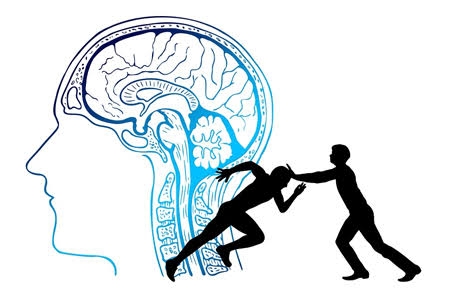
You stand at the edge of the pitch, watching a world-class athlete who has mastered every physical mechanic known to sports science suddenly freeze, choke, and completely implode the moment the score is tied in the final minute.
You grip the clipboard, cursing the invisible mental static that routinely torpedoes months of grueling physical preparation.
Why does elite technical execution disintegrate under pressure? Why is the mind still treated like an unmanageable black box?
Let’s cut through the noise right out of the gate: sports psychology is not an abstract motivational seminar, and it is not a collection of feel-good breathing exercises designed to help you manifest success through positive thinking. For decades, traditional athletics has treated the mind like a mystical accessory—you are either told to "stay tough," shake off a mental slump, or read a book of inspirational quotes until your confidence magically returns.
That view is dangerously backward.
Sports psychology is a mechanical, highly measurable internal science that maps, diagnoses, analyzes, and systematically trains the cognitive and emotional architecture governing physical execution. If you want to stop watching your athletic talent get slowly torched by emotional volatility, anxiety, and mental errors, you have to stop treating your psychology like an unexplainable mystery and start treating it like a system that requires strict diagnostic calibration. What is sports psychology? Let's break down the foundational mechanics required to stop reacting to competitive pressure and start executing with precision.
The Anatomy of an Uncalibrated Cognitive Telemetry System
Think about how you evaluate a high-performance Formula 1 racing engine when its telemetry sensors fail under extreme track heat, causing the engine control unit to misfire and stall. If the data feed between the mechanical components and the pit wall is severed, you don't stare at the dashboard and yell at the car to drive with more passion. You hook up diagnostic hardware, inspect the wiring harness, recalibrate the feedback loops, and restore structural stability to the powertrain. You treat the performance drop as a mechanical breakdown that requires systematic debugging.
Yet, when it comes to human athletic performance, we completely abandon all logic.
We expect athletes to execute complex, high-speed motor skills under intense emotional distress while relying entirely on whatever vague motivation or stubborn grit they can scrape together in the moment. And when their nervous systems inevitably overload under pressure—causing tight muscles, rushed mechanics, and catastrophic mental errors—we blame them for lacking competitive character, completely ignoring the reality that we never engineered a structural framework to manage their cognitive processing.
Sports psychology operates on exact neurobiological feedback loops. When you lack structural self-assessment tools, your emotional brain and your ancient survival pathways hijack your prefrontal cortex the second stakes rise, prioritizing panic and protection over precise execution. You aren't mentally weak; you are simply ignoring the mechanical breakdowns causing your uncalibrated cognitive telemetry.
The Lesson of the Over-Thinking Goalkeeper
I learned this reality years ago while working with a brilliant collegiate goalkeeper who was utterly convinced that his occasional inability to stop penalty kicks was a sign of a terminal flaw in his competitive character. On paper, his technical mechanics were immaculate. He possessed extraordinary explosive power, rapid lateral speed, and exceptional shot-stopping technique during low-stress training sessions. Yet, the moment a crucial penalty shootout arrived, his mind would flood with anxiety. He would guess early, over-analyze the kicker's body language, and dive the wrong way.
His mental execution was a high-performance engine running with zero telemetry or feedback control.
When we finally sat down and mapped his thought patterns after a particularly devastating championship loss, we discovered something entirely different. He wasn't failing because he lacked competitive drive. He was failing because his attention was completely misrouted during high-stakes moments. Instead of focusing on external, mechanical cues like the placement of the ball on the spot and his own set position, his working memory was consumed by catastrophic predictions: "If I dive the wrong way, the team loses because of me." He was trying to consciously control automatic motor programs with frantic internal dialogue.
Once we built a structured protocol to map his emotional triggers, establish strict external attention cues before the kick, and treat his frustration as diagnostic data rather than proof of failure, his entire profile changed. The pressure didn't get any lighter, but his ability to process those high-stakes moments without letting emotional static hijack his motor skills became completely mechanical. That is what true sports psychology looks like in action.
The Taxonomy of Sports Psychology Mechanics
To understand what sports psychology actually is, you have to look past vague wellness advice to "stay focused" and examine concrete behavioral mechanics. Here is how unskilled and skilled approaches compare across different competitive frameworks.
| Sports Psychology Dimension | The Unskilled Approach (Suppression & Hype) | The Skilled Approach (Mechanically Engineered Competency) | Corrective Technical Protocol |
| Attention Management | Letting the mind drift to past mistakes, scoreboard anxiety, or fear of failure. | Locking attention onto specific, actionable external cues required for immediate execution. | Cue word anchoring, focus mapping, visual gating. |
| Emotional Regulation | Trying to force away frustration or anger with fake positive thinking and motivational speeches. | Recognizing emotional arousal as raw data and utilizing systematic breathing to down-regulate the nervous system. | Arousal indexing, tactical breathing, physiological resets. |
| Error Processing | Berating yourself after a mistake, triggering an immediate spiral of compounding errors. | Conducting rapid root-cause analysis of mistakes to extract data before flushing the emotional residue. | Flush routines, objective auditing, immediate baseline reset. |
| Confidence Development | Relying on fleeting emotional highs and external praise from coaches and fans. | Building unshakeable self-belief through objective data logs of preparation and micro-successes. | Evidence cataloging, performance logging, mastery tracking. |
Notice the structural divide? The unskilled approach relies entirely on hope, emotional resistance, and brute-force positivity. The skilled approach relies on mechanics. When competitive pressure, fatigue, or adversity scales upward, the naive method collapses into complete functional failure.
Step-by-Step Protocol: Engineering Your Mental Arsenal
You cannot read your way into elite sports psychology mastery. You have to build your mental skills through deliberate, systematic behavioral drills just like you train your physical conditioning. Here is how you engineer cognitive precision into your athletic workflow.
1. Conduct a Focus Leak Audit
The single greatest cause of athletic inconsistency is invisible background drag—unmanaged distractions, worrying about referee calls, obsessing over past mistakes, or looking at the scoreboard. This internal chatter drains your cognitive bandwidth before you even execute your play.
-
The Practice: Map your competition focus for a single match or training session. Count how many times your attention is hijacked by internal judgment or external noise over twenty minutes. Strip away every non-essential thought process by replacing internal dialogue with hard, external sensory cues—such as the sound of the ball, the position of an opponent's hips, or your own cadence.
-
The Goal: Stop the thermal leaks in your cognitive processor. When your entire attention span is channeled exclusively into the immediate execution window, your motor skills flow without interference.
2. Implement the Physiological Reset Protocol
Your body cannot execute fine or explosive motor skills when your autonomic nervous system is locked in a high-arousal panic state. Pushing through physical tension caused by anxiety destroys mechanical fluidity.
-
The Practice: Identify your personal physical tension triggers—clenched jaws, raised shoulders, or rapid shallow breathing—that occur when pressure peaks. The moment you catch these signs, execute a hard physiological reset: drop your shoulders, exhale completely through your mouth for four seconds, and reset your stance.
-
The Goal: Regulate your nervous system mechanically. Dropping your physical arousal baseline clears out excess adrenaline and allows your trained motor programs to take over automatically.
3. Construct a Structured Error Flush Routine
A major engine of athletic collapse is the "error snowball"—where a single mistake leads to frustration, which leads to tighter mechanics, which leads to a second mistake, destroying your confidence in minutes.
-
The Practice: Build a strict, non-negotiable physical routine to execute immediately after every single error. Whether it is adjusting your socks, touching the grass, or tapping your stick, use that physical motion as a hard programmatic switch to close the open loop of the past mistake. Extract any technical data instantly, then wipe the slate clean.
-
The Goal: Prevent cognitive residue from poisoning your next play. Treating mistakes as isolated mechanical data points rather than reflections of your identity preserves your emotional stability.
4. Build a Performance Evidence Ledger
True athletic confidence is not an emotional mood state that you can simply summon through positive self-talk. It is a logical conclusion derived from verifiable evidence of your preparation and past execution.
-
The Practice: Maintain a daily training ledger where you record concrete evidence of your execution—successful reps, tactical wins, and conditioning metrics. When doubt or imposter syndrome creeps in before a major competition, review the physical evidence in your ledger.
-
The Goal: Starve self-doubt of its fuel. When your brain is confronted with undeniable documentary proof of your rigorous preparation, emotional anxiety loses its grip on your focus.
The Provocative Reality of Sports Psychology Mastery
Let’s dismantle the ultimate comforting illusion in sports: the belief that utilizing sports psychology means reaching a magical state of unshakeable calm where nervousness never occurs and pressure never feels heavy.
When athletes struggle under pressure, they love to wait until they "feel confident" or until the emotional stakes drop so they can finally play freely. They cast themselves as victims of their own nerves. That is a cop-out. It is a psychological defense mechanism designed to protect you from the uncomfortable labor of training your mind with the same brutal discipline you apply to your physical conditioning.
Mastering sports psychology requires maintenance. It requires sweat, structural discipline, and the brutal honesty of looking at your own sloppy competitive habits without making excuses. If your car engine starts sputtering because you are ignoring basic mechanical maintenance and driving on unmaintained roads under a heavy load, you don't curse the vehicle or wait for the track to flatten itself. You tune the engine, adjust your telemetry, and drive with intention.
It is time to tune the telemetry of your own competitive mind. Stop waiting for motivation to magically save you under pressure, stop hoping that hollow pep talks will substitute for structured mental mechanics, and stop treating competitive choking as an unalterable personal destiny. Build the systems, master the cognitive mechanics, and take absolute ownership of your athletic output. Watch how quickly your performance trajectory transforms when you stop reacting to competitive pressure and start engineering your sports psychology.
- Arts
- Business
- Computers
- Oyunlar
- Health
- Home
- Kids and Teens
- Money
- News
- Personal Development
- Recreation
- Regional
- Reference
- Science
- Shopping
- Society
- Sports
- Бизнес
- Деньги
- Дом
- Досуг
- Здоровье
- Игры
- Искусство
- Источники информации
- Компьютеры
- Личное развитие
- Наука
- Новости и СМИ
- Общество
- Покупки
- Спорт
- Страны и регионы
- World

 English
 Russian
 French
 Spanish
 Portuguese
 Deutsch
 Dutch
Dutch
 Italiano
 Arabic
 Romaian
 Portuguese (Brazil)
 Greek
Greek
