
How Does SaaS Work? The Hidden System Behind Modern Software
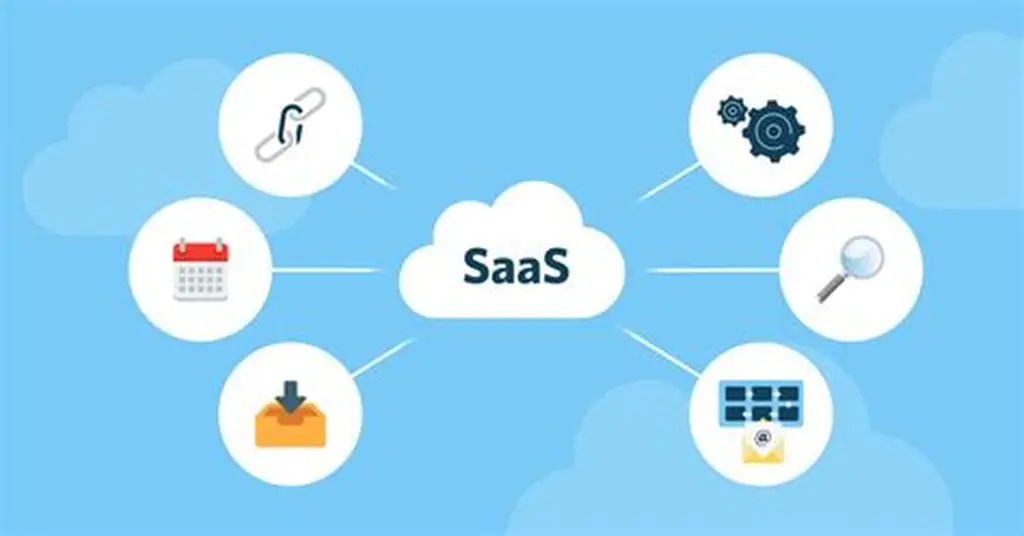
Most people use SaaS dozens of times a day without realizing it.
They open a project management platform to review tasks. They join a video meeting. They update a CRM record. They send an invoice. They collaborate on a document stored somewhere they cannot see and rarely think about.
The software works.
The files appear.
The updates happen.
The login succeeds.
And that, perhaps, is the most remarkable thing about SaaS.
When Software as a Service works well, it becomes invisible.
Customers focus on outcomes rather than infrastructure. They care about closing deals, managing employees, launching products, serving clients, or analyzing data—not about servers, software patches, database maintenance, or system architecture.
Yet behind this apparent simplicity lies an intricate operational model that fundamentally changed how software is delivered and consumed.
The question "How does SaaS work?" sounds technical.
In reality, it is also economic, operational, and surprisingly human.
Because the success of SaaS is not merely about technology. It is about removing friction between customers and the results they seek.
Understanding SaaS Before Understanding How It Works
Before examining how SaaS functions, it helps to understand what makes it different.
Traditional software was typically purchased, installed, and maintained by the customer.
A business bought licenses.
Installed software on company machines.
Managed updates.
Purchased hardware.
Handled security.
Maintained infrastructure.
SaaS reversed that arrangement.
Instead of customers managing software, providers manage software.
Instead of customers maintaining infrastructure, providers maintain infrastructure.
Instead of customers installing updates, providers deploy updates automatically.
The customer accesses the application through the internet.
The provider handles almost everything else.
That shift may sound operational.
Its consequences are profound.
The Basic SaaS Workflow
At its simplest, SaaS operates through a surprisingly elegant process.
A software company develops an application.
The application is hosted on cloud infrastructure.
Customers subscribe to access it.
Users log in through a browser or app.
The provider manages updates, security, storage, performance, and maintenance.
The customer uses the software.
The relationship continues through a recurring subscription model.
From the user's perspective, the process feels effortless.
From the provider's perspective, it requires constant orchestration.
Think about it this way.
When someone opens a SaaS application, they are not launching software installed on their own machine. They are connecting to software running elsewhere.
The application remains centralized.
Access becomes distributed.
That distinction defines the SaaS model.
The Infrastructure Behind SaaS
One reason SaaS feels simple is because complexity has been relocated.
Not eliminated.
Relocated.
Instead of thousands of customers managing separate installations, a SaaS provider manages a centralized environment.
This environment typically includes:
Cloud Servers
Cloud servers provide the computing power required to run applications.
These servers process requests, execute functionality, and deliver information to users.
Customers rarely interact with them directly.
Yet every action depends on them.
Databases
Databases store customer information, transactions, files, settings, and application data.
Whenever a user updates a record, submits a form, or saves a document, information typically flows into a database.
The database acts as the system's memory.
Application Layer
This is the software itself.
The features users interact with.
The dashboards.
The workflows.
The reports.
The automation tools.
The visible experience sits here.
Security Systems
Authentication, encryption, monitoring, and access controls help protect customer data.
Security remains one of the most important responsibilities for SaaS providers because customers entrust them with valuable information.
A SaaS Architecture Comparison
The differences between traditional software and SaaS become easier to understand when viewed structurally.
| Component | Traditional Software | SaaS Model |
|---|---|---|
| Hosting | Customer servers | Vendor cloud infrastructure |
| Installation | Local installation required | Browser-based access |
| Updates | Customer-managed | Automatic deployment |
| Maintenance | Internal IT teams | Vendor-managed |
| Data Storage | On-premises systems | Cloud databases |
| Scalability | Hardware expansion required | Flexible cloud scaling |
| Security Management | Customer responsibility | Shared vendor responsibility |
| Accessibility | Device-specific | Anywhere with internet access |
| Deployment Time | Weeks or months | Hours or days |
| Cost Structure | Upfront licensing | Recurring subscriptions |
Notice a recurring theme.
Responsibility shifts from customer to provider.
That transfer of responsibility is central to how SaaS works.
The Role of the Cloud
Many discussions about SaaS quickly arrive at cloud computing.
For good reason.
Cloud infrastructure provides the foundation that makes SaaS possible.
Without cloud environments, SaaS would struggle to deliver:
- Global accessibility
- Scalability
- Reliability
- Continuous updates
- Cost efficiency
When users access SaaS platforms, they are often connecting to cloud-hosted resources distributed across multiple geographic regions.
This architecture improves availability and performance.
More importantly, it enables providers to support thousands—or millions—of users simultaneously.
The cloud is not SaaS itself.
But SaaS depends heavily upon it.
How SaaS Handles Updates
One of the most underappreciated aspects of SaaS is how updates occur.
Traditional software upgrades were often disruptive.
Organizations scheduled installations.
Employees paused work.
Compatibility issues emerged.
Technical teams intervened.
SaaS changed this experience.
Providers deploy updates centrally.
Users typically receive improvements automatically.
No installation.
No upgrade discs.
No lengthy migration projects.
This creates several advantages.
First, customers benefit from continuous innovation.
Second, providers maintain greater consistency across their user base.
Third, security improvements can be implemented rapidly.
Everyone operates on essentially the same version of the software.
That uniformity simplifies management significantly.
How SaaS Makes Money
Understanding how SaaS works also requires understanding its economics.
Most SaaS companies rely on subscription revenue.
Customers pay:
- Monthly fees
- Annual subscriptions
- Usage-based pricing
- Tiered service plans
The model differs dramatically from traditional software licensing.
Historically, revenue often depended on one-time purchases.
SaaS generates recurring revenue.
This creates an interesting dynamic.
Providers succeed when customers continue receiving value.
Customer retention becomes critical.
The relationship extends far beyond the initial sale.
In many ways, SaaS companies operate less like software vendors and more like ongoing service providers.
Multi-Tenant vs. Single-Tenant SaaS
A concept often overlooked in basic SaaS discussions is tenancy.
Multi-Tenant Architecture
Most SaaS platforms operate using multi-tenant systems.
Multiple customers share the same underlying infrastructure while maintaining separate data environments.
Think of an apartment building.
Residents share the structure.
Each maintains a private living space.
Multi-tenancy improves efficiency and scalability.
Single-Tenant Architecture
Some SaaS providers offer dedicated environments for individual customers.
This arrangement provides greater customization and isolation.
However, it often increases costs.
The choice depends on organizational requirements, security needs, and operational priorities.
A Lesson I Learned About SaaS Adoption
Several years ago, I observed a company implementing a new SaaS platform across multiple departments.
Leadership focused heavily on features.
Integrations.
Reporting capabilities.
Automation.
The evaluation process was rigorous.
Months later, adoption remained disappointingly low.
The software was functioning perfectly.
Employees simply weren't using it consistently.
Eventually, interviews revealed the issue.
The platform was powerful.
It wasn't intuitive.
The lesson was valuable because it highlighted something often forgotten in technology discussions.
Software does not create value merely because it exists.
People must use it.
SaaS works technically through cloud infrastructure and subscription models.
It works commercially through adoption.
Those are not the same thing.
The strongest SaaS companies understand both.
How SaaS Supports Scalability
One reason businesses gravitate toward SaaS involves flexibility.
Organizations change.
Teams grow.
Markets evolve.
Customer demands fluctuate.
Traditional software often required significant infrastructure investments to accommodate growth.
SaaS offers a different model.
Additional users can often be added instantly.
Storage can expand.
Features can be upgraded.
Capacity can increase dynamically.
This elasticity allows businesses to align technology costs more closely with actual usage.
For growing organizations, this flexibility can be extremely valuable.
Security and Reliability in SaaS
A common question emerges whenever data moves beyond organizational walls.
Is it secure?
The answer depends on the provider.
Leading SaaS companies invest heavily in:
- Data encryption
- Access controls
- Compliance certifications
- Threat monitoring
- Backup systems
- Disaster recovery planning
Why?
Because trust is fundamental to the SaaS model.
Customers place critical business information inside vendor-managed systems.
Without confidence in security and reliability, adoption suffers.
Trust becomes a competitive advantage.
And trust, unlike software features, is difficult to replicate quickly.
The Future of How SaaS Works
The SaaS model continues evolving.
Artificial intelligence is becoming embedded into workflows.
Automation capabilities are expanding.
Personalization is increasing.
Platforms are becoming more interconnected.
Yet the underlying structure remains surprisingly consistent.
Centralized software.
Cloud-based delivery.
Subscription economics.
Continuous improvement.
Customer accessibility.
The mechanics evolve.
The foundation persists.
Conclusion: SaaS Works by Removing Complexity From the Customer's World
When people ask how SaaS works, they often expect a technical answer.
Servers.
Databases.
Cloud infrastructure.
Application layers.
And certainly, those components matter.
But they tell only part of the story.
The deeper answer is that SaaS works by shifting complexity away from customers and toward providers. Infrastructure management, updates, scalability, maintenance, and much of the operational burden move behind the scenes.
Customers gain access rather than ownership.
Flexibility rather than rigidity.
Services rather than installations.
That shift explains why SaaS became so pervasive across industries.
Organizations rarely wake up hoping to manage software. They want to serve customers, grow revenue, improve operations, and solve problems. SaaS succeeds because it helps them focus on those objectives instead of the technology supporting them.
The most intriguing aspect of SaaS may be that its greatest achievement is not what customers see.
It is what they no longer have to think about.
- Arts
- Business
- Computers
- Giochi
- Health
- Home
- Kids and Teens
- Money
- News
- Personal Development
- Recreation
- Regional
- Reference
- Science
- Shopping
- Society
- Sports
- Бизнес
- Деньги
- Дом
- Досуг
- Здоровье
- Игры
- Искусство
- Источники информации
- Компьютеры
- Личное развитие
- Наука
- Новости и СМИ
- Общество
- Покупки
- Спорт
- Страны и регионы
- World

 English
 Russian
 French
 Spanish
 Portuguese
 Deutsch
 Turkish
 Dutch
Dutch
 Arabic
 Romaian
 Portuguese (Brazil)
 Greek
Greek
