
The World Behind the Shopping Cart: How Global Supply Chains Shape Modern Retail
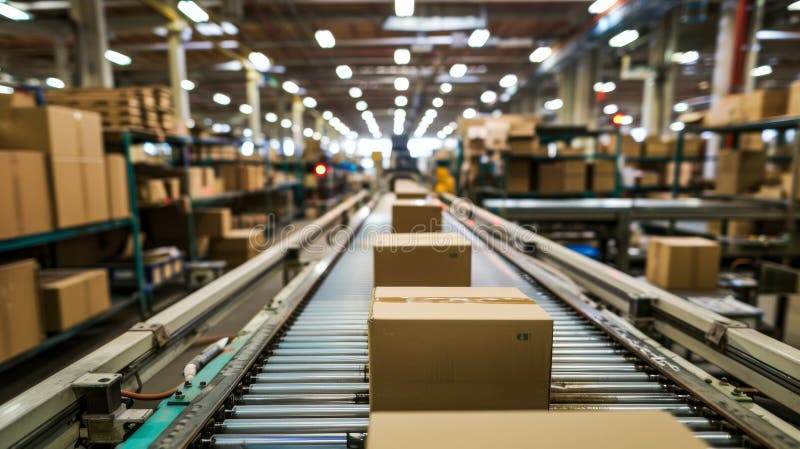
A customer walks into a store and sees a product.
A retailer sees a map.
That map may stretch across continents: raw materials sourced from one country, manufacturing completed in another, components assembled somewhere else, and finished goods transported through ports, warehouses, and distribution centers before reaching the final buyer.
The product looks simple.
The journey is not.
Global supply chains have transformed retail from a local business into a worldwide network of decisions. A shirt purchased in Chicago, a smartphone ordered in Seattle, or a toy bought in Atlanta may depend on thousands of people operating across different time zones, economies, and regulatory systems.
When the system works, consumers rarely notice.
When it does not, everyone notices.
A delayed shipment becomes an empty shelf. A factory disruption becomes a price increase. A transportation problem becomes a customer complaint.
I learned this lesson while examining a retailer that faced unexpected delays in receiving a popular product line. The company had strong sales forecasts and dependable suppliers, yet a disruption thousands of miles away affected availability in local stores. The retailer had not failed to plan. The challenge was that modern supply chains are connected so tightly that a small interruption in one location can create consequences far away.
The experience changed the way I viewed retail operations.
A supply chain is not merely a delivery system.
It is the foundation beneath the customer experience.
What Is a Global Supply Chain?
A global supply chain is a network of suppliers, manufacturers, transportation providers, warehouses, and retailers operating across multiple countries to create and deliver products.
The process typically includes:
- Raw material sourcing
- Component production
- Manufacturing
- International transportation
- Customs and regulatory processes
- Warehousing and distribution
- Retail sales
- Customer delivery
Each stage creates value.
Each stage creates risk.
A retailer’s success depends on coordinating all of them.
The complexity comes from distance. A retailer cannot simply walk into a nearby supplier’s facility and solve every problem immediately. Decisions often involve different currencies, regulations, languages, and business practices.
Global supply chains create opportunity.
They also create dependence.
How Global Supply Chains Changed Retail
Historically, many retailers relied heavily on regional suppliers.
Today, global sourcing allows companies to access:
- Lower production costs
- Specialized manufacturing expertise
- New markets
- Larger production capacity
- Diverse supplier networks
A retailer can design a product in one country, manufacture it in another, and sell it worldwide.
This structure has helped businesses offer more variety at competitive prices.
But global supply chains also changed the nature of competition.
Retailers are no longer competing only on product selection.
They are competing on operational ability.
Who can source efficiently?
Who can deliver consistently?
Who can respond quickly when conditions change?
The Role of Global Sourcing in Retail
Global sourcing is one of the most important decisions retailers make.
Companies choose suppliers based on several factors:
- Production costs
- Quality standards
- Manufacturing capabilities
- Labor conditions
- Transportation access
- Political stability
A retailer may choose one country because it offers lower manufacturing costs. Another supplier may be selected because it provides faster production or higher quality.
The cheapest option is not always the most valuable.
A lower-cost supplier that creates delays, quality issues, or compliance problems may increase expenses over time.
Retailers must evaluate the entire relationship, not just the initial price.
How Transportation Shapes Retail Success
Transportation is the physical connection between global suppliers and customers.
Products may travel through:
- Cargo ships
- Air freight
- Rail networks
- Trucking systems
- Local delivery services
Each method involves trade-offs.
Ocean shipping is economical for large quantities but requires longer lead times.
Air freight is faster but significantly more expensive.
Trucking provides flexibility but depends on regional infrastructure.
Transportation decisions influence:
- Product availability
- Delivery speed
- Retail prices
- Inventory planning
A retailer can have excellent products and reliable suppliers, but transportation delays can still interrupt the customer experience.
Global Supply Chain Models Compared
| Supply Chain Model | Main Advantage | Main Challenge | Retail Impact | Best Fit |
|---|---|---|---|---|
| Global Low-Cost Sourcing | Lower production expenses | Longer lead times and higher disruption risk | Lower prices but less flexibility | High-volume products |
| Regional Supply Networks | Faster response and easier coordination | Higher production costs | Better adaptability | Trend-driven categories |
| Multi-Country Supplier Strategy | Reduces dependence on one region | More complex management | Greater resilience | Large retailers |
| Just-in-Time Global Supply Chain | Lower inventory costs | Vulnerable to delays | Efficient operations with higher risk | Predictable demand |
| Hybrid Supply Chain Model | Balances cost and flexibility | Requires careful planning | Stronger long-term performance | Modern retail organizations |
The strongest retailers often avoid relying on a single model.
They create supply chains designed around their customers’ expectations.
Inventory: The Global Supply Chain’s Balancing Act
Inventory decisions reveal the tension between efficiency and security.
Global supply chains often encourage retailers to purchase large quantities because international production requires planning.
Large orders can reduce costs.
But they can also create challenges.
Excess inventory creates:
- Higher storage expenses
- Discounting pressure
- Reduced flexibility
Insufficient inventory creates:
- Stock shortages
- Lost sales
- Customer frustration
The challenge becomes even more difficult when products travel long distances.
A retailer cannot always respond quickly when demand changes.
A product selling faster than expected today may require weeks or months to replenish.
The Consumer Impact of Global Supply Chains
Consumers experience global supply chains through three major factors:
Price
Global sourcing has allowed many retailers to offer lower prices by accessing efficient manufacturing networks.
However, disruptions, transportation costs, and material shortages can increase prices.
Availability
Customers expect products to be available when they want them.
Global supply challenges can interrupt that expectation.
Speed
Online retail has increased pressure for faster delivery.
Consumers increasingly view delivery performance as part of the product experience itself.
The supply chain has become invisible infrastructure behind customer satisfaction.
Risk and Resilience: The New Supply Chain Priorities
For years, many retailers focused heavily on efficiency.
The goal was simple:
Reduce costs.
Increase speed.
Minimize inventory.
But major disruptions demonstrated that efficiency alone is not enough.
Retailers now place greater emphasis on resilience.
Resilient supply chains may include:
- Multiple suppliers
- Regional production options
- Increased visibility
- Emergency inventory plans
- Flexible transportation strategies
The question has changed.
Companies are no longer asking only, “How cheaply can we produce this?”
They are also asking, “How reliably can we deliver it?”
Technology’s Growing Influence
Global supply chains generate enormous amounts of information.
Retailers use technology to understand:
- Customer demand
- Supplier performance
- Transportation status
- Inventory movement
- Market changes
Advanced analytics can help companies identify potential problems earlier.
Automation can improve warehouse efficiency.
Tracking systems can provide greater visibility.
But technology does not eliminate complexity.
A supply chain remains a human system involving negotiation, decision-making, and adaptation.
Data can reveal a problem.
People must still solve it.
Sustainability and Global Supply Chains
Global supply chains also face increasing pressure to address environmental and social concerns.
Retailers are examining:
- Manufacturing practices
- Transportation emissions
- Packaging choices
- Supplier responsibility
Sustainability decisions are complicated because they often involve balancing cost, customer expectations, and operational realities.
A shorter supply chain may reduce transportation needs but increase production costs.
A lower-cost supplier may create questions about labor practices.
Retailers must consider the broader consequences of their sourcing decisions.
Why Global Supply Chains Create Competitive Advantage
A strong global supply chain can become one of a retailer’s greatest advantages.
It allows companies to:
- Launch products faster
- Maintain better availability
- Control costs
- Respond to changing demand
- Expand into new markets
Two retailers may sell similar products at similar prices.
The difference may be hidden behind the scenes.
One company has a supply chain that adapts.
The other has one that struggles.
Customers may never see the difference directly.
They experience it through better service.
Conclusion: The Retail Experience Begins Before the Store
Consumers often think retail begins when they discover a product.
The reality is different.
Retail begins long before the product reaches the shelf.
It begins with suppliers, factories, shipping routes, warehouses, and countless decisions made across borders.
Global supply chains have made modern retail more efficient, more connected, and more competitive. They have also made it more vulnerable to disruption.
The future of retail will not belong to companies that simply build larger supply networks.
It will belong to companies that build smarter ones.
Because the greatest supply chains are not defined only by how much they move.
They are defined by how well they adapt.
The product on the shelf is the final chapter.
The global supply chain wrote the story.
- Arts
- Business
- Computers
- Jogos
- Health
- Início
- Kids and Teens
- Money
- News
- Personal Development
- Recreation
- Regional
- Reference
- Science
- Shopping
- Society
- Sports
- Бизнес
- Деньги
- Дом
- Досуг
- Здоровье
- Игры
- Искусство
- Источники информации
- Компьютеры
- Личное развитие
- Наука
- Новости и СМИ
- Общество
- Покупки
- Спорт
- Страны и регионы
- World

 English
 Russian
 French
 Spanish
 Portuguese
 Deutsch
 Turkish
 Dutch
Dutch
 Italiano
 Arabic
 Romaian
 Greek
Greek
