
Does exercise improve mental performance?
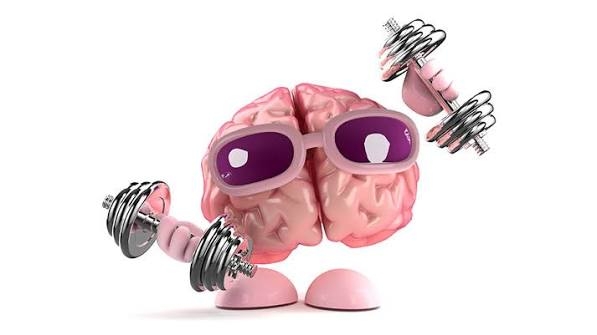
You stare blankly at a dense analytical spreadsheet while your brain feels like it is crawling through thick, suffocating sludge, watching your working memory fail to retain simple metrics as the afternoon hours stretch endlessly ahead.
You grip the edge of your desk, cursing your sluggish processing speed and the mental fog clouding your cognitive capabilities.
Why is my brain moving at a snail's pace? Why can't I sharpen my mental acuity when I need it most?
Let’s cut through the noise right out of the gate: your chronic cognitive sluggishness is not a sign that your neurological hardware is permanently defective, and your tendency to hit a mental wall under intellectual pressure is not proof that you were born without the capacity for high-level neuroplasticity. For decades, wellness culture and pop psychology have treated physical exercise like a superficial lifestyle accessory or an aesthetic chore—you are either told to sweat for beach muscles, lose weight, or hit arbitrary step counts until your mood magically improves.
That view is dangerously backward.
Physical exercise is not an unexplainable emotional art form or a magical fitness toy that rewrites cognitive architecture through wishful thinking. It is a mechanical, highly measurable internal biological conditioning drill that can be mapped, diagnosed, analyzed, and systematically trained just like your cardiovascular capacity, muscular strength, or technical execution. If you want to stop watching your professional and academic potential get slowly torched by mental fatigue and cognitive decay, you have to stop treating your body like a passive vehicle and start treating it as the primary life support system for your brain. Does exercise improve mental performance? Let's break down the foundational architecture required to stop reacting to mental static and start executing with precision.
The Anatomy of an Uncalibrated Biological Processor
Think about how you evaluate a high-performance server cooling and power generation facility when its processing nodes begin lagging under intense computational workloads. If the system is uncalibrated, the power supply is fluctuating, and the thermal management arrays are flooding with erratic error signals, you don't stare at the server rack and yell at the machinery to compute data with more enthusiasm. You check the coolant pumps, balance the electrical load, clean the ventilation filters, and restore structural stability to the hardware array. You treat the data corruption as a mechanical breakdown that requires systematic environmental debugging.
Yet, when it comes to human cognitive conditioning, we completely abandon all logic.
We expect our brains to execute complex analytical tasks, retain massive volumes of structural data, and navigate high-stakes professional friction while running unmanaged, sedentary biological routines that constantly starve our neural tissue of oxygen, neurotrophic factors, and metabolic efficiency. And when our working memories inevitably flood with panic, distraction, or cognitive exhaustion—causing slow processing, careless errors, and mental burnout—we blame ourselves for lacking natural intelligence, completely ignoring the reality that we never engineered a structural framework to train our physical conditioning for cognitive output.
Mental performance operates on exact neurobiological feedback loops. When you lack structural physical conditioning tools, your brain defaults to lazy metabolic pathways, burning through glucose inefficiently and fatiguing your prefrontal cortex. You aren't weak; you are simply ignoring the mechanical breakdowns causing your uncalibrated biological processing loops.
The Lesson of the Over-Sedentary Analyst
I learned this reality years ago while working with an elite financial data analyst who was utterly convinced that his persistent inability to sustain focus during complex market modeling was the result of a terminal flaw in his biological hard drive. On paper, his dedication was absolute. He spent twelve hours every single day sitting in front of dual monitors, refusing to take a lunch break, convinced he was maximizing his productivity through sheer brute-force endurance. Yet, the moment he had to build a complex predictive valuation model under tight constraints, his working memory would short-circuit under pressure.
His daily routine was a high-performance system running with zero operational transfer, stagnant blood flow, and structural neglect.
When we finally sat down and mapped his cognitive habits after a devastating forecasting error that cost his firm a major transactional window, we discovered something entirely different. He wasn't failing because his brain lacked analytical capacity. He was failing because his physical maintenance protocols were entirely disconnected from the actual mechanics of neural health. He was starving his brain of cerebral blood flow, brain-derived neurotrophic factor (BDNF), and structural neuroplasticity stimulation by remaining completely sedentary for fourteen hours a day.
Once we built a structured protocol to replace passive afternoon caffeine consumption with rigorous zone-2 cardiovascular training sessions, intermittent mobility breaks, and post-exercise cognitive loading, his entire profile changed. The financial models didn't get any lighter, but his ability to process dense structural data without letting cognitive fatigue hijack his focus became completely mechanical. That is what true biological conditioning for mental performance looks like in action.
The Taxonomy of Exercise-Cognition Mechanics
To understand whether exercise improves mental performance, you have to look past vague wellness advice to "stay active" and examine concrete behavioral mechanics. Here is how unskilled and skilled approaches compare across different cognitive-physical frameworks.
| Exercise-Cognition Dimension | The Unskilled Approach (Sporadic Workouts & Aesthetic Fitness) | The Skilled Approach (Mechanically Engineered Cognitive Conditioning) | Corrective Technical Protocol |
| Workout Programming | Lifting weights or running purely for aesthetic appearance or random calorie burning. | Targeting specific neurobiological pathways using zone-2 aerobic conditioning and high-intensity intervals. | BDNF stimulation, vascular priming, metabolic optimization. |
| Timing & Sequencing | Exercising randomly late at night without regard for cognitive recovery windows. | Sequencing aerobic sessions strategically before high-cognition deep work blocks. | Pre-task priming, neurochemical windowing, post-workout integration. |
| Data Tracking | Guessing physical progress based solely on scale weight and mirror reflection. | Monitoring resting heart rate variability, cognitive processing speed, and sustained attention metrics. | Physiological auditing, telemetry tracking, cognitive baseline logging. |
| Recovery Integration | Ignoring sleep, nutrition, and physical restoration, leading to systemic neural fatigue. | Balancing physical stress loads with structured rest intervals to maximize structural neuroplasticity. | Supercompensation management, sleep optimization, strain calibration. |
Notice the structural divide? The unskilled approach relies entirely on hope, aesthetic motivation, and arbitrary fitness trends. The skilled approach relies on mechanics. When academic complexity or professional cognitive load scales upward, the naive method collapses into complete functional inefficiency.
Step-by-Step Protocol: Engineering Your Physical-Mental Arsenal
You cannot read your way into elite cognitive-physical mastery. You have to build your mental performance capabilities through deliberate, systematic behavioral drills just like you train your physical fitness or technical execution. Here is how you engineer biological precision into your daily workflow.
1. Conduct a Sedentary Friction Audit
The single greatest cause of poor mental performance is invisible biological stagnation—letting your body sit motionless for hours on end, which reduces cerebral blood flow, dampens neurotransmitter sensitivity, and induces chronic mental fog.
-
The Practice: Map your daily physical movement and sitting habits for a single week. Count how many hours you remain completely stationary versus how many intervals of elevated heart rate you experience. Strip away the sedentary blocks and insert strategic movement windows throughout your day.
-
The Goal: Stop the thermal leaks in your biological processor. When your daily routine forces your cardiovascular system to actively pump oxygen and neurotrophic factors to your brain, your baseline cognitive speed and mental clarity scale upward rapidly.
2. Implement Strategic Pre-Task Aerobic Priming
Your brain does not process complex analytical data efficiently when your body is sluggish and unprimed; it encodes information rapidly when neural tissue is flooded with optimal neurotransmitter levels.
-
The Practice: Utilize targeted aerobic sessions—such as a brisk thirty-minute walk or a zone-2 cycling session—directly before your most demanding cognitive work blocks. Instead of jumping straight from sleep into deep analytical problem-solving, prime your biological hardware first.
-
The Goal: Expand your cognitive bandwidth accurately. Pre-task aerobic priming directly enhances working memory capacity, executive function, and your ability to hold complex variables in mind during high-level problem-solving.
3. Construct a Structured Post-Workout Cognitive Integration Drill
A major engine of wasted physical effort is the failure to leverage the immediate post-exercise neuroplastic window for complex learning and skill acquisition.
-
The Practice: Following an intense physical training session, dedicate the subsequent sixty-minute window to your most challenging learning or strategic planning tasks. During this time, your brain's neuroplasticity is elevated, making it an ideal window for encoding complex structural information.
-
The Goal: Maximize your biological efficiency. Training your brain to absorb dense academic or professional material during periods of elevated neurotrophic factor production turns physical exercise into a direct cognitive accelerator.
4. Build a Biological Stamina Calibration Protocol
True mental sharpness is not achieved by sporadic weekend gym sessions followed by days of complete physical inactivity; it requires building sustained biological endurance under load.
-
The Practice: Gradually scale your weekly physical conditioning volume. Begin with three weekly structured aerobic sessions of thirty minutes, and systematically build toward consistent cardiovascular conditioning alongside resistance training. Treat missed physical sessions as mechanical failures that require an immediate reset.
-
The Goal: Inoculate your nervous system against mental fatigue. When your body is conditioned to sustain high metabolic output and efficient oxygen utilization, complex professional projects and academic demands lose their power to exhaust your cognitive reserves.
The Provocative Reality of Cognitive-Physical Conditioning
Let’s dismantle the ultimate comforting illusion in modern life: the belief that mastering mental performance means sitting in a chair indefinitely while ignoring your physical health, expecting your brain to function at an elite level despite starving its biological host.
When professionals and students struggle with cognitive performance, they love to wait until they "feel inspired" or until their mental fog magically clears so they can finally study or work without resistance. They cast themselves as victims of demanding workloads and slow processing speeds. That is a cop-out. It is a psychological defense mechanism designed to protect you from the uncomfortable labor of training your body and mind with the same brutal discipline you apply to your professional execution.
Mastering cognitive-physical conditioning requires maintenance. It requires sweat, structural discipline, and the brutal honesty of looking at your own sloppy sedentary habits without making excuses. If your car engine starts sputtering because you are ignoring basic mechanical maintenance and driving on unmaintained roads under a heavy load, you don't curse the vehicle or wait for the road to flatten itself. You tune the engine, adjust your telemetry, and drive with intention.
It is time to tune the telemetry of your own biological processor. Stop waiting for motivation to magically sharpen your mind, stop hoping that casual walking will substitute for structured cardiovascular conditioning, and stop treating mental fatigue as an unalterable personal destiny. Build the systems, master the biological mechanics, and take absolute ownership of your intellectual output. Watch how quickly your professional and academic trajectory transforms when you stop reacting to mental static and start engineering your exercise protocols for peak cognitive performance.
- Arts
- Business
- Computers
- Spiele
- Health
- Startseite
- Kids and Teens
- Geld
- News
- Personal Development
- Recreation
- Regional
- Reference
- Science
- Shopping
- Society
- Sports
- Бизнес
- Деньги
- Дом
- Досуг
- Здоровье
- Игры
- Искусство
- Источники информации
- Компьютеры
- Личное развитие
- Наука
- Новости и СМИ
- Общество
- Покупки
- Спорт
- Страны и регионы
- World

 English
 Russian
 French
 Spanish
 Portuguese
 Turkish
 Dutch
Dutch
 Italiano
 Arabic
 Romaian
 Portuguese (Brazil)
 Greek
Greek
