
What Is Subscription-Based Pricing? Why Paying Repeatedly Became the Dominant Business Model
The most interesting thing about subscription-based pricing is that customers often complain about it while simultaneously embracing it.
Ask consumers how they feel about monthly charges, and many will describe a growing sense of fatigue. Streaming services, productivity apps, cloud storage, fitness platforms, meal kits—the list seems endless.
Yet subscription businesses continue to expand.
That apparent contradiction reveals something important.
Customers are not necessarily opposed to recurring payments. They are opposed to recurring payments that fail to deliver recurring value.
The distinction matters.
For decades, businesses focused on transactions. A customer purchased a product, exchanged money, and the relationship largely ended. Subscription pricing changed that equation. It transformed a single moment of purchase into an ongoing conversation between company and customer.
That shift has profound implications—not just for revenue models but for marketing, customer experience, product development, and competitive strategy.
Subscription-based pricing is often described as a billing mechanism. In reality, it is something much larger.
It is a business philosophy built around continuity.
And understanding why it works requires looking beyond the monthly invoice.
What Is Subscription-Based Pricing?
Subscription-based pricing is a business model in which customers pay a recurring fee—typically monthly, quarterly, or annually—to gain continued access to a product or service.
Instead of purchasing ownership outright, customers purchase access over time.
Common examples include:
- Software platforms
- Streaming services
- Digital publications
- Membership communities
- Cloud storage providers
- Fitness programs
- Subscription boxes
The arrangement appears simple.
A customer pays.
Access continues.
Payment stops.
Access ends.
Yet beneath that straightforward structure lies a significant shift in how value is created and captured.
Traditional pricing asks:
“Can we persuade customers to buy?”
Subscription pricing asks:
“Can we persuade customers to stay?”
Those are fundamentally different challenges.
Why Subscription Pricing Became So Popular
At first glance, recurring payments seem far more attractive for businesses than for customers.
Companies gain predictable revenue.
Customers assume recurring obligations.
Case closed.
But that interpretation overlooks why subscription models gained traction in the first place.
The success of subscription pricing emerged because it solved problems for both sides.
For businesses, subscriptions reduce revenue volatility.
For customers, subscriptions reduce upfront commitment.
Instead of spending $2,000 on enterprise software, a customer might spend $49 per month.
Instead of purchasing a year's worth of content, they can evaluate value incrementally.
The psychological barrier becomes smaller.
Risk decreases.
Adoption increases.
The economics change because the psychology changes.
And psychology often drives purchasing behavior more than spreadsheets do.
The Evolution from Ownership to Access
Historically, ownership occupied a privileged position in commerce.
People purchased books.
They bought CDs.
They owned software.
They accumulated products.
Today, many consumers prioritize access over possession.
They stream music instead of purchasing albums.
They subscribe to software rather than buying licenses.
They consume content through memberships instead of acquiring individual copies.
Why?
Partly because technology made access frictionless.
Partly because expectations evolved.
And partly because ownership itself became less valuable in certain categories.
A customer does not necessarily want accounting software.
They want functioning accounting.
They do not want cybersecurity infrastructure.
They want protection.
They do not want media files.
They want entertainment.
Subscription pricing aligns naturally with this outcome-oriented mindset.
The Core Mechanics of Subscription-Based Pricing
Every subscription model contains three foundational elements.
Recurring Payments
The most obvious component is regular billing.
Customers pay according to a predetermined schedule:
- Monthly
- Quarterly
- Semi-annually
- Annually
Annual subscriptions often include discounts designed to improve retention and cash flow.
For example:
- Monthly Plan: $25/month
- Annual Plan: $240/year
The annual customer pays less overall while the company receives more immediate revenue.
Both parties benefit.
At least theoretically.
Continuous Access
Unlike traditional purchases, subscriptions grant ongoing access rather than permanent ownership.
Access remains contingent upon continued payment.
This creates an ongoing relationship between customer and provider.
The transaction never truly ends.
Ongoing Value Delivery
This final element is often overlooked.
Subscription pricing works only when value continues to accumulate.
A company cannot simply win a customer once.
It must continually justify renewal.
That requirement fundamentally changes organizational priorities.
The Different Types of Subscription-Based Pricing
Not all subscription models operate identically.
Several distinct approaches exist.
Fixed Subscription Pricing
Customers pay a single recurring fee.
Everyone receives essentially the same offering.
| Plan Type | Monthly Price |
|---|---|
| Standard Access | $49 |
This model prioritizes simplicity.
Customers immediately understand what they will pay.
Predictability becomes a competitive advantage.
Tiered Subscription Pricing
Customers choose among multiple service levels.
| Tier | Monthly Price |
|---|---|
| Basic | $19 |
| Professional | $79 |
| Enterprise | Custom |
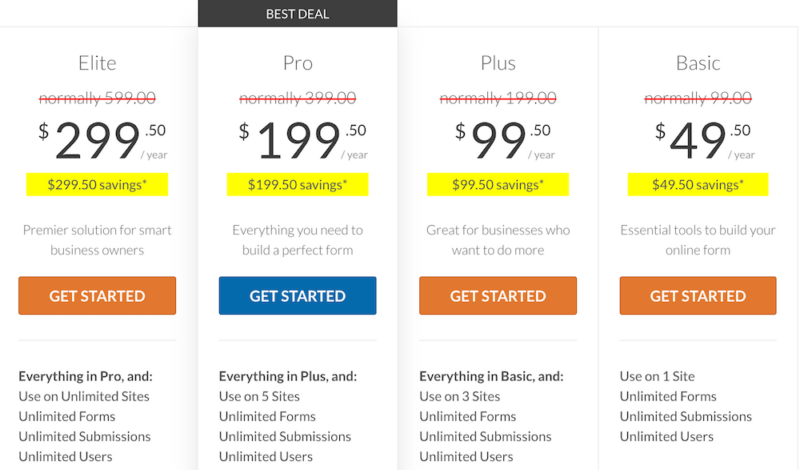
Tiered pricing allows companies to serve different customer segments simultaneously.
A startup and a global corporation rarely require identical solutions.
Tiering acknowledges that reality.
Usage-Based Subscription Pricing
Some subscriptions combine recurring fees with consumption-based charges.
Examples include:
- API requests
- Data storage
- Transaction volume
- Processing capacity
This approach aligns costs more closely with value creation.
As usage grows, revenue grows.
Freemium Subscription Models
Freemium pricing offers basic access at no cost while reserving advanced features for subscribers.
The free tier functions as an acquisition engine.
The paid tier generates revenue.
The challenge lies in balancing generosity with monetization.
Too much free value suppresses upgrades.
Too little discourages adoption.
Comparing Subscription Pricing Models
| Pricing Model | Revenue Predictability | Customer Flexibility | Complexity | Ideal For |
|---|---|---|---|---|
| Fixed Subscription | High | Low | Low | Simple services |
| Tiered Subscription | High | High | Medium | Diverse customer bases |
| Usage-Based Subscription | Medium | Very High | Medium | Infrastructure services |
| Freemium Subscription | Variable | Very High | Low | Product-led growth businesses |
| Hybrid Subscription | High | High | High | Mature SaaS companies |
Notice something interesting.
No model dominates every category.
Each represents a different tradeoff.
That observation becomes increasingly important as markets mature.
The Psychology Behind Subscription Pricing
Subscription pricing is often discussed through financial metrics.
Yet behavioral economics may be equally important.
Customers rarely evaluate recurring payments in purely rational terms.
They evaluate them emotionally.
One psychological factor is payment smoothing.
A $600 annual purchase feels expensive.
A $50 monthly subscription often feels manageable.
Mathematically, they may be identical.
Emotionally, they are not.
Another factor is commitment reduction.
Subscriptions lower perceived risk.
Customers know they can cancel.
Whether they actually do is another matter.
The existence of an exit option often increases willingness to enter.
Then there is habit formation.
Repeated usage strengthens customer attachment.
The longer customers integrate a product into their routines, the more difficult cancellation becomes.
This dynamic helps explain why retention is often the defining metric for subscription businesses.
Why Businesses Love Subscription Revenue
Executives frequently describe recurring revenue as attractive.
That description may be an understatement.
Subscription businesses enjoy several advantages.
Greater Revenue Visibility
Future income becomes more predictable.
Forecasting improves.
Planning improves.
Investor confidence often improves as well.
Stronger Customer Relationships
Traditional transactions are episodic.
Subscriptions create continuity.
Every renewal becomes an opportunity to deepen engagement.
Lower Customer Acquisition Pressure
A one-time purchase requires constant replacement customers.
Subscriptions generate ongoing revenue from existing customers.
Retention becomes a growth engine.
Expansion Opportunities
Customers can upgrade.
Purchase add-ons.
Expand usage.
Revenue growth can occur without acquiring entirely new accounts.
The Hidden Risks of Subscription Pricing
For all its strengths, subscription pricing creates unique vulnerabilities.
Businesses often underestimate them.
Churn
The greatest threat to subscription revenue is customer departure.
A subscription model leaks value whenever customers cancel.
Small increases in churn can dramatically reduce long-term profitability.
Subscription Fatigue
Consumers face growing numbers of recurring charges.
As subscription proliferation increases, scrutiny intensifies.
Customers become more selective.
Continuous Performance Expectations
One-time purchases allow companies occasional missteps.
Subscriptions do not.
Customers reassess value constantly.
The relationship is perpetually under review.
A Lesson I Learned About Subscription Value
Several years ago, I participated in a strategic workshop involving a software company concerned about rising cancellations.
The leadership team initially focused on pricing.
Perhaps prices were too high.
Perhaps competitors were undercutting them.
Perhaps customers wanted discounts.
The discussion felt logical.
Then someone examined customer behavior immediately preceding cancellation.
The findings were surprising.
Price was not the primary issue.
Usage was.
Customers who regularly engaged with the product stayed.
Customers who stopped integrating the software into daily workflows left.
The problem wasn't pricing.
The problem was value visibility.
Once the company redesigned onboarding and improved engagement triggers, retention improved substantially.
The lesson stayed with me.
Subscription pricing succeeds not because customers agree to pay repeatedly.
It succeeds because companies earn the right to charge repeatedly.
Those are very different things.
Subscription Pricing in the Age of Artificial Intelligence
Artificial intelligence introduces fascinating questions about subscription economics.
Historically, subscriptions granted access.
Increasingly, software performs work autonomously.
This raises a strategic dilemma.
Should companies charge for access?
For usage?
For productivity gains?
For outcomes?
Consider an AI writing platform.
The customer may care less about logging in and more about articles produced.
Value migrates from activity to results.
As AI capabilities expand, subscription models will likely evolve accordingly.
The traditional concept of paying for access may gradually give way to paying for measurable outcomes.
That transition is already beginning.
Conclusion: Subscription Pricing Is a Relationship, Not a Transaction
Subscription-based pricing is often portrayed as a revenue model.
Technically, that description is correct.
Strategically, it is incomplete.
Subscriptions fundamentally alter the relationship between businesses and customers. They replace isolated purchases with ongoing exchanges. They reward retention over acquisition, consistency over novelty, and sustained value over short-term persuasion.
That is why the most successful subscription companies rarely obsess solely over pricing. They focus on engagement. They focus on outcomes. They focus on making themselves difficult to leave—not through contracts or restrictions, but through relevance.
The real power of subscription pricing is not that customers pay every month.
It is that companies must earn that payment every month.
For organizations willing to embrace that discipline, subscription pricing becomes more than a billing structure.
It becomes a test of whether value is genuinely being delivered.
And that may be the most revealing metric of all.
- Arts
- Business
- Computers
- Spiele
- Health
- Startseite
- Kids and Teens
- Geld
- News
- Personal Development
- Recreation
- Regional
- Reference
- Science
- Shopping
- Society
- Sports
- Бизнес
- Деньги
- Дом
- Досуг
- Здоровье
- Игры
- Искусство
- Источники информации
- Компьютеры
- Личное развитие
- Наука
- Новости и СМИ
- Общество
- Покупки
- Спорт
- Страны и регионы
- World

 English
 Russian
 French
 Spanish
 Portuguese
 Turkish
 Dutch
Dutch
 Italiano
 Arabic
 Romaian
 Portuguese (Brazil)
 Greek
Greek
