
What Is Usage-Based Pricing? Why the Most Important Number May Not Be the Price
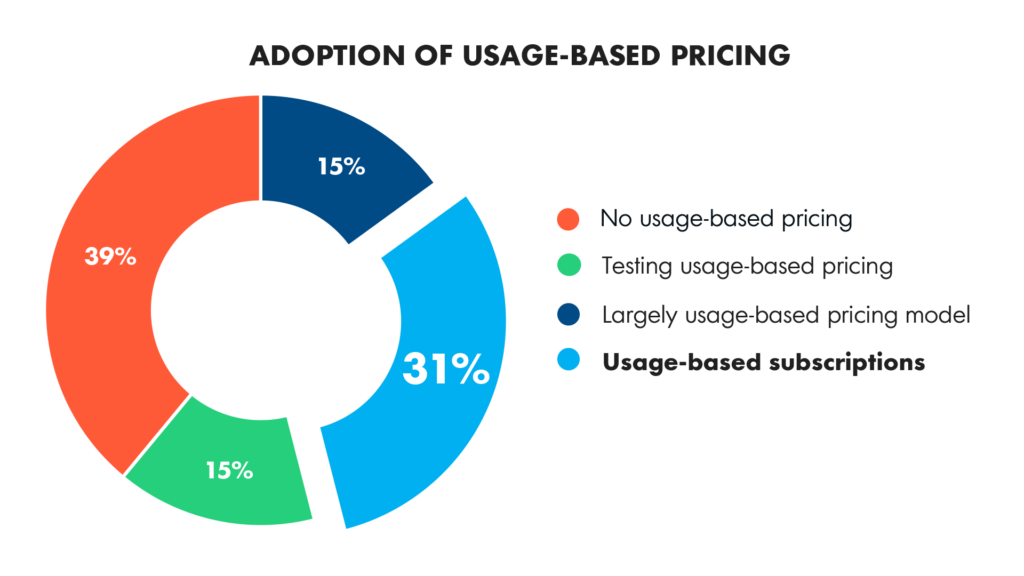
For decades, pricing followed a familiar script.
A customer bought a product. The company named a price. Money changed hands. The transaction ended.
Even when subscription models emerged, the underlying logic remained largely intact. Customers paid for access. Whether they used the product extensively or barely touched it often had little impact on what they owed.
Then a different idea began gaining traction.
What if customers paid not for access, but for usage?
What if pricing expanded and contracted according to actual consumption?
At first glance, the concept feels almost self-evident. After all, we already encounter similar arrangements in everyday life. Utility bills fluctuate according to electricity consumption. Shipping costs vary based on volume. Transportation expenses often reflect distance traveled.
Yet when applied to software and digital services, usage-based pricing represents something more significant than a billing mechanism.
It reflects a different philosophy of value.
Instead of asking, “How many customers do we have?” companies begin asking, “How much value are customers creating?”
That subtle shift has transformed industries ranging from cloud computing and artificial intelligence to cybersecurity and communications platforms.
The result is one of the fastest-growing pricing strategies in modern business.
And one of the most misunderstood.
What Is Usage-Based Pricing?
Usage-based pricing is a pricing model in which customers are charged according to how much of a product or service they consume.
Rather than paying a fixed fee for access, customers pay based on measurable activity.
Common usage metrics include:
- API calls
- Data storage
- Transactions processed
- Messages sent
- Computing power consumed
- AI tokens generated
- Gigabytes transferred
The formula is simple:
More usage = Higher cost
Less usage = Lower cost
At a conceptual level, usage-based pricing attempts to align payment with value.
Customers pay when they benefit.
Providers earn more when customers derive more utility.
That alignment explains why many technology companies view usage-based pricing as an attractive alternative to traditional subscription models.
But alignment, as we will see, is not always simplicity.
Why Usage-Based Pricing Became Popular
Historically, software companies favored predictable subscriptions.
A customer paid $99 per month.
Access continued.
Revenue forecasting became straightforward.
Investors appreciated the consistency.
Customers understood the arrangement.
Everyone seemed satisfied.
Yet a problem lurked beneath the surface.
Not all customers generated equal value.
Consider two organizations paying identical subscription fees.
One logs into the platform once per week.
The other processes millions of transactions every month.
The pricing remains the same.
The value received does not.
This disconnect created pressure for a more flexible model.
Usage-based pricing emerged as a solution.
Rather than charging everyone equally, companies began charging proportionally.
The philosophy shifted from ownership to consumption.
And that shift changed everything.
How Usage-Based Pricing Works
The mechanics vary by industry, but the underlying structure remains remarkably consistent.
A company identifies a measurable unit of value.
Customers are billed according to how much of that unit they consume.
For example:
| Usage Metric | Price |
|---|---|
| 1,000 API Calls | $2 |
| 10 GB Storage | $5 |
| 100 Transactions | $1 |
| 1 Million AI Tokens | $10 |
The pricing unit becomes the foundation of the business model.
The critical challenge is selecting the right metric.
Because not every activity accurately reflects customer value.
A poor usage metric can create frustration.
A strong usage metric can create powerful alignment.
The difference is substantial.
The Psychology Behind Usage-Based Pricing
Most pricing discussions focus on economics.
Customers, however, often experience pricing psychologically before they experience it financially.
Usage-based pricing succeeds partly because it activates a powerful perception of fairness.
Customers frequently ask themselves:
“Am I paying for what I actually use?”
Traditional subscriptions sometimes create discomfort.
A customer paying $200 monthly while using only a fraction of the platform may feel trapped.
Usage-based pricing reduces that concern.
Costs appear proportional.
Waste appears minimized.
The emotional response changes.
Interestingly, this dynamic also affects purchasing decisions.
A fixed annual contract requires commitment before value is fully demonstrated.
Usage pricing lowers the barrier to entry.
Customers can start small.
Risk feels manageable.
Experimentation becomes easier.
The perception of flexibility often matters as much as the flexibility itself.
The Different Types of Usage-Based Pricing
Usage-based pricing is not a single model.
Several variations exist.
Pure Usage-Based Pricing
Under this structure, charges depend entirely on consumption.
No base subscription exists.
Customers pay only for what they use.
For example:
| Usage | Monthly Cost |
|---|---|
| 5,000 Requests | $10 |
| 50,000 Requests | $100 |
| 500,000 Requests | $1,000 |
This approach creates maximum flexibility.
It also creates maximum revenue variability.
Tiered Usage Pricing
Many companies establish usage thresholds.
Pricing changes as consumption reaches specific levels.
Example:
| Monthly Usage | Price per Unit |
|---|---|
| First 10,000 Requests | $0.002 |
| Next 50,000 Requests | $0.0015 |
| Beyond 60,000 Requests | $0.001 |
This structure rewards growth while maintaining economic efficiency.
Hybrid Pricing
Hybrid models combine subscriptions with usage charges.
Customers pay:
- A recurring base fee
- Additional usage fees
For example:
| Component | Cost |
|---|---|
| Platform Access | $99/month |
| Additional API Usage | Variable |
This approach balances predictability with scalability.
Many mature SaaS companies prefer hybrid structures because they reduce revenue volatility.
Pay-As-You-Go Pricing
Customers are billed exclusively after usage occurs.
No commitment is required.
No minimum spend exists.
This model is particularly common among cloud infrastructure providers.
It emphasizes flexibility and low barriers to adoption.
Why SaaS and Cloud Companies Love Usage-Based Pricing
Software executives often describe usage-based pricing as highly aligned with customer value.
There is truth in that claim.
But there are additional reasons.
Revenue Expands Naturally
Traditional subscriptions require upselling.
Usage-based pricing often generates expansion automatically.
As customers grow, usage increases.
As usage increases, revenue rises.
Growth becomes embedded within customer success.
That relationship is extraordinarily attractive.
Lower Entry Barriers
Large contracts can discourage adoption.
Usage-based pricing allows customers to begin with minimal commitments.
Initial purchases feel less risky.
Sales cycles often become shorter.
Better Customer Segmentation
Different customers consume products differently.
Usage-based models accommodate that variation naturally.
Small customers pay less.
Large customers pay more.
Pricing adjusts without requiring complex package structures.
The Hidden Challenges of Usage-Based Pricing
The appeal of usage pricing is easy to understand.
Its difficulties are less obvious.
And often more consequential.
Revenue Predictability
Finance teams value certainty.
Usage-based pricing introduces variability.
Revenue may fluctuate significantly month to month.
Forecasting becomes more difficult.
Budget planning becomes more complicated.
Customer Anxiety
Customers appreciate flexibility.
They dislike surprises.
An unexpected invoice can damage trust quickly.
Particularly when usage accelerates unexpectedly.
This concern explains why many providers invest heavily in usage dashboards, spending alerts, and forecasting tools.
Transparency becomes essential.
Metric Selection
Not every measurable activity reflects value.
A company might charge based on API calls because they are easy to track.
Customers, however, may care about outcomes rather than requests.
Misalignment creates friction.
Selecting the right metric remains one of the most difficult pricing decisions any company faces.
Comparing Usage-Based Pricing With Other Models
| Pricing Model | Revenue Predictability | Customer Flexibility | Scalability | Complexity |
|---|---|---|---|---|
| Flat-Rate Pricing | High | Low | Medium | Low |
| Subscription Pricing | High | Medium | Medium | Low |
| Per-User Pricing | High | Medium | High | Low |
| Tiered Pricing | High | High | High | Medium |
| Usage-Based Pricing | Medium | Very High | Very High | Medium |
| Hybrid Pricing | High | High | Very High | High |
Notice the tradeoff.
Usage-based pricing offers exceptional scalability and flexibility.
But it sacrifices some predictability.
Every pricing strategy involves compromise.
There are no universally perfect solutions.
Only better fits for specific business models.
A Lesson I Learned About Usage and Value
Several years ago, I participated in a workshop involving a technology company considering a shift toward usage-based pricing.
The leadership team was enthusiastic.
Usage seemed measurable.
The economics appeared attractive.
The transition felt obvious.
Then the customer interviews began.
Something unexpected emerged.
Customers were not discussing usage.
They were discussing outcomes.
One customer cared about leads generated.
Another focused on operational efficiency.
A third emphasized risk reduction.
None of them mentioned the metric the company intended to charge for.
That discovery changed the entire conversation.
The issue was not whether usage could be measured.
The issue was whether usage represented value.
Eventually, the company adopted a hybrid structure that blended usage metrics with outcome-oriented pricing elements.
Adoption improved.
Customer conversations became easier.
The experience reinforced an important lesson.
The best pricing metric is not necessarily the easiest one to track.
It is the one customers believe reflects what they are actually buying.
Usage-Based Pricing and Artificial Intelligence
Artificial intelligence has accelerated interest in usage pricing dramatically.
Many AI platforms charge according to:
- Tokens processed
- Images generated
- Queries submitted
- Computing resources consumed
These metrics are measurable.
They are scalable.
They fit naturally within usage-based frameworks.
Yet AI also exposes a deeper question.
Suppose two customers generate the same number of outputs.
One achieves extraordinary business value.
The other does not.
Should both pay the same amount?
That question points toward the future of pricing.
As software becomes increasingly autonomous, companies may move beyond simple usage metrics toward outcome-oriented structures.
Usage-based pricing may represent a transitional stage rather than a final destination.
An important distinction.
And one worth watching carefully.
When Usage-Based Pricing Works Best
Usage-based pricing tends to perform well when several conditions exist:
Value Scales With Consumption
Customers receive greater benefits as usage increases.
Cloud computing provides a clear example.
More computing resources create more capability.
Usage Is Easy to Measure
Ambiguous metrics create disputes.
Transparent metrics create trust.
The connection between activity and billing should be immediately understandable.
Customer Needs Vary Significantly
When consumption levels differ dramatically across customers, usage pricing often provides greater fairness than fixed subscriptions.
Growth Is a Strategic Priority
Flexible pricing can reduce adoption barriers and encourage experimentation.
For emerging categories, that advantage can be substantial.
Conclusion: Usage-Based Pricing Is Really About Alignment
Usage-based pricing is frequently described as a billing structure.
That description captures the mechanics.
It misses the strategy.
At its core, usage-based pricing represents an attempt to align payment with value creation. It seeks to ensure that customers pay more when they benefit more and less when they benefit less. That aspiration explains why so many technology companies have embraced it.
Yet the model's success ultimately depends on something deeper than metering consumption.
It depends on understanding what customers actually value.
The strongest usage-based pricing systems are not built around what companies can measure most easily. They are built around what customers perceive as meaningful. When those two perspectives align, pricing feels intuitive. Growth feels natural. Expansion becomes a byproduct of customer success.
And perhaps that is the most revealing aspect of usage-based pricing.
The real question is not how much customers use a product.
The real question is whether usage captures what they care about in the first place.
- Arts
- Business
- Computers
- Oyunlar
- Health
- Home
- Kids and Teens
- Money
- News
- Personal Development
- Recreation
- Regional
- Reference
- Science
- Shopping
- Society
- Sports
- Бизнес
- Деньги
- Дом
- Досуг
- Здоровье
- Игры
- Искусство
- Источники информации
- Компьютеры
- Личное развитие
- Наука
- Новости и СМИ
- Общество
- Покупки
- Спорт
- Страны и регионы
- World

 English
 Russian
 French
 Spanish
 Portuguese
 Deutsch
 Dutch
Dutch
 Italiano
 Arabic
 Romaian
 Portuguese (Brazil)
 Greek
Greek
