
Is Every Cloud Application a SaaS Product? The Assumption That Keeps Confusing Businesses
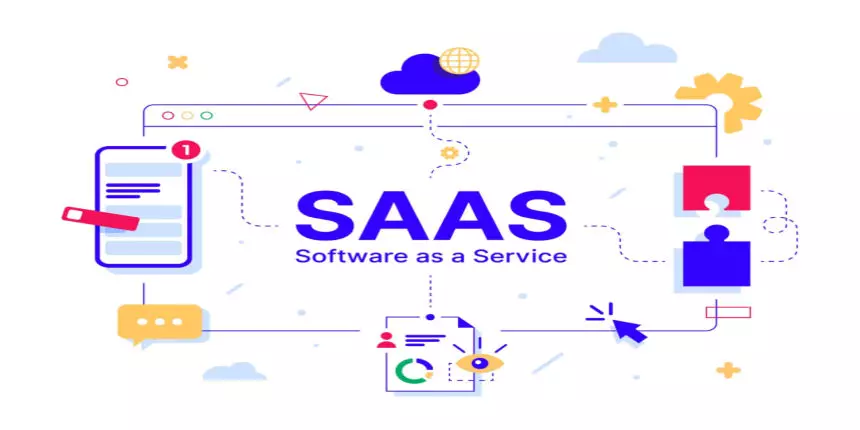
There is a particular kind of mistake that becomes more common as an idea becomes more popular.
People stop defining it.
They assume everyone already knows what it means.
The result is not clarity. It is confusion disguised as consensus.
Cloud computing suffers from this problem constantly.
Ask ten executives whether every cloud application is a SaaS product, and many will answer yes without hesitation. The logic seems straightforward. If an application runs in the cloud and users access it through the internet, surely it qualifies as Software-as-a-Service.
Not quite.
The assumption is understandable.
It is also wrong.
I encountered this firsthand during a strategic planning session with a growing technology company. Leadership was reviewing its software portfolio and discussing future investments. One executive proudly stated that the company had "moved entirely to SaaS."
The chief architect paused.
Then he responded with a question.
"Are we talking about SaaS, or are we talking about cloud applications?"
The room went silent.
The distinction sounded semantic. It wasn't.
That single question exposed a misunderstanding that affected budgeting, vendor evaluations, infrastructure planning, and long-term technology strategy.
Because while all SaaS products are cloud applications, not all cloud applications are SaaS products.
The difference may appear subtle.
Its implications are not.
Why This Question Matters More Than It Seems
Technology markets are filled with overlapping concepts.
Consumers confuse brands with categories.
Managers confuse metrics with outcomes.
Organizations confuse tools with strategies.
Cloud computing and SaaS often fall into the same trap.
The terms are frequently used interchangeably because they share visible characteristics.
Both involve internet access.
Both rely on remote infrastructure.
Both eliminate traditional installation requirements.
Both often provide scalable experiences.
From a user's perspective, they can appear nearly identical.
Yet beneath the surface, they serve different purposes.
Cloud applications describe where and how software operates.
SaaS describes how software is delivered, managed, and commercialized.
One is primarily an architectural concept.
The other is primarily a business model.
And that distinction changes everything.
Understanding What a Cloud Application Actually Is
A cloud application is software that relies on cloud-based infrastructure for at least part of its operation.
The application may run entirely in the cloud.
It may use cloud-hosted databases.
It may leverage cloud storage.
It may distribute workloads across cloud environments.
The defining characteristic is not ownership.
It is not pricing.
It is not subscription billing.
The defining characteristic is cloud-based computing resources.
Examples include:
- Internal enterprise dashboards
- Customer portals
- Banking applications
- E-commerce systems
- Inventory management platforms
- Healthcare management tools
- Data analytics platforms
Many of these applications operate in the cloud.
Not all are SaaS products.
That distinction often surprises people.
What Makes a SaaS Product Different?
Software-as-a-Service represents a specific software delivery model.
Rather than purchasing software outright, customers subscribe to ongoing access.
The provider manages:
- Infrastructure
- Updates
- Maintenance
- Security patches
- Availability
- Product enhancements
Customers consume the software as a service.
The provider retains responsibility for operational management.
This relationship creates recurring value rather than a one-time transaction.
And that recurring relationship is what differentiates SaaS from many other cloud applications.
A cloud application may exist entirely within a company's internal operations.
A SaaS product exists to serve multiple customers through an ongoing service model.
The difference is not technological.
It is structural.
The Rectangle-and-Square Analogy Still Applies
Some distinctions become easier when viewed visually.
Think about rectangles and squares.
Every square is a rectangle.
Not every rectangle is a square.
The same logic applies here.
Every SaaS product is a cloud application.
Not every cloud application is a SaaS product.
The relationship is hierarchical.
SaaS belongs inside the broader cloud application category.
Cloud applications encompass much more than SaaS alone.
Understanding this hierarchy eliminates much of the confusion surrounding cloud technologies.
Cloud Application vs. SaaS: Side-by-Side Comparison
| Feature | Cloud Application | SaaS Product |
|---|---|---|
| Primary Definition | Software using cloud infrastructure | Software delivered as a service |
| Cloud-Based Operation | Yes | Yes |
| Subscription Model Required | No | Usually |
| Multi-Customer Delivery | Optional | Common |
| Vendor Management | Varies | Expected |
| Continuous Updates | Optional | Standard |
| Commercial Product | Not required | Usually |
| Internal Company Use | Common | Less common |
| Customer Support | Optional | Core offering |
| Revenue Model | Varies | Recurring revenue |
| Infrastructure Responsibility | Depends on deployment | Primarily provider |
| Service Orientation | Not required | Essential |
The table highlights something important.
Cloud applications are defined by technology.
SaaS products are defined by relationships.
One describes architecture.
The other describes value delivery.
Why Companies Often Mistake One for the Other
The confusion is not accidental.
It stems from market evolution.
For many organizations, SaaS became their first significant interaction with cloud computing.
Customer relationship management systems moved online.
Collaboration tools moved online.
Accounting software moved online.
Human resources platforms moved online.
Executives understandably began associating cloud computing with SaaS.
The overlap was substantial.
Yet cloud computing continued expanding beyond software subscriptions.
Organizations started building custom applications.
Developers leveraged cloud infrastructure services.
Companies adopted platform services and cloud-native architectures.
The ecosystem became much broader than SaaS alone.
The terminology, however, did not evolve as quickly as the technology.
When a Cloud Application Is Not SaaS
This is where the distinction becomes practical.
Many cloud applications do not meet the requirements of a SaaS model.
Internal Business Applications
Companies frequently build cloud-hosted tools exclusively for employees.
These applications may manage operations, logistics, reporting, or workflows.
They operate in the cloud.
They are not sold as services.
Therefore, they are not SaaS.
Customer-Specific Applications
Some organizations develop software exclusively for a single client.
The application may reside entirely in cloud infrastructure.
Yet because it is not delivered as a scalable software service to multiple customers, it does not qualify as SaaS.
Government Platforms
Public-sector systems increasingly operate in cloud environments.
Licensing portals.
Tax filing systems.
Citizen service platforms.
These applications leverage cloud technologies without functioning as commercial SaaS offerings.
Proprietary Enterprise Systems
Large enterprises often migrate custom software into cloud environments.
The deployment changes.
The business model does not.
The software remains an internal asset rather than a SaaS product.
The Lesson I Learned From a Cloud Migration Project
Several years ago, I worked with a company undertaking an ambitious cloud transformation initiative.
Leadership repeatedly described the effort as a "SaaS migration."
The phrase appeared in presentations.
Budgets.
Executive updates.
Vendor discussions.
Everything.
Yet after months of analysis, it became clear that much of the software being migrated wasn't SaaS at all.
The organization was moving internally developed applications into cloud infrastructure.
Those applications remained proprietary.
They remained internally managed.
They served only employees.
The technology changed.
The business model did not.
That realization altered project priorities significantly.
The team began evaluating architecture, scalability, and operational efficiency rather than focusing exclusively on SaaS vendor selection.
The lesson was simple but memorable:
Cloud adoption and SaaS adoption are not synonymous.
Treating them as equivalent can lead organizations toward the wrong strategic decisions.
The Role of IaaS and PaaS
Part of the confusion comes from overlooking other cloud service models.
Cloud computing includes more than SaaS.
Infrastructure-as-a-Service (IaaS)
IaaS provides computing resources such as:
- Virtual servers
- Storage
- Networking
- Processing power
Organizations build and manage applications themselves.
The infrastructure resides in the cloud.
The applications may or may not be SaaS products.
Platform-as-a-Service (PaaS)
PaaS provides development environments and application frameworks.
Developers build custom software without managing underlying infrastructure.
Again, the resulting applications may become SaaS products.
Or they may not.
Cloud computing encompasses all of these models.
SaaS represents only one branch of the larger ecosystem.
Why the Distinction Matters for Buyers
Many technology purchasing mistakes originate from category confusion.
Organizations compare products that serve different purposes.
Or they evaluate solutions using the wrong criteria.
Understanding the difference between cloud applications and SaaS products helps clarify several important questions:
- Who manages the software?
- Who controls updates?
- Who owns the infrastructure?
- Who handles security responsibilities?
- How is value delivered?
- What costs are recurring versus operational?
These considerations influence long-term satisfaction far more than terminology alone.
Because ultimately, buyers are not purchasing technology categories.
They are purchasing outcomes.
The Future: More Cloud Applications, Not Necessarily More SaaS
Cloud adoption will continue expanding.
That much seems likely.
Yet not every future cloud application will emerge as a SaaS product.
Artificial intelligence systems may run in cloud environments.
Internal analytics platforms may run in cloud environments.
Specialized industry applications may run in cloud environments.
Some will be commercial SaaS offerings.
Others will remain proprietary systems.
The cloud is becoming the default infrastructure layer for software.
But infrastructure does not automatically determine business model.
That distinction will remain relevant regardless of how technology evolves.
Conclusion: The Cloud Is Bigger Than SaaS
The question "Is every cloud application a SaaS product?" appears simple.
The answer is not.
Every SaaS product is indeed a cloud application.
But the reverse is not true.
Cloud applications describe where software operates and how computing resources are delivered.
SaaS describes how software is packaged, managed, monetized, and consumed.
One is an infrastructure concept.
The other is a service model.
Confusing the two is understandable.
After all, they frequently coexist.
Yet organizations that fail to recognize the distinction risk making strategic decisions based on inaccurate assumptions.
And assumptions, particularly in technology, tend to become expensive.
The most effective leaders understand that cloud computing is not a product category.
It is an ecosystem.
SaaS occupies an important place within that ecosystem.
But it is only one part of a much larger story.
The companies that thrive are rarely those that chase labels.
They are the ones that understand what the labels actually mean.
- Arts
- Business
- Computers
- Juegos
- Health
- Home
- Kids and Teens
- Money
- News
- Personal Development
- Recreation
- Regional
- Reference
- Science
- Shopping
- Society
- Sports
- Бизнес
- Деньги
- Дом
- Досуг
- Здоровье
- Игры
- Искусство
- Источники информации
- Компьютеры
- Личное развитие
- Наука
- Новости и СМИ
- Общество
- Покупки
- Спорт
- Страны и регионы
- World

 English
 Russian
 French
 Portuguese
 Deutsch
 Turkish
 Dutch
Dutch
 Italiano
 Arabic
 Romaian
 Portuguese (Brazil)
 Greek
Greek
