
Can inflation help the economy?
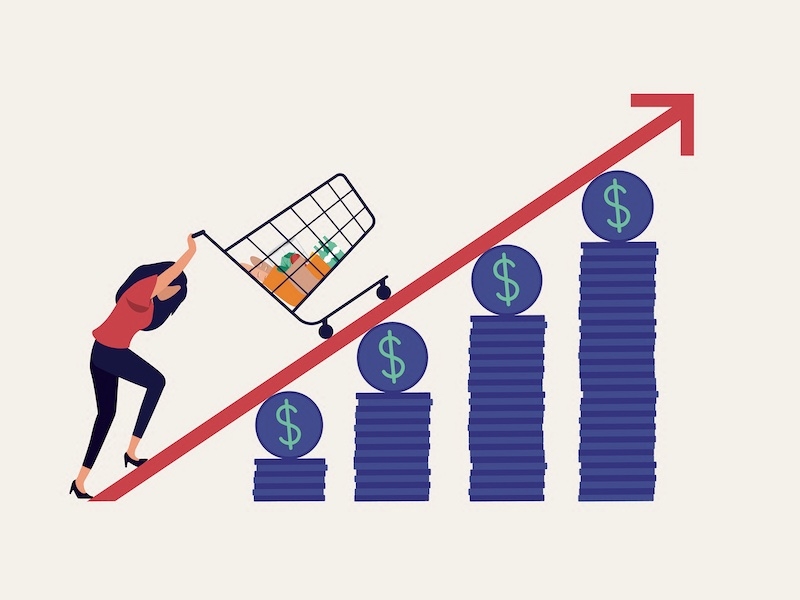
Can Inflation Help the Economy?
Inflation is often portrayed as an economic problem because it raises the prices of goods and services. Consumers notice it when groceries, rent, or fuel become more expensive. However, inflation is not always bad. In fact, a moderate and stable rate of inflation can play an important role in supporting a healthy economy.
Economists and central banks generally aim for low, predictable inflation rather than zero inflation. This approach encourages economic activity while avoiding the risks associated with both runaway inflation and falling prices.
Understanding Inflation
Inflation refers to the rate at which the general price level of goods and services increases over time. As prices rise, the purchasing power of money declines, meaning each dollar buys slightly less than before.
Inflation is commonly measured using indicators such as the Consumer Price Index (CPI), which tracks the average change in prices paid by consumers for a basket of goods and services.
How Inflation Can Help the Economy
When inflation remains moderate—typically around 2% annually in many advanced economies—it can provide several economic benefits.
1. Encourages Consumer Spending
If consumers expect prices to rise gradually in the future, they may choose to make purchases sooner rather than later. This increased spending boosts demand for goods and services.
Higher consumer demand benefits businesses by increasing sales and revenue, encouraging companies to expand production and hire additional workers.
2. Supports Business Investment
Moderate inflation often signals a growing economy with healthy demand. Businesses are more likely to invest in new equipment, technology, and facilities when they expect future sales to increase.
These investments can:
-
Increase productivity
-
Create new jobs
-
Improve innovation
-
Expand economic output
As companies grow, they contribute to overall economic development.
3. Helps Reduce Unemployment
Growing demand encourages businesses to produce more goods and services. To meet this demand, companies often hire more employees.
Lower unemployment generally leads to:
-
Higher household incomes
-
Increased consumer confidence
-
Greater economic activity
This positive cycle can strengthen economic growth when inflation remains under control.
4. Makes Debt Easier to Repay
Inflation reduces the real value of money over time. Borrowers who have fixed-interest loans effectively repay their debt using dollars that are worth slightly less than when they borrowed them.
For example, if wages rise alongside moderate inflation, households and businesses may find it easier to manage existing debts.
Governments also benefit because inflation can reduce the real burden of public debt.
5. Prevents Deflation
Many economists consider deflation—a sustained decline in prices—to be more dangerous than modest inflation.
During deflation:
-
Consumers delay purchases because prices may fall further.
-
Businesses experience declining revenues.
-
Companies reduce investment.
-
Unemployment may increase.
Moderate inflation helps prevent this downward economic spiral.
6. Gives Central Banks More Flexibility
Central banks influence economic activity by adjusting interest rates.
With positive inflation, interest rates can remain above zero during normal economic conditions. This gives policymakers room to reduce rates during recessions to stimulate borrowing and spending.
If inflation were consistently zero or negative, central banks would have fewer tools available to support the economy during downturns.
When Inflation Stops Being Helpful
Although moderate inflation can benefit the economy, excessive inflation creates significant problems.
Reduced Purchasing Power
Rapid price increases mean wages often fail to keep pace, leaving households with less buying power.
Increased Uncertainty
Businesses struggle to plan investments when prices change unpredictably. Consumers may also delay financial decisions because future costs become difficult to estimate.
Higher Interest Rates
To slow excessive inflation, central banks often raise interest rates. Higher borrowing costs can reduce consumer spending, business investment, and housing demand.
Income Inequality
High inflation can disproportionately affect lower-income households because they spend a larger share of their income on necessities such as food, housing, and transportation.
What Is the Ideal Inflation Rate?
Most major central banks target annual inflation around 2%.
This target aims to balance economic growth with price stability. At roughly this level:
-
Consumers remain confident in the value of money.
-
Businesses can plan investments with greater certainty.
-
Employment tends to remain stronger.
-
The economy has a buffer against deflation.
The exact target may vary by country, but the underlying goal is similar: maintain low, stable, and predictable inflation.
Historical Examples
Economic Expansion
Many periods of strong economic growth have occurred alongside moderate inflation. During these times, businesses expanded, employment increased, and consumer spending remained healthy.
High Inflation
In contrast, periods of very high inflation have often damaged economies. Rapid price increases reduce purchasing power, discourage investment, and create financial instability.
Deflation
Japan experienced prolonged periods of very low inflation and deflation during the 1990s and early 2000s. Weak consumer spending and slow economic growth highlighted the challenges of persistently falling prices.
The Importance of Balance
Inflation is neither entirely good nor entirely bad. Its effects depend largely on its rate and stability.
Low, predictable inflation encourages spending, investment, hiring, and borrowing while giving policymakers room to respond to economic downturns. However, inflation that accelerates too quickly can reduce living standards and create widespread economic uncertainty.
The objective is not to eliminate inflation completely but to keep it within a range that supports sustainable long-term growth.
Conclusion
Can inflation help the economy? Yes—when it remains low, stable, and predictable. Moderate inflation encourages consumer spending, supports business investment, helps reduce unemployment, eases the burden of debt, and protects against the harmful effects of deflation.
However, inflation is beneficial only up to a point. Once it becomes too high or unpredictable, its costs begin to outweigh its advantages. This is why central banks around the world focus on maintaining price stability rather than eliminating inflation altogether.
In the end, healthy inflation acts as a balancing force, supporting economic growth while preserving confidence in the value of money.
- Arts
- Business
- Computers
- Juegos
- Health
- Home
- Kids and Teens
- Money
- News
- Personal Development
- Recreation
- Regional
- Reference
- Science
- Shopping
- Society
- Sports
- Бизнес
- Деньги
- Дом
- Досуг
- Здоровье
- Игры
- Искусство
- Источники информации
- Компьютеры
- Личное развитие
- Наука
- Новости и СМИ
- Общество
- Покупки
- Спорт
- Страны и регионы
- World

 English
 Russian
 French
 Portuguese
 Deutsch
 Turkish
 Dutch
Dutch
 Italiano
 Arabic
 Romaian
 Portuguese (Brazil)
 Greek
Greek
