
How Long Does SaaS Implementation Take?
The most dangerous question in software implementation is often the first one executives ask.
“How long will it take?”
At first glance, it seems perfectly reasonable. Budgets require timelines. Teams need milestones. Vendors are expected to provide answers.
Yet the question contains a hidden assumption—that SaaS implementation behaves like a predictable manufacturing process.
It rarely does.
Two organizations can purchase the exact same software on the same day and arrive at radically different outcomes. One launches successfully within six weeks. The other is still resolving configuration issues eight months later. The software hasn't changed. The implementation timeline has.
That discrepancy reveals something important.
SaaS implementation is not primarily a technology exercise. It is a coordination exercise. A process exercise. A behavioral exercise. Sometimes, it is even a political exercise.
Technology follows instructions. Organizations do not.
Which is why asking how long SaaS implementation takes is a little like asking how long it takes to renovate a house. The answer depends less on the tools and more on what happens once the walls come down.
The short answer is that most SaaS implementations take anywhere from two weeks to twelve months, depending on complexity, integrations, data quality, customization requirements, and organizational readiness.
The more useful answer is understanding why.
The Range Is Wider Than Most People Expect
One reason implementation timelines generate confusion is that the term SaaS implementation encompasses vastly different realities.
A ten-person startup deploying a project management tool is not facing the same challenge as a multinational enterprise rolling out a global ERP platform.
Yet both are technically implementing SaaS software.
The timeline differences can be dramatic.
Typical SaaS Implementation Timelines
| SaaS Type | Company Size | Average Timeline | Complexity Level |
|---|---|---|---|
| Team Collaboration Software | Small Business | 1–4 Weeks | Low |
| Help Desk Platform | Small to Mid-Size | 1–2 Months | Moderate |
| CRM System | Mid-Size Organization | 2–4 Months | Moderate to High |
| HR Management Platform | Mid-Size to Enterprise | 3–6 Months | High |
| Marketing Automation Platform | Mid-Size to Enterprise | 2–6 Months | High |
| ERP Software | Enterprise | 6–12+ Months | Very High |
| Industry-Specific SaaS Platforms | Enterprise | 4–12 Months | Very High |
Notice what the table suggests.
The software category matters.
But it is rarely the only variable.
Why Software Isn't Usually the Bottleneck
One of the more surprising lessons I learned while participating in several software rollouts was that implementation delays rarely originated from the application itself.
The software was generally ready.
The organization wasn't.
I remember a CRM deployment that was expected to launch within ninety days. Leadership had approved the project. The vendor had completed onboarding. Technical resources were available.
Everything appeared on schedule.
Then someone asked a seemingly innocent question:
“Which definition of a qualified lead should we use?”
Silence.
Sales had one definition.
Marketing had another.
Regional teams had three more.
A debate that should have happened before implementation consumed weeks.
No software issue existed.
Yet the project stalled.
That experience permanently changed how I think about implementation timelines. The greatest delays often emerge from organizational ambiguity rather than technical complexity.
The Five Factors That Determine Implementation Speed
Every SaaS implementation has unique characteristics. Yet timeline differences usually trace back to a handful of recurring variables.
1. Organizational Size
Larger organizations generally require more time.
Not because larger companies are inherently less efficient.
Because complexity increases exponentially.
More departments.
More stakeholders.
More approval layers.
More workflows.
A software rollout affecting fifteen employees can move quickly. A rollout affecting fifteen thousand employees introduces entirely different coordination challenges.
The implementation timeline often reflects organizational structure as much as technological requirements.
2. Data Quality
Few topics receive less attention during project planning.
Few create more delays.
Organizations frequently assume data migration is straightforward until they examine their existing records.
Then reality emerges.
Duplicate contacts.
Missing fields.
Inconsistent formatting.
Outdated customer information.
Incomplete employee records.
The software can be configured in weeks. Cleaning years of accumulated data often requires considerably longer.
Poor data is like moving into a beautiful new home while bringing every broken piece of furniture with you.
The environment improves.
The problems remain.
3. Integration Requirements
Very few SaaS platforms operate independently.
Most must communicate with existing systems.
Consider a typical business environment.
A CRM may connect to:
- Marketing platforms
- Customer support software
- Accounting systems
- ERP solutions
- Analytics tools
- Communication platforms
Each integration introduces dependencies.
Dependencies introduce complexity.
Complexity extends timelines.
Organizations often underestimate this relationship because integrations appear simple on architecture diagrams. Reality tends to be less accommodating.
4. Customization Decisions
Here is where implementation projects often become unexpectedly lengthy.
SaaS software generally includes best-practice workflows developed through years of customer experience.
Organizations purchase the software.
Then immediately attempt to redesign it.
Custom fields multiply.
Approval processes expand.
Workflows become increasingly unique.
Implementation slows.
This creates a fascinating paradox.
The desire to make software fit existing processes often delays the very efficiencies the software was intended to create.
5. Change Management
This may be the most underestimated variable of all.
Technology can be deployed quickly.
Adoption cannot.
Employees need training.
Managers need buy-in.
Teams need support.
Questions need answers.
Resistance needs attention.
Organizations frequently focus on technical readiness while overlooking human readiness.
The result is predictable.
The system launches on time.
Actual usage arrives months later.
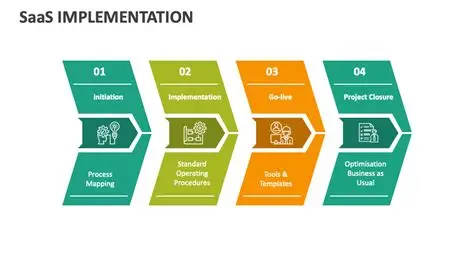
Breaking Down the SaaS Implementation Timeline
Although every project differs, most implementations follow a recognizable sequence.
Understanding these phases provides a clearer picture of where time is actually spent.
Phase 1: Discovery and Planning
Typical Duration: 1–4 Weeks
This stage establishes objectives, stakeholders, requirements, and success metrics.
Activities include:
- Defining business goals
- Identifying stakeholders
- Assessing workflows
- Creating project plans
- Establishing governance structures
Interestingly, organizations often try to shorten this phase.
That decision frequently extends later phases.
Planning may feel slow, but confusion is slower.
Phase 2: Configuration
Typical Duration: 2–8 Weeks
During configuration, teams tailor the platform to business needs.
Tasks typically include:
- User setup
- Security settings
- Workflow configuration
- Permission structures
- Reporting dashboards
The timeline depends heavily on customization levels.
Organizations embracing standard configurations generally move faster than those pursuing extensive modifications.
Phase 3: Data Migration
Typical Duration: 1–12 Weeks
This phase varies dramatically.
Simple migrations may require only days.
Complex migrations involving multiple systems can take months.
Activities include:
- Data cleansing
- Mapping fields
- Validation testing
- Migration execution
- Error resolution
The larger the data footprint, the greater the potential impact on timelines.
Phase 4: Integration and Testing
Typical Duration: 2–8 Weeks
Integrations connect systems.
Testing validates functionality.
Neither should be rushed.
Common testing activities include:
- User acceptance testing
- Security validation
- Workflow testing
- Integration verification
- Performance assessment
Testing often reveals assumptions hidden during earlier phases.
That discovery process adds time but reduces risk.
Phase 5: Training and Deployment
Typical Duration: 1–6 Weeks
This phase introduces users to the platform and supports rollout activities.
Training formats may include:
- Live sessions
- Recorded tutorials
- Documentation
- Peer mentoring
- Department-specific workshops
Organizations sometimes underestimate the value of training because it appears non-technical.
The opposite is often true.
Training determines whether the technology becomes operationally meaningful.
Why Enterprise Implementations Take So Much Longer
Executives occasionally wonder why vendors advertise rapid deployment while enterprise implementations require months.
The answer lies in scale.
Enterprise organizations rarely implement software in isolation.
They implement ecosystems.
Consider the differences.
A small business may need:
- 25 users
- One integration
- Minimal customization
An enterprise may require:
- 25,000 users
- Dozens of integrations
- Global compliance requirements
- Regional workflows
- Complex security policies
- Extensive training programs
The software remains the same.
The implementation environment changes completely.
Enterprise timelines reflect complexity accumulation rather than technological limitations.
Fast Implementations Versus Effective Implementations
There is an understandable fascination with speed.
Executives want results.
Vendors highlight rapid deployment.
Project teams celebrate launch dates.
Yet speed and effectiveness are not synonymous.
A rushed implementation can create hidden costs.
Risks of Moving Too Quickly
These risks include:
- Poor adoption
- Data inaccuracies
- Workflow disruptions
- Security vulnerabilities
- User frustration
- Increased support costs
Organizations occasionally save four weeks during implementation and spend six months recovering from avoidable issues.
Efficiency requires perspective.
The fastest implementation is not always the most successful implementation.
What High-Performing Organizations Do Differently
Organizations that consistently achieve strong outcomes tend to focus on:
- Clear objectives
- Strong governance
- Executive sponsorship
- Data readiness
- User engagement
- Ongoing optimization
Notice something interesting.
None of these factors involve software features.
They involve organizational discipline.
A Lesson Learned About Timeline Estimates
Several years ago, I participated in a software initiative where leadership demanded an aggressive deployment schedule.
The timeline looked impressive on paper.
Milestones were ambitious.
Everyone felt pressure to move faster.
The launch occurred on schedule.
Celebrations followed.
Three months later, adoption metrics revealed a less encouraging story.
Employees had completed training but weren't using critical features. Reporting processes remained inconsistent. Manual workarounds persisted.
Technically, implementation was complete.
Operationally, it wasn't.
That experience reinforced a lesson I still find valuable.
Deployment measures activity.
Adoption measures value.
The second metric matters more.
Whenever someone asks how long SaaS implementation takes, I now think beyond launch dates and consider when meaningful business outcomes actually emerge.
Those are rarely identical moments.
So, How Long Does SaaS Implementation Really Take?
The answer depends on what you mean by implementation.
If implementation means software deployment, timelines can range from a few weeks to several months.
If implementation means organizational adoption, timelines often extend much longer.
A realistic framework looks something like this:
| Milestone | Typical Timeline |
|---|---|
| Planning Begins | Week 1 |
| Configuration Complete | Month 1–3 |
| Data Migration Complete | Month 2–4 |
| Deployment Launch | Month 2–6 |
| Broad User Adoption | Month 3–9 |
| Process Optimization | Month 6–12 |
| Full Business Value Realization | Month 6–18 |
This distinction matters because executives often measure the wrong endpoint.
Software launch is a milestone.
Business transformation is the destination.
Conclusion: The Calendar Matters Less Than the Alignment
The question “How long does SaaS implementation take?” appears straightforward.
It isn't.
Behind the question sits a deeper issue: how effectively can an organization align technology, people, processes, and objectives?
The timeline reflects that alignment.
Organizations with clean data, clear goals, engaged leadership, and disciplined project management frequently move faster than expected.
Organizations lacking those elements often move slower than planned, regardless of software quality.
Perhaps the most provocative reality is this: implementation does not end when the software goes live.
That moment simply marks the transition from preparation to proof.
The true measure of implementation is not whether the platform launched according to schedule. It is whether employees embrace it, workflows improve because of it, and business outcomes justify the investment behind it.
And those achievements are measured not in weeks, but in organizational commitment.
- Arts
- Business
- Computers
- Игры
- Health
- Главная
- Kids and Teens
- Деньги
- News
- Personal Development
- Recreation
- Regional
- Reference
- Science
- Shopping
- Society
- Sports
- Бизнес
- Деньги
- Дом
- Досуг
- Здоровье
- Игры
- Искусство
- Источники информации
- Компьютеры
- Личное развитие
- Наука
- Новости и СМИ
- Общество
- Покупки
- Спорт
- Страны и регионы
- World

 English
 French
 Spanish
 Portuguese
 Deutsch
 Turkish
 Dutch
Dutch
 Italiano
 Arabic
 Romaian
 Portuguese (Brazil)
 Greek
Greek
