
How Do SaaS Applications Integrate With Other Software?
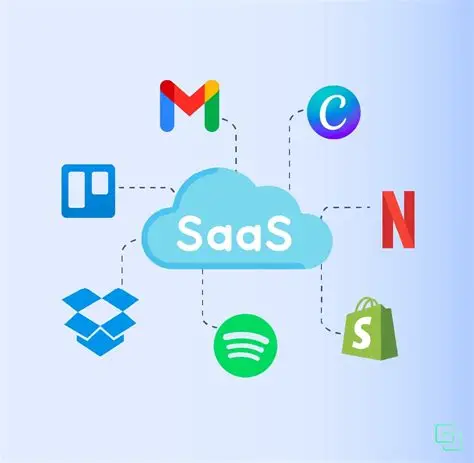
The most revealing sign of a poorly integrated software environment is not a system error.
It is an employee.
More specifically, an employee copying information from one screen, pasting it into another, downloading a spreadsheet, uploading it somewhere else, and repeating the process several times a day.
At first glance, the behavior appears harmless. A few extra clicks. A few extra minutes.
Then multiply that routine across hundreds of employees, dozens of applications, and thousands of transactions.
Suddenly, the issue is no longer inefficiency.
It is fragmentation.
Modern organizations rarely operate a single software platform. They use customer relationship management systems, accounting applications, marketing automation tools, collaboration platforms, HR systems, analytics dashboards, customer support software, and industry-specific solutions. Each application may perform its role exceptionally well.
The challenge emerges when they need to work together.
That challenge explains why software integration has become one of the defining characteristics of successful SaaS adoption. Organizations don't merely buy software anymore. They assemble ecosystems.
And ecosystems derive value not from individual components, but from the connections between them.
Which brings us to a critical question:
How do SaaS applications integrate with other software?
The answer involves APIs, middleware, workflows, data synchronization, automation, and perhaps most importantly, organizational strategy. But before examining the mechanics, it is worth understanding why integration matters in the first place.
The Hidden Cost of Isolated Software
Imagine a sales representative closes a deal.
Ideally, that information should automatically update the CRM, notify the finance team, create a customer record in the billing system, trigger onboarding workflows, and alert customer success managers.
Without integration, those actions become manual.
Someone enters the same information repeatedly.
Errors increase.
Delays accumulate.
Visibility declines.
The irony is striking.
Organizations often purchase software to improve efficiency, then create inefficiency by allowing systems to operate independently.
Integration solves this problem by enabling applications to exchange information automatically.
At its simplest, integration allows software systems to communicate.
At its most sophisticated, it creates an interconnected digital environment where information moves seamlessly across the organization.
What Is SaaS Integration?
SaaS integration refers to the process of connecting cloud-based applications with other software systems so data, workflows, and business processes can operate across platforms.
The key word is connect.
Applications remain separate.
They simply become capable of sharing information.
For example:
- A CRM shares customer data with an email marketing platform.
- An HR system updates payroll software.
- An e-commerce platform sends orders to an ERP system.
- A support platform synchronizes customer records with a CRM.
Each system retains its unique functionality.
Integration ensures those systems remain aligned.
Think of it less as merging applications and more as creating a common language between them.
Why SaaS Integrations Matter
Organizations often focus on software features during purchasing decisions.
Integration capabilities deserve equal attention.
Why?
Because isolated excellence creates limited value.
Connected excellence scales.
Key Benefits of SaaS Integration
Organizations typically achieve:
- Reduced manual data entry
- Improved data accuracy
- Faster workflows
- Better reporting
- Stronger customer experiences
- Increased operational visibility
Interestingly, integration often creates more value than adding entirely new software.
Connecting existing systems can unlock efficiencies that organizations never realized were available.
The Most Common Ways SaaS Applications Integrate
Not all integrations operate the same way.
Several approaches dominate the modern SaaS landscape.
SaaS Integration Methods Compared
| Integration Method | How It Works | Complexity | Typical Use Cases |
|---|---|---|---|
| APIs | Direct system communication | Moderate to High | CRM, ERP, Finance |
| Middleware Platforms | Central integration layer | Moderate | Multi-system environments |
| Native Integrations | Built-in vendor connections | Low | Popular SaaS applications |
| Webhooks | Event-triggered communication | Moderate | Notifications and automation |
| File-Based Transfers | Data exchange through files | Low to Moderate | Legacy systems |
| iPaaS Solutions | Cloud integration platforms | Moderate to High | Enterprise automation |
Each method solves a different problem.
Choosing the right one depends on business requirements, technical resources, and system complexity.
APIs: The Foundation of Modern SaaS Integration
If SaaS integration has a common language, it is the API.
API stands for Application Programming Interface.
The terminology sounds technical.
The concept is surprisingly intuitive.
An API allows one application to request information or actions from another application.
A Simple Example
Imagine a CRM platform requesting customer information from an accounting system.
The CRM sends a request.
The accounting system responds.
Data is exchanged automatically.
No employee intervention required.
This interaction occurs through predefined rules established by APIs.
Why APIs Matter
APIs enable:
- Real-time communication
- Automated workflows
- Scalable integrations
- Consistent data exchange
Most leading SaaS providers prioritize API development because customers increasingly expect software to operate as part of larger ecosystems rather than standalone products.
Native Integrations: The Simplest Path
Many SaaS vendors recognize that customers frequently use complementary platforms.
As a result, they create prebuilt integrations.
These are commonly called native integrations.
Examples of Native Integrations
A CRM might offer direct connections with:
- Email platforms
- Video conferencing tools
- Marketing automation systems
- Customer support applications
The appeal is obvious.
Native integrations typically require minimal technical expertise.
Configuration often occurs through settings menus rather than custom development.
The Tradeoff
Simplicity comes with constraints.
Organizations must work within the vendor's predefined functionality.
Customization options may be limited.
For many businesses, however, the convenience outweighs the restrictions.
Middleware: The Translator Between Systems
As software environments become more complex, direct integrations can become difficult to manage.
This is where middleware enters the picture.
Middleware acts as an intermediary layer between applications.
Instead of every application connecting individually, they connect through a centralized platform.
Why Middleware Exists
Imagine ten applications requiring communication.
Direct integrations create numerous connections.
Managing them becomes increasingly difficult.
Middleware simplifies the architecture by providing a central hub.
Benefits include:
- Reduced complexity
- Easier maintenance
- Centralized monitoring
- Improved scalability
Organizations with extensive software ecosystems often rely heavily on middleware solutions.
iPaaS: Integration as a Service
A relatively recent development has transformed how organizations approach integration.
The category is known as iPaaS—Integration Platform as a Service.
These cloud-based platforms specialize in connecting applications.
Rather than building integrations manually, organizations use visual tools and prebuilt connectors.
What iPaaS Platforms Typically Offer
They often include:
- Workflow automation
- Data transformation
- Application connectors
- Monitoring tools
- Error handling
The appeal is significant.
Organizations can create sophisticated integrations without extensive custom coding.
For many businesses, iPaaS solutions accelerate implementation while reducing technical overhead.
Webhooks: Real-Time Event Communication
Not all integrations require constant communication.
Sometimes systems only need to react when specific events occur.
This is where webhooks become valuable.
How Webhooks Work
A webhook sends information automatically when an event happens.
For example:
- A customer submits a form.
- An invoice is paid.
- A support ticket is created.
- A contract is signed.
The event triggers a notification.
Connected systems respond immediately.
The result is near real-time automation without continuous data polling.
The Data Synchronization Challenge
Integration sounds straightforward until data enters the conversation.
Then complexity increases.
Different systems often organize information differently.
A customer record in one application may not perfectly match a customer record in another.
Common Data Challenges
Organizations frequently encounter:
- Duplicate records
- Inconsistent naming conventions
- Missing fields
- Conflicting data structures
- Synchronization delays
These challenges explain why integration projects often involve substantial data governance work.
Technology enables communication.
Data quality determines whether that communication remains useful.
A Lesson Learned About Integration Complexity
Several years ago, I participated in a SaaS implementation where integration appeared almost effortless during planning.
The architecture diagrams were elegant.
The APIs were well documented.
The vendor demonstrations were impressive.
Everyone assumed the integration phase would move quickly.
Then reality emerged.
Different departments had developed different definitions of customer status. Data fields lacked consistency. Reporting structures varied significantly across systems.
The technology connected successfully.
The data did not.
That experience reinforced an important lesson.
Software integration is rarely limited by connectivity.
It is frequently limited by organizational alignment.
Systems can exchange information only as effectively as businesses define that information.
Security Considerations in SaaS Integrations
Every integration introduces additional access points.
Consequently, security becomes a critical consideration.
Organizations must evaluate:
Key Security Factors
- Authentication methods
- Access permissions
- Data encryption
- Audit logging
- Vendor security standards
- Regulatory compliance requirements
The goal is not simply enabling communication.
The goal is enabling secure communication.
A poorly governed integration can create vulnerabilities that undermine broader security initiatives.
Common SaaS Integrations Across Business Functions
Different departments rely on different integration strategies.
Sales and Marketing
Typical integrations include:
- CRM to marketing automation
- CRM to email platforms
- Lead generation tools to sales systems
Finance
Common integrations include:
- Billing platforms to ERP systems
- Expense management software to accounting tools
- Payment processors to financial reporting applications
Human Resources
Frequent integrations include:
- HR information systems to payroll platforms
- Recruiting software to onboarding systems
- Learning management systems to employee records
Customer Service
Popular integrations include:
- Support platforms to CRM systems
- Chat applications to ticketing software
- Knowledge bases to service portals
Each connection reduces friction and improves visibility.
Best Practices for SaaS Integration
Organizations that consistently achieve successful integrations tend to follow several principles.
Start with Business Objectives
Integration should solve business problems.
Not simply connect software.
Prioritize Data Governance
Clean, consistent data improves outcomes dramatically.
Minimize Complexity
Not every possible integration is necessary.
Focus on high-value workflows.
Monitor Continuously
Integrations require maintenance.
Data volumes change.
Applications evolve.
Requirements shift.
Involve Stakeholders Early
Technical success does not guarantee operational success.
Business teams should participate throughout the process.
Conclusion: Integration Is Really About Organizational Connectivity
When people ask how SaaS applications integrate with other software, they often expect a technical answer.
APIs.
Webhooks.
Middleware.
Integration platforms.
Those components matter.
Yet they represent only part of the story.
The deeper purpose of integration is organizational connectivity.
Information should move without friction.
Departments should operate with shared visibility.
Employees should spend less time transferring data and more time creating value.
In that sense, integration is not fundamentally about software.
It is about coordination.
It is about removing the invisible barriers that prevent organizations from operating as unified systems.
The most successful companies do not necessarily have the most software.
They have the most connected software.
And that distinction grows increasingly important as business ecosystems become larger, more complex, and more dependent on the flow of information.
Because ultimately, the power of SaaS does not reside in individual applications.
It resides in what those applications can accomplish together.
- Arts
- Business
- Computers
- Games
- Health
- Home
- Kids and Teens
- Money
- News
- Personal Development
- Recreation
- Regional
- Reference
- Science
- Shopping
- Society
- Sports
- Бизнес
- Деньги
- Дом
- Досуг
- Здоровье
- Игры
- Искусство
- Источники информации
- Компьютеры
- Личное развитие
- Наука
- Новости и СМИ
- Общество
- Покупки
- Спорт
- Страны и регионы
- World

 Russian
 French
 Spanish
 Portuguese
 Deutsch
 Turkish
 Dutch
Dutch
 Italiano
 Arabic
 Romaian
 Portuguese (Brazil)
 Greek
Greek
