
What Is a SaaS API?
The most valuable software feature is often the one users never see.
It doesn't appear on a dashboard. It isn't highlighted during product demonstrations. Customers rarely click it. Most employees never know it exists.
Yet without it, many of the software platforms businesses depend on every day would function like isolated islands.
That hidden feature is the API.
More specifically, in the world of cloud software, it is the SaaS API.
I was reminded of its importance during a software implementation project several years ago. A leadership team had invested heavily in a new customer relationship management platform. Expectations were high. The software itself was impressive. Reporting capabilities were strong. User adoption was progressing.
Then someone asked a practical question.
"Can it automatically update customer billing information from our finance system?"
The room became quiet.
The answer wasn't about dashboards, workflows, or user interfaces. It was about whether the software could communicate with another application.
In other words, it was about the API.
That moment highlighted an important reality. Organizations rarely purchase SaaS applications simply to use them independently. They purchase them to become part of a larger operational ecosystem.
And APIs make that ecosystem possible.
Understanding the Basics: What Is a SaaS API?
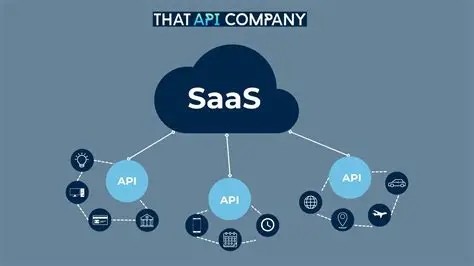
A SaaS API (Software as a Service Application Programming Interface) is a set of rules, protocols, and tools that allows one software application to communicate with a SaaS platform.
At its core, an API serves as a messenger.
One application makes a request.
Another application receives that request.
Information is exchanged.
An action occurs.
The process sounds deceptively simple.
Its implications are enormous.
Without APIs, software systems would require manual intervention for nearly every interaction. Employees would move data between applications, update records individually, and repeatedly enter the same information into multiple systems.
APIs eliminate much of that friction.
They allow software to talk to software.
And increasingly, that communication is what powers modern business operations.
Why SaaS APIs Matter
A useful way to think about SaaS applications is to imagine them as specialized experts.
One application excels at customer relationship management.
Another manages accounting.
A third handles marketing automation.
A fourth supports customer service.
Individually, each application performs a specific function.
Collectively, they create business value.
The challenge lies in coordination.
A SaaS API provides the connection layer that enables those applications to work together.
The Business Impact
Organizations use APIs to:
- Synchronize customer information
- Automate workflows
- Reduce manual data entry
- Improve reporting accuracy
- Connect software ecosystems
- Enable real-time information sharing
The result is not merely operational efficiency.
It is organizational coherence.
Data becomes more consistent because systems share information rather than storing conflicting versions of it.
How a SaaS API Works
Technical discussions about APIs often become unnecessarily complicated.
The underlying concept is remarkably straightforward.
Imagine ordering food at a restaurant.
You don't enter the kitchen and prepare the meal yourself.
Instead, a server accepts your request, communicates it to the kitchen, and delivers the result.
An API performs a similar function.
The Basic Process
- An application sends a request.
- The SaaS API receives that request.
- The SaaS platform processes the information.
- A response is returned.
- The requesting application uses the response.
This interaction often occurs in milliseconds.
Users rarely notice it happening.
Yet countless business processes depend on it every day.
Common SaaS API Components
Although APIs vary by vendor and platform, most contain similar building blocks.
Requests
A request asks the SaaS platform to perform an action.
Examples include:
- Retrieve customer records
- Create a support ticket
- Update account information
- Generate a report
Endpoints
Endpoints are specific destinations within the API.
Think of them as addresses.
Different endpoints perform different functions.
Authentication
Authentication verifies that requests are authorized.
Without authentication, APIs would become security liabilities.
Responses
Responses contain the information returned by the SaaS application.
These responses may include:
- Customer data
- Transaction records
- Status updates
- Error messages
Together, these components create structured communication between applications.
SaaS APIs Versus Traditional APIs
Although all APIs share common principles, SaaS APIs possess characteristics that distinguish them from many traditional APIs.
Comparison of SaaS APIs and Traditional APIs
| Feature | SaaS API | Traditional API |
|---|---|---|
| Hosting Environment | Cloud-Based | Often On-Premise |
| Accessibility | Internet Accessible | Internal or External |
| Maintenance | Vendor Managed | Organization Managed |
| Scalability | Dynamic | Often Infrastructure Dependent |
| Updates | Continuous | Periodic |
| Integration Focus | Cross-Platform Connectivity | Varies by Environment |
| Deployment Complexity | Lower | Often Higher |
This distinction matters because SaaS platforms are designed to operate within interconnected ecosystems.
APIs are not secondary features.
They are foundational components.
Types of SaaS APIs
Not all SaaS APIs serve the same purpose.
Different categories address different business needs.
REST APIs
REST (Representational State Transfer) APIs are the most widely used.
Their popularity stems from simplicity and flexibility.
REST APIs typically:
- Use standard web protocols
- Support multiple programming languages
- Scale effectively
- Integrate easily with cloud applications
Most modern SaaS platforms rely heavily on REST APIs.
SOAP APIs
SOAP (Simple Object Access Protocol) APIs follow stricter communication standards.
Organizations often encounter SOAP APIs in:
- Enterprise systems
- Financial services
- Legacy environments
- Regulatory-heavy industries
While less flexible than REST APIs, SOAP APIs provide strong structure and reliability.
GraphQL APIs
GraphQL offers a different approach.
Instead of receiving predefined responses, applications request only the information they need.
Benefits include:
- Reduced data transfer
- Improved efficiency
- Greater flexibility
As software ecosystems become more complex, GraphQL adoption continues to grow.
Real-World Examples of SaaS APIs
The easiest way to understand SaaS APIs is to observe them in action.
CRM and Marketing Automation
A CRM platform captures customer information.
Through APIs, that information automatically flows into marketing software.
Marketing campaigns become more targeted.
Data remains synchronized.
Manual updates disappear.
E-Commerce and Accounting
An online purchase occurs.
The e-commerce platform sends transaction information through an API.
Accounting software records the revenue automatically.
Finance teams avoid repetitive data entry.
HR and Payroll
A human resources platform updates employee information.
Payroll software receives those changes through an API.
Compensation records remain accurate.
Administrative workloads decline.
These examples reveal an important theme.
APIs are not primarily technical tools.
They are business enablers.
Why APIs Are Essential for SaaS Growth
One fascinating trend in software markets is that customers increasingly evaluate ecosystems rather than products.
A platform's ability to connect often matters as much as its standalone functionality.
This shift has significant implications.
The Ecosystem Effect
Consider two SaaS applications.
Both offer comparable features.
One provides extensive API capabilities.
The other offers limited integration options.
Over time, the more connected platform often becomes more valuable because it adapts more easily to changing business environments.
Flexibility creates longevity.
APIs provide flexibility.
This dynamic helps explain why SaaS vendors invest heavily in API development.
A Lesson Learned About API Value
Several years ago, I worked with a team evaluating competing software platforms.
One vendor had a noticeably more attractive interface. Demonstrations were polished. User feedback was positive.
Another platform appeared less impressive at first glance.
Yet during technical discussions, the second vendor revealed extensive API capabilities.
At the time, the difference seemed relatively minor.
Months later, it became clear that the API strategy mattered more than the interface.
The organization needed integrations with finance systems, customer support applications, reporting tools, and proprietary databases.
The platform's connectivity capabilities became one of its greatest strengths.
The experience reinforced a lesson I continue to see repeatedly.
Software features create immediate impressions.
APIs create long-term adaptability.
The distinction becomes increasingly important as organizations expand their technology ecosystems.
SaaS API Security Considerations
Connectivity creates opportunity.
It also introduces responsibility.
Every API represents a potential access point.
Security therefore becomes a central consideration.
Common Security Measures
Most SaaS APIs employ:
- Authentication tokens
- Encryption protocols
- Access controls
- Rate limiting
- Audit logging
- Permission management
These safeguards help ensure that authorized systems communicate securely.
Organizations evaluating SaaS platforms should assess API security capabilities as carefully as they assess application features.
Common Challenges with SaaS APIs
Despite their benefits, APIs are not without challenges.
Organizations frequently encounter:
Integration Complexity
Connecting multiple systems can become difficult when data structures differ significantly.
Data Quality Issues
Poor data remains poor data, regardless of how efficiently APIs transfer it.
Version Changes
Vendors periodically update APIs.
Organizations must adapt accordingly.
Governance Concerns
Without clear oversight, API ecosystems can become difficult to manage.
These challenges are generally manageable.
Ignoring them, however, can create operational risks.
Best Practices for Using SaaS APIs
Organizations seeking strong API outcomes typically follow several principles.
Prioritize Business Objectives
Begin with the problem being solved.
Technology should support strategy.
Not the reverse.
Document Integrations Carefully
Clear documentation reduces future complexity.
Monitor Performance
APIs should be monitored continuously.
Visibility improves reliability.
Strengthen Security Controls
Authentication and authorization should remain top priorities.
Standardize Data Definitions
Consistent data structures improve integration quality dramatically.
These practices help organizations maximize API value while minimizing risk.
The Future of SaaS APIs
As software ecosystems continue expanding, APIs are becoming increasingly important.
Artificial intelligence platforms, automation tools, analytics systems, and cloud applications all depend heavily on connectivity.
The trend is clear.
Software is evolving from individual applications into interconnected networks.
APIs are the infrastructure enabling that evolution.
Interestingly, users may become less aware of APIs even as their importance grows.
The more seamless integrations become, the more invisible the technology appears.
And perhaps that is the ultimate measure of success.
The best integrations often feel effortless.
Conclusion: SaaS APIs Are the Connective Tissue of Modern Software
When people ask, "What is a SaaS API?" they are often seeking a technical definition.
A SaaS API is indeed a technical interface that enables software communication.
But that description captures only part of its significance.
A more revealing perspective is this:
A SaaS API is the mechanism that transforms isolated applications into coordinated systems.
It enables information to move.
It enables workflows to scale.
It enables organizations to build technology ecosystems rather than software collections.
Without APIs, SaaS platforms would remain useful but disconnected.
With APIs, they become part of something larger—a network of applications capable of sharing intelligence, automating processes, and supporting increasingly sophisticated business operations.
And perhaps that is why APIs matter so much.
Not because they are visible.
Not because users interact with them directly.
But because they quietly make modern software environments possible.
The most powerful technology is often the technology nobody notices.
SaaS APIs are a perfect example.
- Arts
- Business
- Computers
- Spiele
- Health
- Startseite
- Kids and Teens
- Geld
- News
- Personal Development
- Recreation
- Regional
- Reference
- Science
- Shopping
- Society
- Sports
- Бизнес
- Деньги
- Дом
- Досуг
- Здоровье
- Игры
- Искусство
- Источники информации
- Компьютеры
- Личное развитие
- Наука
- Новости и СМИ
- Общество
- Покупки
- Спорт
- Страны и регионы
- World

 English
 Russian
 French
 Spanish
 Portuguese
 Turkish
 Dutch
Dutch
 Italiano
 Arabic
 Romaian
 Portuguese (Brazil)
 Greek
Greek
