
What is the 5 Whys method?
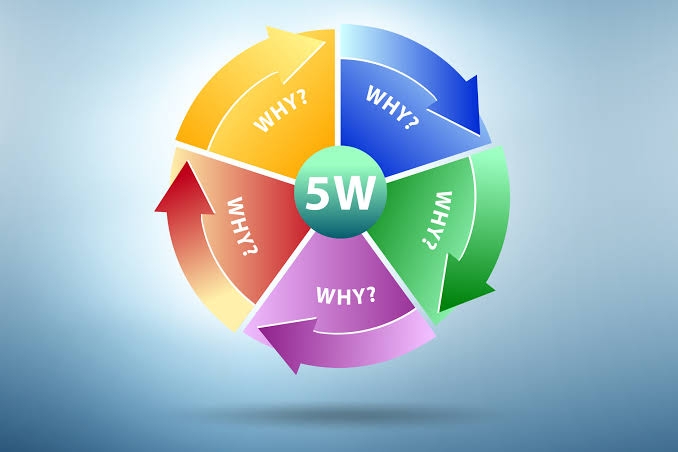
The Monument That Was Crumbling from the Inside Out
Twelve years ago, a historic monument preservation trust in Washington, D.C., faced a devastating architectural crisis that threatened to permanently erode one of the capital's most treasured stone facades. The exterior granite blocks were rapidly pitting, discoloring, and flaking away under the mid-Atlantic weather. The governing board was in a state of absolute panic. Preservationists were writing scathing op-eds, donors were threatening to pull their funding, and structural engineers were working round-the-clock shifts.
The management team did what conventional bureaucracies always do when faced with a visible emergency. They rushed headlong into solution mode.
They hired an elite chemical engineering firm. They brought in high-powered solvent sprayers, waterproof membrane sealants, and industrial chemical washes. For three weeks, the plaza echoed with the harsh hissing of pressure washers and the chemical tang of masonry sealants. Workers coated the entire monument in a thick, expensive protective polymer layer. They were entirely convinced they had correctly identified the core mechanics of maintenance: the granite was decaying due to harsh weather exposure, so they applied a chemical barrier to shield it.
Then, a veteran industrial chemist walked past the scaffolding, looked at the flaking stone, and asked a profoundly irritating question.
He did not ask how to spray the sealant faster. He did not ask about the chemical composition of the polymer. Instead, he asked: "Why are the stone cleaning crews washing this specific facade twice as often as any other section of the monument?"
When they actually investigated the operational habits of the maintenance team, the answer revealed a staggering institutional absurdity. The granite wasn't decaying from natural weather exposure at all.
The root cause was entirely self-inflicted. To combat a minor regional bird-droppings issue on the lower terrace, the night-shift cleaning crew had been washing the stone every single night using a high-pressure industrial power washer mixed with a harsh, highly concentrated acidic detergent. The abrasive chemical wash and excessive water pressure were physically dissolving the stone crystals bit by bit. The sealant they had just applied at great expense was trapping moisture behind the compromised granite, accelerating the internal decay.
The fix did not cost thousands of dollars in chemical polymers. It did not require architectural restoration. The supervisors simply instructed the night crew to switch to a gentle, neutral-pH rinse once a week. Overnight, the stone degradation stopped entirely. The weather was completely fine. But the crisis had exposed a profound, uncomfortable truth about how organizations diagnose failure.
This is the hidden trap of modern troubleshooting. We treat every visible symptom as the definitive problem, applying high-speed tactical force to the wrong layer of a system while the actual root cause remains blissfully untouched. Enter the most deceptively simple tool in the arsenal of industrial diagnosis: the 5 Whys method.
The Epidemic of Symptom Chasing and Linear Panics
Look at your own professional calendar this week. How many hours did you spend rushing headfirst into execution? You likely built slide decks, patched software bugs, mediated team friction points, and answered urgent emails, entirely convinced you were being productive. But did you ever pause to ask whether you were fixing the underlying engine or merely wiping away the smoke?
We suffer from a deeply ingrained cultural pathology known as solution bias, compounded by our obsession with immediate symptoms. From our earliest days in school through our rise up the corporate hierarchy, our environments train us to react instantly to whatever is flashing red. The customer yells, so we offer a refund. The metric drops, so we launch a campaign. The employee burns out, so we mandate a wellness seminar.
We treat troubleshooting as an athletic race to make the noise stop.
This creates a dangerous illusion of competence. We become exceptionally skilled at executing superficial fixes with surgical precision, ensuring that the exact same problem will return with absolute mathematical certainty next quarter.
Consider how most organizations handle a chronic dip in employee retention or a recurring software deployment failure. Within minutes of reviewing the metrics, emergency committees form. Spreadsheets open. People begin aggressively debating policy updates, patch releases, and managerial oversight. Everyone is intensely active, highly focused, and utterly convinced they are doing vital, high-leverage work.
Yet, if you interrupt them mid-debate and ask, "What is the structural incentive driving this recurring failure?" you will often watch the room disintegrate into nervous silence or defensive posturing. One executive thinks the problem is employee attitude. Another thinks it is the project management software. A third is convinced it is macroeconomic pressure. They are all furiously treating symptoms because they lack a disciplined framework like the 5 Whys to drill past the noise.
If you cannot execute proper root-cause analysis, your intelligence and your work ethic become weapons of self-destruction. The harder you work on treating a symptom, the deeper you embed the systemic disease.
Anatomy of the Divergence: Superficial Fixes vs. 5 Whys Mastery
To understand why the 5 Whys method is so powerful yet so frequently misunderstood, we have to look past vague corporate buzzwords and examine the concrete behavioral mechanics of how we diagnose friction. Here is how superficial symptom-chasing compares to disciplined 5 Whys execution across various operational frameworks:
| Diagnostic Dimension | Superficial Symptom-Chasing (The Panic Loop) | Disciplined 5 Whys Execution (Upstream Tracing) | Cognitive Cost & Organizational Impact |
| Initial Reaction | Reacting instantly to the loudest complaint, the most visible error, or the flashing dashboard metric. | Enforcing a deliberate diagnostic pause to trace the failure backward through its upstream dependencies using iterative questioning. | High initial friction, low long-term drag. Eliminates recurring fires entirely. |
| Data Gathering | Relying on surface-level feedback, direct customer anger, or immediate post-mortem assumptions. | Actively seeking disconfirming evidence, mapping behavioral incentives, and interrogating operational outliers. | Requires intellectual humility. Exposes uncomfortable organizational truths. |
| Action Strategy | Applying tactical Band-Aids: policy mandates, hurried patches, cosmetic redesigns, or temporary bonuses. | Reengineering structural incentives, removing systemic bottlenecks, or redesigning operational architecture. | Demands upfront capital and courage. Creates permanent, self-sustaining stability. |
| Long-Term Result | The exact same crisis recurs in a slightly different disguise three to six months later. | The vulnerability is permanently closed, freeing up cognitive bandwidth for genuine innovation. | Transforms organizational culture. Shifts teams from reactive firefighters to proactive architects. |
Notice the structural divide in the table above. Symptom-chasing relies entirely on speed, motion, and brute-force execution. The 5 Whys method relies on pause, perspective, and systematic drilling. When organizational complexity scales upward, the superficial method collapses into a repeating loop of expensive, exhausting fire drills.
A Lesson from My Own Blind Spots
I learned this reality the hard way several years ago while leading a product strategy overhaul for a fast-growing enterprise software firm. Our customer support queue was overflowing, and our net promoter scores were plummeting into negative territory. The executive leadership team was in a state of full-blown panic.
My initial reaction was textbook symptom-chasing. I looked at the support ticket backlog and immediately defined the problem: Our support team is understaffed and overwhelmed.
I argued that we needed to hire ten new support engineers immediately, implement a 24/7 chatbot, and mandate stricter response-time SLAs. I spent two weeks drafting hiring requisitions, budgeting vendor contracts, and restructuring support shifts. I was entirely confident. I had quantitative data showing that customers were waiting forty-eight hours for a response. Case closed.
Fortunately, before we pushed the new hiring plan through the finance committee, a senior data analyst on my team insisted we sit down and run a strict 5 Whys interrogation on the actual content of the support tickets.
What we discovered shattered my elegant, expensive staffing solution entirely:
-
Why is the support queue overflowing? Because customers are submitting thousands of tickets complaining that their saved dashboard filters keep disappearing.
-
Why are the dashboard filters disappearing? Because every time our bi-weekly software release goes live, the database migration script overwrites user preference tables.
-
Why does the migration script overwrite user preference tables? Because the engineering team reuses an old database template from the staging environment during production deployments.
-
Why do they reuse the staging template? Because there is no automated configuration check in our continuous integration pipeline to flag environment mismatches.
-
Why is there no automated check? Because leadership incentivized engineers to ship feature velocity goals ahead of schedule, leaving zero budget for automated pipeline maintenance.
The support tickets weren't pouring in because we lacked enough humans to answer questions. They were pouring in because our engineering deployment incentives prioritized speed over architectural safety.
If we had deployed my "hiring and chatbots" solution, we would have successfully spent hundreds of thousands of dollars bringing in new support staff to manually apologize for a broken software deployment loop, while completely ignoring the buggy codebase causing the hemorrhage.
I sat at my desk staring at the 5 Whys cascade, internalizing a brutal professional truth. Root causes are never found where the noise is loudest. They are always found upstream in the architecture of the system.
How to Execute the 5 Whys Method Without Falling Into Common Traps
Invented within the Toyota Production System by industrial pioneer Sakichi Toyoda, the 5 Whys methodology sounds disarmingly simple. You take a problem and ask "Why?" five successive times. Yet, in practice, teams routinely butcher the technique, turning it into an exercise in corporate finger-pointing or illogical leaping.
Mastering the 5 Whys method requires adhering to four rigorous execution principles.
1. Stop at the System, Not the Person (Avoid the Blame Trap)
When inexperienced teams run a 5 Whys session, their interrogation almost always terminates in a human error. Why did the server crash? Because John forgot to run the backup script. Case closed, reprimand issued, problem unsolved.
-
The Practice: If your "Why?" chain lands on human negligence or individual incompetence, you have failed the exercise. Humans make mistakes because the system allows or encourages them to do so.
-
The Nuance: When you hit a human action in your chain, immediately ask: Why did the system permit that human action to cause a catastrophe? What incentive, lack of training, or poor UI design made that mistake inevitable?
2. Maintain Strict Logical Causality (Avoid the Leap Trap)
Another common failure mode is jumping across massive logical gaps between two questions, assuming a connection that requires empirical verification.
-
The Practice: Every single "Why" must be connected to the previous statement by a direct, verifiable cause-and-effect link. Test each step backward: Does statement B strictly cause statement A?
-
The Nuance: If your chain relies on speculation rather than observable data, pause the session and go verify the physical or digital evidence before writing the next "Why."
3. Recognize That Five Is a Symbol, Not a Dogma
People often get paralyzed by the arithmetic of the method, panicking if they solve the root cause in four whys or if they need seven whys to reach the bottom of a complex enterprise bottleneck.
-
The Practice: Treat the number five as a heuristic rule of thumb, not an absolute law of physics. The goal is not to count to five; the goal is to drill past symptoms and behavioral triggers until you hit a structural or cultural root.
-
The Nuance: Some simple operational glitches can be unmasked in three whys. Deep organizational dysfunctions may require eight or nine iterations. Keep digging until you hit a variable you actually have the power to reengineer.
4. Branch Outward for Complex Systems
Real-world problems are rarely linear snakes; they are sprawling root systems. A single symptom can be caused by multiple converging structural failures.
-
The Practice: If a failure has multiple contributing factors, don't force them into a single linear chain. Let your 5 Whys branch outward like a decision tree, exploring parallel upstream causes.
-
The Nuance: Mapping multiple branches prevents you from oversimplifying a complex systemic crisis into a single convenient narrative.
The Provocative Reality of the 5 Whys Method
Let us dismantle the ultimate comforting illusion in modern professional culture: the belief that leadership and problem-solving are simply matters of working harder, staying later, and fighting fires with relentless physical energy.
When organizations face complex, messy operational crises, they love to praise the frantic executives who rush in, deploy emergency resources, and bark orders during a fire drill. They cast those individuals as heroic leaders. That is a dangerous, systemic delusion. It is a psychological defense mechanism designed to protect us from the highly uncomfortable, ambiguous labor of sitting in silence, tracing systemic dependencies, and admitting that our own organizational designs are flawed.
Mastering the 5 Whys method requires immense restraint. It requires intellectual courage, the discipline to stop fighting fires long enough to inspect the electrical wiring, and the brutal honesty of looking at your own sloppy diagnostic habits without making excuses.
If your home is flooding because a pipe is broken, mopping the floor faster will never save your furniture. Yelling at the water will not change its physics. You have to turn off the main valve.
It is time to turn off the main valve. Stop treating problem-solving as a frantic reaction to the loudest symptoms in the room. Stop hoping that brute-force execution will somehow mask a structural vulnerability. Build the diagnostic systems, master the art of upstream tracing, and take absolute ownership of your intellectual output. Watch how quickly your professional trajectory transforms when you stop wiping away smoke and start extinguishing the fire at its source through disciplined application of the 5 Whys method.
- Arts
- Business
- Computers
- Oyunlar
- Health
- Home
- Kids and Teens
- Money
- News
- Personal Development
- Recreation
- Regional
- Reference
- Science
- Shopping
- Society
- Sports
- Бизнес
- Деньги
- Дом
- Досуг
- Здоровье
- Игры
- Искусство
- Источники информации
- Компьютеры
- Личное развитие
- Наука
- Новости и СМИ
- Общество
- Покупки
- Спорт
- Страны и регионы
- World

 English
 Russian
 French
 Spanish
 Portuguese
 Deutsch
 Dutch
Dutch
 Italiano
 Arabic
 Romaian
 Portuguese (Brazil)
 Greek
Greek
