
Inflation essay
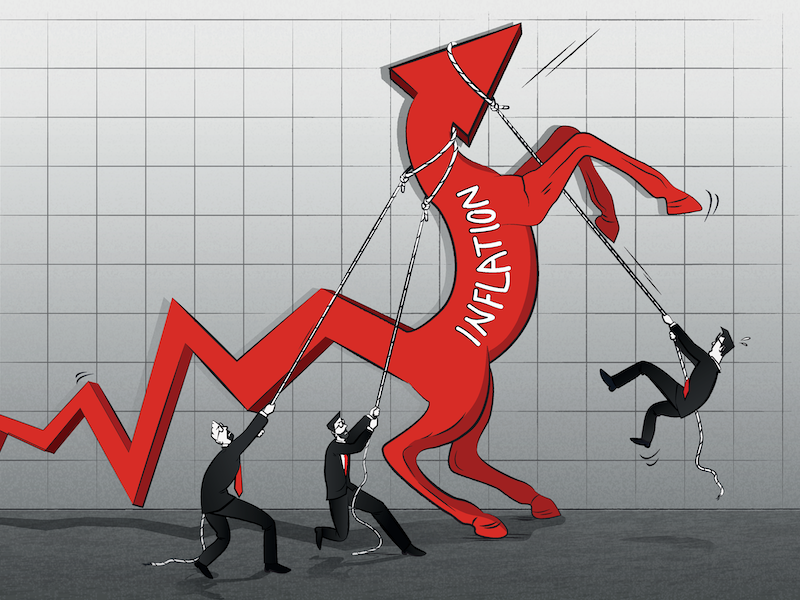
Inflation Essay
Introduction
Inflation is one of the most important economic concepts affecting individuals, businesses, and governments. It refers to the general increase in the prices of goods and services over time, reducing the purchasing power of money. In simple terms, when inflation occurs, the same amount of money buys fewer products than it did before. While moderate inflation is considered a normal part of a growing economy, excessive inflation can create financial instability and economic hardship.
This essay explores the meaning of inflation, its causes, effects, advantages, disadvantages, and possible solutions.
What Is Inflation?
Inflation is the sustained rise in the average price level of goods and services in an economy over a period of time. It is usually measured using indicators such as the Consumer Price Index (CPI) or the Producer Price Index (PPI). Central banks and governments closely monitor inflation because it influences interest rates, employment, investment, and economic growth.
For example, if a loaf of bread costs $2 today and costs $2.10 next year, the increase reflects inflation. Although a small rise may seem insignificant, continuous increases over several years can substantially reduce the value of money.
Causes of Inflation
Inflation can occur for several reasons, and economists generally classify its causes into three main categories.
1. Demand-Pull Inflation
Demand-pull inflation happens when consumer demand for goods and services exceeds the economy's ability to produce them. As demand rises faster than supply, businesses increase prices.
For example, if people have higher incomes and spend more on electronics, but manufacturers cannot produce enough products, prices will rise.
2. Cost-Push Inflation
Cost-push inflation occurs when production costs increase. Rising wages, higher energy prices, expensive raw materials, or supply chain disruptions make it more costly for businesses to produce goods. Companies often pass these additional costs on to consumers through higher prices.
3. Monetary Inflation
When the money supply grows too quickly, more money circulates within the economy. If the production of goods and services does not increase at the same pace, prices tend to rise because there is more money chasing the same amount of products.
Effects of Inflation
Inflation affects different groups in different ways. Some effects are positive, while others can be harmful.
Positive Effects
Moderate inflation can benefit the economy by:
-
Encouraging consumers to spend rather than save because prices may be higher in the future.
-
Motivating businesses to invest and expand production.
-
Supporting economic growth and job creation.
-
Helping borrowers repay loans with money that has lower purchasing power.
Negative Effects
High inflation can create serious economic problems, including:
-
Reduced purchasing power, making everyday goods more expensive.
-
Increased cost of living for households.
-
Lower real value of savings if interest rates fail to keep pace with inflation.
-
Greater uncertainty for businesses planning future investments.
-
Increased income inequality, especially affecting low-income families and people on fixed incomes.
Types of Inflation
Economists classify inflation according to its intensity.
Creeping Inflation
This refers to slow and steady price increases, generally considered healthy for economic growth.
Walking Inflation
Prices rise at a faster pace, requiring policymakers to monitor economic conditions more carefully.
Galloping Inflation
Rapid inflation causes significant economic disruption, making everyday goods much more expensive within a short period.
Hyperinflation
Hyperinflation is an extreme form of inflation in which prices rise uncontrollably, often by hundreds or thousands of percent annually. It can destroy savings, reduce confidence in the national currency, and severely damage the economy.
Impact on Everyday Life
Inflation influences many aspects of daily living.
Families may spend more on groceries, transportation, housing, healthcare, and education. Employees often seek higher wages to keep up with rising living costs. Businesses may adjust product prices more frequently, while investors look for assets that can preserve purchasing power, such as real estate or inflation-protected securities.
People on fixed incomes, including many retirees, are especially vulnerable because their income may not increase as quickly as prices.
How Governments Control Inflation
Governments and central banks use several tools to keep inflation under control.
Monetary Policy
Central banks can raise interest rates to reduce borrowing and spending. Higher interest rates generally slow demand, helping stabilize prices.
Fiscal Policy
Governments may reduce public spending or adjust taxes to lower overall demand within the economy.
Increasing Supply
Policies that improve productivity, support businesses, and strengthen supply chains can increase the availability of goods and services, reducing upward pressure on prices.
Stable Economic Policies
Maintaining responsible budgeting, encouraging competition, and ensuring stable financial systems help prevent excessive inflation over the long term.
Why Some Inflation Is Beneficial
Although inflation often receives negative attention, economists generally agree that a low and predictable inflation rate is desirable. Many central banks aim for annual inflation of around 2%.
A modest inflation rate encourages spending and investment while reducing the risk of deflation, a prolonged decline in prices that can discourage consumption and slow economic growth.
Conclusion
Inflation is a natural part of most modern economies, but its effects depend on how high and how quickly prices rise. Moderate inflation supports economic growth, investment, and employment, while excessive inflation reduces purchasing power, increases living costs, and creates financial uncertainty.
Understanding inflation helps individuals make better financial decisions regarding saving, spending, and investing. At the same time, governments and central banks play a vital role in maintaining price stability through sound monetary and fiscal policies. By keeping inflation at manageable levels, economies can promote sustainable growth and improve the overall standard of living.
- Arts
- Business
- Computers
- Oyunlar
- Health
- Home
- Kids and Teens
- Money
- News
- Personal Development
- Recreation
- Regional
- Reference
- Science
- Shopping
- Society
- Sports
- Бизнес
- Деньги
- Дом
- Досуг
- Здоровье
- Игры
- Искусство
- Источники информации
- Компьютеры
- Личное развитие
- Наука
- Новости и СМИ
- Общество
- Покупки
- Спорт
- Страны и регионы
- World

 English
 Russian
 French
 Spanish
 Portuguese
 Deutsch
 Dutch
Dutch
 Italiano
 Arabic
 Romaian
 Portuguese (Brazil)
 Greek
Greek
