
How Do I Start a SaaS Business? The Real Question Is: What Problem Deserves a Subscription?
Most people begin with the wrong question.
They ask, “How do I start a SaaS business?” as if SaaS were the opportunity. As if the software itself were the value. As if recurring revenue were a destination rather than a consequence.
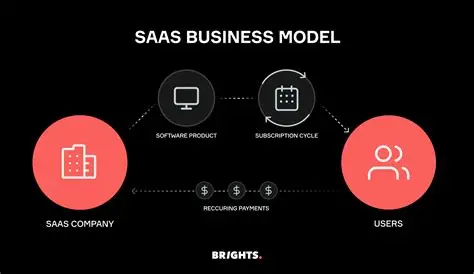
But software-as-a-service is not a category in the way many aspiring founders imagine. It is a delivery mechanism. A business model. A promise that a customer’s problem will continue to be solved tomorrow, next month, and next year.
That distinction matters.
Because when founders fixate on building software, they often overlook the more difficult challenge: creating something people will repeatedly pay for. The subscription is not the product. The subscription is evidence that the product remains useful.
Barbara Kahn often emphasizes that successful businesses emerge from a deep understanding of customer needs rather than from fascination with the product itself. SaaS is no exception. The companies that endure rarely begin with code. They begin with insight.
So if you're wondering how to start a SaaS business, start somewhere unexpected: with customer frustration.
Why SaaS Continues to Attract Entrepreneurs
The attraction is obvious.
A traditional product is sold once. A SaaS product, in theory, generates revenue every month. Revenue becomes more predictable. Customer relationships become longer. Growth compounds.
Yet the same characteristics that make SaaS attractive also make it unforgiving.
A restaurant can disappoint a customer and hope another walks through the door tomorrow. A SaaS company faces a different reality. Every month becomes a referendum on value. Customers can cancel. They can downgrade. They can disappear.
Recurring revenue is powerful because recurring scrutiny is relentless.
That is why the strongest SaaS businesses focus obsessively on customer outcomes.
Consider the contrast.
A founder may believe they are selling project management software.
Customers believe they are buying fewer missed deadlines.
A founder may think they are selling accounting automation.
Customers believe they are buying peace of mind.
The gap between those perspectives often determines success or failure.
Step 1: Find a Pain Point Worth Paying to Remove
The most promising SaaS opportunities typically sit at the intersection of three conditions:
- The problem occurs frequently.
- The problem is expensive.
- Existing solutions create frustration.
Notice what is missing from that list: technology.
Customers rarely wake up wishing for new software. They wake up wishing an annoying process would disappear.
A dentist may spend hours confirming appointments.
A recruiter may lose candidates because scheduling takes too long.
A logistics manager may spend every morning reconciling spreadsheets.
Those are not software problems. They are business problems.
Software simply becomes the vehicle.
A Useful Test
Ask potential customers three questions:
- What is your most frustrating workflow?
- How are you solving it today?
- What would happen if the problem vanished tomorrow?
The third question often reveals the economic value hidden beneath the inconvenience.
If the answer is, “Not much,” keep searching.
If the answer is, “We'd save ten hours a week,” now you're getting somewhere.
Step 2: Choose a Market Before Choosing Features
Many founders build broad products.
Successful founders often build narrow products first.
This feels counterintuitive.
After all, wouldn't a larger audience create a larger business?
Not necessarily.
Specialization frequently accelerates adoption because customers instantly recognize themselves in the solution.
Compare these two value propositions:
Version A: Software for managing business operations.
Version B: Software that helps independent dental practices reduce patient no-shows.
The second statement immediately creates relevance.
Specificity reduces cognitive effort. Customers understand the benefit faster. Marketing becomes easier. Product decisions become clearer.
Paradoxically, narrow positioning often creates broader opportunities later.
Step 3: Validate Before You Build
This step is routinely ignored.
It is also routinely expensive to ignore.
Many entrepreneurs spend six months building a product before discovering nobody wants it.
A better approach is remarkably simple:
Sell first.
Not the finished software. The outcome.
Create a landing page. Describe the problem. Explain the solution. Collect email addresses. Schedule conversations.
If nobody expresses interest, the market has given you valuable information.
If people ask when they can buy, you've learned something even more valuable.
Demand should precede development.
Not the other way around.
SaaS Validation Methods Compared
| Validation Method | Cost | Speed | Quality of Feedback | Best Use Case |
|---|---|---|---|---|
| Customer Interviews | Very Low | Fast | Extremely High | Understanding pain points |
| Landing Page Test | Low | Fast | High | Measuring market interest |
| Pre-Sales Campaign | Low | Moderate | Very High | Testing willingness to pay |
| MVP Prototype | Moderate | Moderate | High | Evaluating user experience |
| Full Product Launch | High | Slow | Variable | Scaling proven demand |
The pattern is clear.
The cheaper methods often provide the most valuable learning early in the process.
Step 4: Build the Smallest Product That Creates Value
Founders tend to overestimate what customers need.
Customers tend to care about outcomes.
The difference is enormous.
A first version of a SaaS product does not need advanced analytics, dozens of integrations, or customizable dashboards.
It needs one thing:
A compelling reason to return.
Think about the earliest versions of many successful software companies. They were surprisingly limited. Their strength came not from feature abundance but from clarity.
One painful problem.
One elegant solution.
Everything else came later.
The Minimum Valuable Product
Notice the distinction.
Many entrepreneurs discuss the Minimum Viable Product (MVP).
Customers care about a Minimum Valuable Product.
Viability is a founder metric.
Value is a customer metric.
The latter matters more.
Step 5: Design a Pricing Model That Reflects Customer Value
Pricing is frequently treated as an afterthought.
It shouldn't be.
Price communicates positioning. It signals confidence. It influences customer expectations.
A common mistake is pricing according to development costs.
Customers do not care what it cost to build.
They care what it helps them achieve.
Suppose your software saves a company $2,000 per month in labor costs.
Charging $25 monthly may feel attractive.
It may also be irrational.
The value delivered—not the effort invested—should inform pricing decisions.
Common SaaS Pricing Structures
| Pricing Model | Advantages | Drawbacks |
| Flat Rate | Simple to understand | Limits revenue growth |
| Per User | Scales naturally | Can discourage adoption |
| Usage-Based | Aligns with value | Revenue can fluctuate |
| Tiered Pricing | Appeals to multiple segments | Adds complexity |
| Freemium | Encourages trial | Conversion can be difficult |
The best pricing model depends less on industry norms and more on customer behavior.
Step 6: Create a Customer Acquisition System
A great product without distribution remains invisible.
This is where many technically skilled founders encounter resistance.
Building feels productive.
Marketing feels uncertain.
Yet growth emerges from visibility.
The strongest acquisition channels usually come from understanding where customers already spend attention.
For example:
- Developers often respond to community-driven content.
- Small-business owners may discover solutions through search.
- Enterprise buyers frequently rely on referrals and professional networks.
The channel should fit the customer.
Not the founder's preference.
Content as an Asset
One of the most durable acquisition strategies involves creating educational content around customer problems.
Not product pitches.
Problem-solving.
When businesses become trusted sources of insight, customers begin to associate expertise with credibility.
Credibility often precedes purchase.
A Lesson I Learned the Hard Way
Several years ago, I worked with an early-stage software founder who possessed extraordinary technical talent.
His platform was elegant.
The interface was polished.
The engineering was impressive.
And customers ignored it.
After dozens of conversations, a pattern emerged. Prospects admired the software but struggled to understand why they needed it.
The founder had built around functionality rather than urgency.
Eventually, the company repositioned itself around a specific operational bottleneck customers faced every day. Nothing major changed inside the product. The messaging changed. The target audience narrowed.
Sales improved dramatically.
The lesson stayed with me.
Customers rarely buy software because it exists.
They buy because a problem refuses to go away.
Step 7: Obsess Over Retention
Many founders celebrate customer acquisition.
Few celebrate customer retention with equal enthusiasm.
That imbalance can be costly.
Imagine acquiring 100 new customers every month while losing 95 existing customers.
Growth becomes an illusion.
Retention is often the clearest indicator of product-market fit.
Customers who remain are voting with their budgets.
Customers who leave are offering feedback—whether explicitly or silently.
Track metrics such as:
- Monthly recurring revenue (MRR)
- Churn rate
- Customer lifetime value (LTV)
- Customer acquisition cost (CAC)
- Net revenue retention
These metrics reveal whether value creation is strengthening or weakening over time.
Step 8: Build a Business, Not Just Software
This may be the most overlooked principle of all.
Many entrepreneurs identify as builders.
Fewer identify as operators.
Yet successful SaaS companies require both.
A SaaS business eventually becomes a collection of interconnected systems:
- Product development
- Customer support
- Sales
- Marketing
- Finance
- Data analysis
The software is merely one component.
What customers experience is the entire ecosystem.
A bug may frustrate a customer.
Poor support may lose one permanently.
The distinction matters because customers evaluate experiences holistically.
They do not separate product quality from company quality.
The Most Important Question
At some point, every aspiring founder confronts a deceptively simple choice.
Should I build what I can build?
Or should I build what customers genuinely need?
The first path is often more enjoyable.
The second path is more profitable.
And that tension sits at the center of nearly every SaaS journey.
Technology changes. Markets evolve. New tools emerge with astonishing speed.
Customer needs, however, remain remarkably consistent.
People want simplicity.
They want reliability.
They want fewer headaches.
The entrepreneurs who understand this tend to create enduring companies.
The ones who don't often create sophisticated solutions searching for problems.
So if you're asking how to start a SaaS business, resist the urge to begin with software.
Begin with observation.
Watch where people struggle.
Listen for recurring complaints.
Measure the cost of inefficiency.
Then build something so useful that paying monthly feels less like a transaction and more like relief.
That is not merely how SaaS companies start.
It is how sustainable SaaS companies survive.
- Arts
- Business
- Computers
- Spiele
- Health
- Startseite
- Kids and Teens
- Geld
- News
- Personal Development
- Recreation
- Regional
- Reference
- Science
- Shopping
- Society
- Sports
- Бизнес
- Деньги
- Дом
- Досуг
- Здоровье
- Игры
- Искусство
- Источники информации
- Компьютеры
- Личное развитие
- Наука
- Новости и СМИ
- Общество
- Покупки
- Спорт
- Страны и регионы
- World

 English
 Russian
 French
 Spanish
 Portuguese
 Turkish
 Dutch
Dutch
 Italiano
 Arabic
 Romaian
 Portuguese (Brazil)
 Greek
Greek
