
What Is Customer Lifetime Value (LTV)? The Metric That Reveals the True Worth of Every Customer Relationship
A customer signs up.
The payment arrives.
The sales team celebrates.
The dashboard moves upward.
It feels like success.
But a question remains unanswered.
What happens next?
Will that customer stay for three months?
Three years?
Will they upgrade?
Will they recommend the product?
Will the revenue they generate justify everything spent to acquire them?
These questions expose a fundamental truth about modern business.
A customer is not defined by the first transaction.
The real value of a customer unfolds over time.
This is the idea behind Customer Lifetime Value, commonly known as LTV or CLV.
At its simplest, LTV estimates the total revenue a company can expect from a customer throughout the entire relationship.
A simple calculation.
A profound implication.
Because LTV shifts the way businesses think about customers.
Instead of asking, “How much did this customer buy today?”
Companies begin asking:
“How much value will this relationship create over time?”
That change in perspective influences everything from marketing budgets to product strategy.
It explains why some companies willingly spend more to acquire customers. It explains why others struggle despite impressive sales numbers.
The difference often comes down to understanding the long-term economics of customer relationships.
Barbara Kahn has consistently explored the connection between customer behavior and business performance. LTV represents that connection in measurable form. It translates loyalty, satisfaction, and ongoing engagement into a financial framework.
For SaaS businesses especially, LTV is not simply a metric.
It is a lens.
A way of seeing whether customer relationships are becoming stronger or weaker.
What Is Customer Lifetime Value (LTV)?
Customer Lifetime Value measures the estimated total revenue a business expects to earn from a customer during their entire relationship.
The phrase “entire relationship” matters.
A customer’s value is not limited to the initial purchase.
It includes:
- Subscription payments
- Renewals
- Upgrades
- Additional purchases
- Expansion opportunities
For example:
A SaaS customer pays $100 per month and remains subscribed for four years.
The basic calculation:
$100 × 12 months × 4 years
Customer Lifetime Value = $4,800
That number provides a much clearer picture than the first $100 payment alone.
The initial transaction is only the opening chapter.
LTV measures the entire story.
Why LTV Matters More Than Individual Sales
Businesses often celebrate immediate revenue.
Understandable.
Revenue keeps organizations operating.
But individual transactions provide limited information.
Consider two customers.
Customer A pays $500 upfront and never returns.
Customer B pays $100 monthly for five years.
At first glance, Customer A appears more valuable.
Over time, Customer B generates significantly greater economic value.
This distinction changes strategic decisions.
Without LTV, companies may underestimate the importance of:
- Retention
- Customer experience
- Product improvement
- Long-term engagement
With LTV, those activities become measurable investments.
The Relationship Between LTV and Customer Acquisition Cost (CAC)
LTV becomes especially powerful when paired with Customer Acquisition Cost.
CAC answers:
“How much does it cost to acquire a customer?”
LTV answers:
“How much value does that customer generate?”
Together, they reveal whether growth is economically sustainable.
LTV Ratio
A commonly used SaaS benchmark is:
LTV = 3:1
Meaning:
For every $1 spent acquiring a customer, the company generates approximately $3 in customer value.
Example
Customer Acquisition Cost:
$500
Customer Lifetime Value:
$1,500
LTV ratio:
3:1
This suggests healthy economics.
Now consider the opposite.
CAC:
$1,000
LTV:
$700
The company loses money with every customer relationship.
Growth may appear exciting.
The economics are not.
How to Calculate Customer Lifetime Value
The formula can become increasingly sophisticated depending on the business model.
A basic calculation looks like this:
Simple LTV Formula
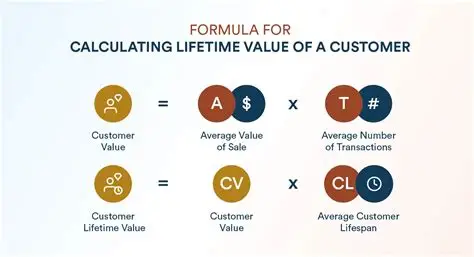
LTV = Average Revenue Per Customer × Average Customer Lifespan
For subscription businesses, another common formula is:
LTV = (Average Monthly Revenue Per Customer × Gross Margin) ÷ Monthly Churn Rate
Each version provides insight.
The first offers simplicity.
The second accounts for the realities of recurring revenue.
Breaking Down the Components of LTV
LTV depends on several interconnected factors.
Understanding those components is more valuable than memorizing formulas.
Average Revenue Per Customer (ARPC)
This measures how much revenue an average customer generates during a given period.
Higher revenue per customer generally increases LTV.
However, increasing prices without increasing value can damage retention.
Customer Lifespan
How long customers remain active significantly influences LTV.
A customer staying for five years is dramatically more valuable than one leaving after five months.
Retention is not simply a customer success metric.
It is an economic driver.
Gross Margin
Revenue does not equal profit.
A company must consider the cost of delivering its product.
Higher gross margins increase the value generated from each customer.
Churn Rate
Churn has one of the largest impacts on LTV.
When customers leave quickly, lifetime value declines.
Small improvements in retention can create substantial increases in customer value.
LTV Compared With Other SaaS Metrics
LTV rarely exists alone.
It works within a larger ecosystem of business measurements.
| Metric | Measures | Main Question | Strategic Importance |
|---|---|---|---|
| LTV | Customer value over time | How much is a customer worth? | Profitability |
| CAC | Acquisition expense | How much does growth cost? | Efficiency |
| MRR | Monthly recurring revenue | How much recurring revenue exists now? | Operational visibility |
| ARR | Annual recurring revenue | What predictable revenue exists yearly? | Long-term planning |
| Churn Rate | Customer loss | Why are customers leaving? | Retention health |
| NRR | Existing customer revenue growth | Are current customers expanding? | Relationship strength |
No single metric tells the complete story.
Together, they reveal the health of the business.
Why Retention Has an Outsized Impact on LTV
Many companies focus heavily on acquiring new customers.
That focus is understandable.
New customers are visible.
New customers create immediate excitement.
But retention often creates greater long-term value.
A customer who remains longer:
- Generates more revenue
- Requires fewer acquisition investments
- Has more opportunities to upgrade
- Provides more feedback
This creates a compounding effect.
A small improvement in retention can dramatically increase LTV.
The mathematics are straightforward.
The business implications are enormous.
A Lesson I Learned From a Company That Chased Acquisition Too Hard
Several years ago, I worked with a SaaS company that had mastered customer acquisition.
Marketing campaigns performed well.
Sales pipelines looked impressive.
New customer numbers continued climbing.
From the outside, the company appeared successful.
But beneath the surface, something was wrong.
Customers were leaving almost as quickly as they arrived.
The company had optimized the beginning of the relationship while neglecting everything afterward.
When leadership examined LTV, the problem became impossible to ignore.
Customers were expensive to acquire but not valuable enough to retain.
The strategy changed.
The company invested in onboarding, customer education, and product improvements.
Growth slowed temporarily.
Then something interesting happened.
LTV increased.
Customers stayed longer.
Expansion revenue improved.
The company grew more efficiently.
The lesson was clear.
A customer relationship is not won at the moment of purchase.
It is earned repeatedly.
Ways Companies Increase LTV
Increasing LTV does not necessarily require acquiring more customers.
Often, it requires serving existing customers better.
Improve Customer Onboarding
The first experience shapes long-term engagement.
Customers who reach value quickly are more likely to remain.
Increase Product Adoption
Customers using more features often become more valuable.
Education and support can improve adoption.
Create Expansion Opportunities
Upsells and upgrades increase revenue without requiring new customer acquisition.
Reduce Churn
Retention improvements directly influence lifetime value.
Even small reductions in churn can create meaningful gains.
Common LTV Mistakes
Despite its importance, LTV is frequently misunderstood.
Using Revenue Instead of Profit
Revenue alone ignores delivery costs.
Gross margin provides a more accurate picture.
Overestimating Customer Lifespan
Optimistic assumptions can inflate LTV calculations.
Historical behavior matters.
Ignoring Customer Segments
Different customers often have different values.
Enterprise customers and small businesses should not always be analyzed together.
Treating LTV as Fixed
LTV changes as products, pricing, and customer behavior evolve.
It requires continuous evaluation.
The Psychology Behind LTV
LTV appears mathematical.
But its foundation is psychological.
Customers remain when they perceive ongoing value.
They upgrade when their needs expand.
They leave when alternatives become more attractive.
Every LTV calculation represents thousands of individual decisions.
That is what makes the metric so interesting.
It converts human behavior into business intelligence.
A rising LTV often signals increasing customer trust.
A declining LTV may indicate weakening relevance.
The number tells a financial story.
The customer experience creates the plot.
The Real Meaning Behind Customer Lifetime Value
When people ask, “What is customer lifetime value?” they often expect a formula.
And formulas matter.
They create structure.
They enable comparison.
They support decision-making.
But LTV represents something deeper.
It represents a company’s ability to create lasting relationships.
A business can acquire customers.
Many businesses can do that.
The harder challenge is creating enough value that customers choose to stay.
Again and again.
Month after month.
Year after year.
That is the true measure of a successful SaaS business.
Not the first payment.
Not the initial conversion.
The relationship that follows.
And perhaps that is the most important lesson LTV reveals.
A customer is not a transaction waiting to happen.
A customer is a relationship waiting to develop.
Companies that understand this do not merely chase growth.
They build value that compounds.
- Arts
- Business
- Computers
- Spiele
- Health
- Startseite
- Kids and Teens
- Geld
- News
- Personal Development
- Recreation
- Regional
- Reference
- Science
- Shopping
- Society
- Sports
- Бизнес
- Деньги
- Дом
- Досуг
- Здоровье
- Игры
- Искусство
- Источники информации
- Компьютеры
- Личное развитие
- Наука
- Новости и СМИ
- Общество
- Покупки
- Спорт
- Страны и регионы
- World

 English
 Russian
 French
 Spanish
 Portuguese
 Turkish
 Dutch
Dutch
 Italiano
 Arabic
 Romaian
 Portuguese (Brazil)
 Greek
Greek
