
What Is Churn Rate? The Metric That Reveals Why Customers Leave and What Businesses Can Learn From It
A company celebrates a record-breaking quarter.
New customers are arriving.
Revenue is increasing.
The sales pipeline looks stronger than ever.
Then someone asks a simple question:
“How many customers did we lose?”
The room becomes quieter.
Not because the answer is unavailable.
Because the question changes the conversation.
Growth tells one story.
Retention tells another.
And for subscription businesses, the second story often matters more.
This is where churn rate enters the picture.
At first glance, churn appears negative.
A measurement of loss.
A reminder of customers who departed.
But experienced operators understand something more nuanced.
Churn is information.
It reveals whether customers continue finding value. It exposes weaknesses in onboarding, pricing, product experience, and customer support. It provides clues about the relationship between a company and the people who pay for its services.
A SaaS business can acquire customers endlessly.
But if those customers leave quickly, growth becomes a treadmill.
The company moves forward.
The business does not necessarily advance.
Barbara Kahn has often highlighted the importance of understanding customer behavior rather than simply observing outcomes. Churn rate reflects this principle. It is not merely a financial statistic. It is evidence of customer decisions.
And customer decisions determine the future of recurring revenue businesses.
What Is Churn Rate?
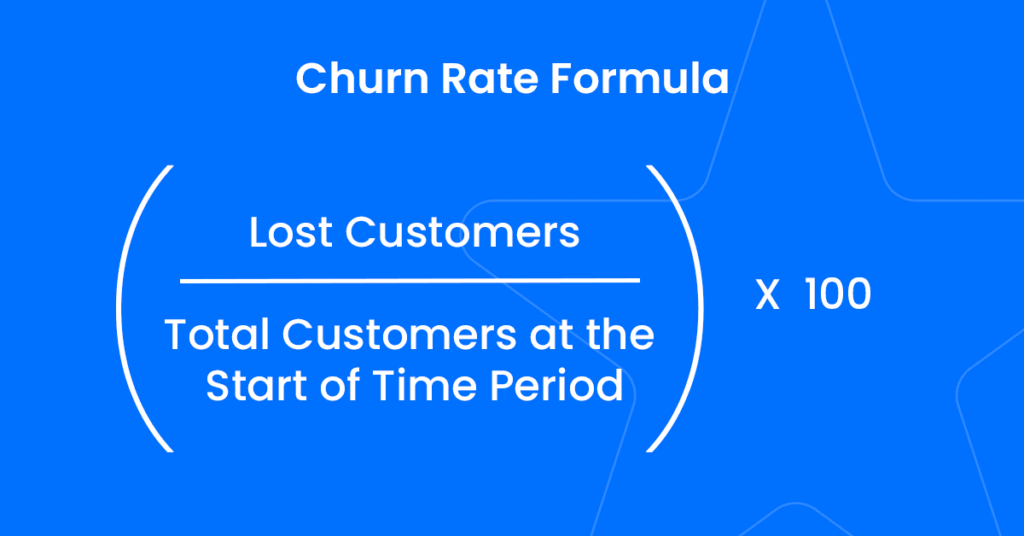
Churn rate measures the percentage of customers or revenue lost during a specific period.
In simple terms:
Churn Rate = The percentage of customers who stop using a product or service over time.
For SaaS companies, churn usually refers to customers canceling subscriptions.
For example:
A company begins the month with 1,000 customers.
During that month, 50 customers cancel.
The customer churn rate is:
50 ÷ 1,000 = 5%
The calculation is simple.
The meaning is not.
A 5% monthly churn rate may look manageable.
But compounded over time, the impact becomes significant.
Why Churn Rate Matters More Than Most Growth Metrics
Businesses naturally focus on acquisition.
New customers create excitement.
They generate revenue.
They signal momentum.
But acquisition without retention creates instability.
Imagine a SaaS company adding 500 customers every month.
Impressive.
Now imagine losing 450 customers every month.
The business is constantly replacing customers rather than building a stronger customer base.
This creates several problems:
- Higher acquisition costs
- Increased sales pressure
- Lower profitability
- Reduced predictability
Retention creates leverage.
When customers remain longer, every acquisition investment becomes more valuable.
This is why churn rate receives so much attention.
It reveals whether growth has a foundation.
The Different Types of Churn
Churn is not a single measurement.
Different forms of churn reveal different problems.
Customer Churn
Customer churn measures the percentage of customers who cancel.
Formula:
Customer Churn Rate = Customers Lost During Period ÷ Customers at Start of Period
Example:
Beginning customers: 2,000
Customers lost: 80
Customer churn:
80 ÷ 2,000 = 4%
This metric answers:
“How many relationships ended?”
Revenue Churn
Revenue churn measures lost recurring revenue rather than lost customers.
This distinction matters because not all customers have equal value.
Losing one enterprise customer may affect revenue more than losing dozens of smaller accounts.
Formula:
Revenue Churn Rate = Lost Recurring Revenue ÷ Starting Recurring Revenue
Gross Revenue Churn
This includes revenue lost from:
- Cancellations
- Downgrades
It measures contraction within the existing customer base.
Net Revenue Churn
Net revenue churn accounts for expansion revenue from existing customers.
It includes:
- Upsells
- Upgrades
- Additional purchases
A company can lose customers while still increasing revenue if expansion outweighs losses.
That is why Net Revenue Retention has become such an important SaaS metric.
Churn Rate Compared With Other SaaS Metrics
Churn rarely exists independently.
It interacts with nearly every major SaaS performance indicator.
| Metric | What It Measures | Relationship to Churn | Strategic Value |
|---|---|---|---|
| Churn Rate | Customer or revenue loss | Direct measure of retention | Reveals customer stability |
| MRR | Monthly recurring revenue | Churn reduces recurring income | Shows revenue momentum |
| ARR | Annual recurring revenue | High churn weakens future revenue | Measures predictability |
| LTV | Customer value over time | Lower churn increases lifetime value | Measures profitability |
| CAC | Acquisition expense | High churn wastes acquisition investment | Measures efficiency |
| NRR | Existing customer revenue growth | Includes churn impact | Shows customer expansion |
The most important insight:
Churn does not merely affect one metric.
It influences the entire economic system.
Why SaaS Companies Are Especially Sensitive to Churn
Traditional businesses often complete transactions and move forward.
SaaS businesses operate differently.
The relationship continues.
Every month creates another opportunity for customers to reconsider.
That means the product must continually earn its place.
Customers are not simply buying software.
They are repeatedly deciding whether the software remains valuable.
This creates both pressure and opportunity.
Companies that understand customer needs can build durable relationships.
Companies that ignore those needs eventually feel the consequences through rising churn.
What Causes Customer Churn?
Customers rarely leave for one single reason.
Usually, churn results from accumulated friction.
Poor Onboarding
The first customer experience often determines future engagement.
If users fail to understand value quickly, cancellation becomes more likely.
Weak Product Adoption
Customers who use only a small portion of a product often struggle to justify continued payment.
Usage creates attachment.
Lack of usage creates uncertainty.
Better Alternatives
Competitors may offer:
- Lower prices
- Better features
- Superior experiences
Markets change.
Customer expectations change with them.
Poor Customer Support
A frustrating support experience can transform a minor problem into a cancellation decision.
Misaligned Expectations
Sometimes churn begins before purchase.
If marketing promises something the product cannot deliver, disappointment follows.
A Lesson I Learned Watching Churn Reveal the Real Problem
Several years ago, I worked with a SaaS company that believed its biggest challenge was customer acquisition.
The team invested heavily in marketing.
More campaigns.
More leads.
More sales activity.
But the numbers remained frustrating.
New customers arrived.
Revenue increased.
Yet growth never accelerated as expected.
When the company examined churn patterns, the answer became clear.
Customers were leaving because they struggled to experience value during the first few weeks.
The problem was not demand.
The problem was activation.
The company redesigned onboarding, improved customer education, and introduced better early engagement programs.
Churn declined.
Revenue quality improved.
The lesson was simple.
Sometimes customers do not leave because they dislike a product.
They leave because they never discovered why it mattered.
What Is a Good Churn Rate?
This question sounds simple.
It is not.
A healthy churn rate depends on factors such as:
- Industry
- Customer type
- Pricing model
- Contract length
- Market maturity
Enterprise SaaS companies often experience lower churn because contracts are larger and more structured.
Small-business SaaS products may experience higher churn because switching costs are lower.
Still, the general principle remains:
Lower churn usually creates stronger economics.
Even small improvements can have significant long-term effects.
How Churn Impacts Customer Lifetime Value
Churn and LTV are deeply connected.
When customers stay longer, lifetime value increases.
When customers leave quickly, lifetime value decreases.
Consider two customers:
Customer A:
- Pays $100/month
- Stays 5 years
Revenue:
$6,000
Customer B:
- Pays $100/month
- Stays 6 months
Revenue:
$600
Same subscription price.
Completely different economic value.
Retention transforms acquisition investments into long-term assets.
Strategies to Reduce Churn
Reducing churn rarely involves one dramatic change.
More often, it requires improving the entire customer experience.
Improve Customer Onboarding
Help customers reach meaningful value quickly.
Early success creates confidence.
Monitor Product Usage
Usage patterns reveal risk.
Customers becoming less active may require attention.
Build Customer Relationships
Communication should not occur only when problems appear.
Collect Feedback Regularly
Customers often reveal problems before they become cancellations.
Create Expansion Opportunities
Customers who discover increasing value are less likely to leave.
The Danger of Ignoring Churn
Some companies treat churn as a backward-looking metric.
They see it as a report of past failures.
That perspective misses its strategic value.
Churn is a warning system.
It identifies problems while they are still visible.
A rising churn rate may indicate:
- Product issues
- Competitive threats
- Pricing problems
- Customer dissatisfaction
The metric does not simply describe what happened.
It suggests what needs attention.
Churn Is a Customer Conversation in Numerical Form
At first glance, churn rate appears cold.
A percentage.
A calculation.
A line on a dashboard.
But behind every cancellation is a decision.
A customer evaluated the relationship and chose to leave.
That decision contains information.
Maybe the product lacked value.
Maybe expectations were unclear.
Maybe the experience was frustrating.
Maybe the customer’s needs changed.
The number represents the outcome.
Understanding the reason reveals the opportunity.
The Real Meaning Behind Churn Rate
When people ask, “What is churn rate?” they often expect a definition.
And the definition matters.
But the deeper lesson is more important.
Churn rate measures whether a company continues earning customer trust.
That is a much harder challenge than making an initial sale.
Anyone can attract attention.
The strongest businesses create reasons for customers to stay.
Because recurring revenue is not created when customers subscribe.
It is created every month afterward.
That is the moment of truth.
The renewal.
The continued usage.
The decision to remain.
A company’s future is often determined not by how many customers it can convince to arrive.
But by how many customers it can convince not to leave.
And perhaps that is the most revealing aspect of churn.
It does not measure failure.
It measures feedback.
The companies that listen carefully often discover something valuable:
Customers are constantly explaining what they need.
Churn is simply one of the clearest ways they communicate.
- Arts
- Business
- Computers
- Spellen
- Health
- Home
- Kids and Teens
- Money
- News
- Personal Development
- Recreation
- Regional
- Reference
- Science
- Shopping
- Society
- Sports
- Бизнес
- Деньги
- Дом
- Досуг
- Здоровье
- Игры
- Искусство
- Источники информации
- Компьютеры
- Личное развитие
- Наука
- Новости и СМИ
- Общество
- Покупки
- Спорт
- Страны и регионы
- World

 English
 Russian
 French
 Spanish
 Portuguese
 Deutsch
 Turkish
 Italiano
 Arabic
 Romaian
 Portuguese (Brazil)
 Greek
Greek
