
What Is Product-Led Growth (PLG)?
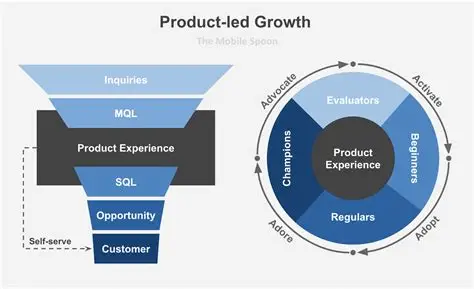
For decades, software companies followed a familiar script.
Marketing generated awareness.
Sales generated interest.
Sales demonstrations generated confidence.
Contracts generated revenue.
The product entered the conversation surprisingly late.
Customers often made purchasing decisions before fully experiencing what they were buying.
Then something changed.
A different model emerged.
Instead of asking customers to trust the sales pitch, companies began inviting them to experience the product first.
Try it.
Explore it.
Use it.
Decide for yourself.
The software stopped waiting at the end of the buying journey and moved directly to the beginning.
This shift gave rise to one of the most influential concepts in modern software businesses: Product-Led Growth, commonly known as PLG.
At first glance, PLG appears to be a customer acquisition strategy.
In reality, it is something broader.
It is a philosophy about how value should be discovered, communicated, and expanded.
And perhaps more importantly, it represents a subtle transfer of power—from the vendor to the customer.
That transfer has changed how software is bought, adopted, and scaled.
Defining Product-Led Growth
Product-Led Growth is a business strategy in which the product itself serves as the primary driver of customer acquisition, conversion, expansion, and retention.
Rather than relying predominantly on sales representatives or marketing campaigns to persuade buyers, PLG companies allow customers to experience value directly through the product.
The product becomes:
- The demonstration
- The onboarding experience
- The conversion mechanism
- The retention engine
- The expansion channel
This distinction matters.
Traditional software companies often ask customers to believe.
PLG companies allow customers to verify.
The difference may seem subtle.
Its impact is profound.
Why Product-Led Growth Emerged
The rise of PLG did not occur accidentally.
It emerged because software buyers changed.
Information became easier to access.
Product comparisons became easier to conduct.
Customer reviews became more visible.
Buyers increasingly preferred self-directed evaluation.
They wanted evidence.
Not promises.
The traditional software buying process often felt cumbersome.
Schedule a meeting.
Attend a demo.
Wait for pricing.
Talk to sales.
Attend another meeting.
PLG simplified the experience.
Customers could immediately engage with the product and determine whether it solved their problem.
The buying process became less theoretical and more experiential.
People tend to trust experiences.
That reality sits at the center of PLG.
The Core Principle Behind PLG
Every successful Product-Led Growth strategy revolves around one idea:
Deliver value before asking for commitment.
Not after.
Before.
This principle influences nearly every aspect of the business.
Free trials.
Freemium plans.
Interactive onboarding.
Self-service product tours.
Each mechanism serves the same purpose.
Reduce friction.
Accelerate discovery.
Demonstrate value.
The customer no longer relies exclusively on marketing messages to evaluate the product.
The product provides its own proof.
How Product-Led Growth Works
Although implementations vary, most PLG companies follow a similar progression.
Step 1: User Acquisition
Potential customers discover the product through:
- Search engines
- Referrals
- Content marketing
- Social media
- Word-of-mouth
The goal is simple.
Encourage product interaction.
Step 2: Product Activation
Users experience an initial success.
This stage is critical.
The faster users reach meaningful value, the greater the likelihood of long-term engagement.
Activation often becomes the most important metric in PLG organizations.
Step 3: Product Adoption
Users integrate the software into workflows.
Usage increases.
Dependence develops.
The product becomes useful rather than merely interesting.
Step 4: Conversion
Users upgrade to paid plans when additional value justifies investment.
Importantly, conversion often occurs after product trust has already been established.
Step 5: Expansion
Additional users, teams, departments, or features increase account value.
Growth emerges organically from demonstrated utility.
This progression creates a remarkably efficient growth model when executed effectively.
Product-Led Growth vs. Sales-Led Growth
PLG is often compared with traditional sales-led models.
The comparison is useful, though somewhat oversimplified.
Both approaches can be highly successful.
They simply prioritize different mechanisms.
| Factor | Product-Led Growth | Sales-Led Growth |
|---|---|---|
| Primary Growth Driver | Product experience | Sales team |
| Initial User Access | Self-service | Sales engagement |
| Time to Evaluation | Immediate | Scheduled demonstrations |
| Customer Acquisition Cost | Often lower | Often higher |
| Scalability | High | Moderate |
| Human Interaction | Limited initially | Significant |
| Typical Deal Size | Smaller to medium | Medium to large |
| Conversion Mechanism | Product value | Relationship and consultation |
The choice is not always binary.
Many successful SaaS companies blend both approaches.
The product creates initial adoption.
Sales teams support expansion.
The distinction is increasingly blurred.
Why Customers Respond to PLG
Product-Led Growth succeeds because it aligns with human behavior.
People prefer reducing uncertainty.
Traditional sales processes require customers to imagine outcomes.
PLG allows them to experience outcomes.
That difference changes the psychology of decision-making.
Customers gain:
- Greater confidence
- Faster validation
- Reduced risk
- More control
From the buyer's perspective, the arrangement feels fair.
The product proves itself before requesting investment.
Trust develops naturally.
And trust influences purchasing decisions more than many organizations realize.
The Importance of Product Activation
Among all PLG metrics, activation may be the most revealing.
Activation occurs when a user experiences the product's core value for the first time.
Not when they sign up.
Not when they log in.
When they succeed.
The distinction is crucial.
A project management platform might define activation as completing a project.
A CRM might define activation as importing customer data and closing an opportunity.
An analytics platform might define activation as generating the first report.
Each company identifies the moment when curiosity transforms into utility.
That moment often predicts retention.
And retention often predicts growth.
Freemium vs. Free Trial
Many people use these concepts interchangeably.
They are not identical.
Freemium
Users access a limited version of the product indefinitely without payment.
The objective is broad adoption.
Conversion occurs when users require additional capabilities.
Free Trial
Users receive temporary access to premium functionality.
The objective is demonstrating value within a defined timeframe.
Each model carries advantages.
Freemium encourages scale.
Free trials create urgency.
The appropriate choice depends on product complexity, market dynamics, and customer behavior.
Comparing Key PLG Metrics
PLG organizations rely heavily on behavioral data.
The following metrics frequently receive significant attention.
| Metric | What It Measures | Why It Matters |
| Sign-Up Rate | User acquisition | Indicates interest |
| Activation Rate | Initial value realization | Predicts adoption |
| Product Adoption | Feature utilization | Reflects engagement |
| Free-to-Paid Conversion | Monetization efficiency | Drives revenue |
| Retention Rate | Customer persistence | Indicates value |
| Net Revenue Retention (NRR) | Revenue expansion | Measures growth quality |
| Expansion Revenue | Upselling and growth | Reflects product adoption |
| Customer Lifetime Value (LTV) | Long-term customer value | Evaluates sustainability |
Unlike traditional models, PLG metrics often focus more heavily on behavior than pipeline.
What users do becomes more important than what they say.
The Role of Customer Experience
Product-Led Growth often appears product-centric.
Ironically, it is deeply customer-centric.
Because customers navigate the journey independently, experience becomes critical.
Every interaction matters.
The signup flow.
The onboarding process.
The interface design.
The support experience.
The educational resources.
Each contributes to value perception.
Poor experiences create friction.
Friction weakens adoption.
Weak adoption undermines growth.
The relationship is remarkably direct.
A Lesson I Learned About PLG
Several years ago, I observed two software companies pursuing very different growth strategies.
The first invested heavily in sales.
Demonstrations were polished. Presentations were persuasive. Revenue growth initially appeared impressive.
The second company focused relentlessly on product experience.
Its onboarding process received extraordinary attention. Every activation milestone was measured. Every user behavior was analyzed.
At first, the sales-driven company appeared stronger.
Then retention data emerged.
Users from the second company adopted more features, expanded usage more frequently, and generated significantly more referrals.
The explanation was simple.
Customers understood the product because they had experienced its value firsthand.
The lesson stayed with me.
People rarely become loyal to promises.
They become loyal to outcomes.
PLG works because it shortens the distance between the two.
Common Misconceptions About Product-Led Growth
PLG has attracted substantial attention.
It has also attracted misunderstanding.
Misconception 1: PLG Eliminates Sales
It does not.
Many PLG companies maintain highly effective sales teams.
The difference is that sales often enters later in the customer journey.
Misconception 2: Every Product Should Be PLG
Not necessarily.
Highly complex enterprise solutions may require significant consultation before adoption.
PLG works best when users can experience value independently.
Misconception 3: PLG Is Simply Freemium
Freemium is a tactic.
PLG is a strategy.
The two frequently overlap but are not synonymous.
Misconception 4: PLG Is Easier
In some respects, it is harder.
The product must communicate value without extensive human assistance.
That requirement raises the standard significantly.
The Challenges of Product-Led Growth
PLG offers substantial advantages.
It also introduces unique challenges.
Organizations must:
- Deliver intuitive user experiences
- Reduce onboarding friction
- Track behavioral data effectively
- Align product and growth teams
- Continuously optimize activation
The product becomes responsible for responsibilities traditionally handled by sales and marketing.
That transition requires exceptional execution.
Not every organization is prepared for it.
Why Investors Love PLG
Investors frequently view successful PLG companies favorably for several reasons.
First, customer acquisition costs often improve.
Second, scalability increases.
Third, retention frequently strengthens because users adopt products through demonstrated value rather than persuasion alone.
Most importantly, PLG can create powerful growth loops.
Users invite colleagues.
Teams expand usage.
Organizations adopt additional features.
Growth compounds.
The economics become increasingly attractive.
When executed well, PLG transforms the product into a distribution channel.
Few business assets are more valuable.
The Bigger Truth About Product-Led Growth
Product-Led Growth is often described as a go-to-market strategy.
A customer acquisition model.
A SaaS growth framework.
All of those descriptions are accurate.
Yet they miss something important.
At its core, PLG reflects a philosophical shift.
For decades, software companies attempted to persuade customers that value existed.
PLG asks a different question:
Why persuade when customers can experience the value themselves?
That perspective changes everything.
The product stops being the destination.
It becomes the journey.
And perhaps that explains why PLG has become so influential.
Not because it eliminates sales.
Not because it lowers acquisition costs.
Not because it creates efficient growth.
Those benefits matter.
But the deeper reason is simpler.
Product-Led Growth aligns with how people prefer to make decisions.
People trust what they experience.
They trust outcomes more than promises.
They trust evidence more than explanations.
The most successful PLG companies understand this intuitively.
They spend less time telling customers why the product matters and more time helping customers discover it for themselves.
Because when value becomes self-evident, growth often follows naturally.
And in a marketplace crowded with claims, demonstrations remain remarkably persuasive.
- Arts
- Business
- Computers
- Games
- Health
- Home
- Kids and Teens
- Money
- News
- Personal Development
- Recreation
- Regional
- Reference
- Science
- Shopping
- Society
- Sports
- Бизнес
- Деньги
- Дом
- Досуг
- Здоровье
- Игры
- Искусство
- Источники информации
- Компьютеры
- Личное развитие
- Наука
- Новости и СМИ
- Общество
- Покупки
- Спорт
- Страны и регионы
- World

 Russian
 French
 Spanish
 Portuguese
 Deutsch
 Turkish
 Dutch
Dutch
 Italiano
 Arabic
 Romaian
 Portuguese (Brazil)
 Greek
Greek
