
How do interest rates affect exchange rates?
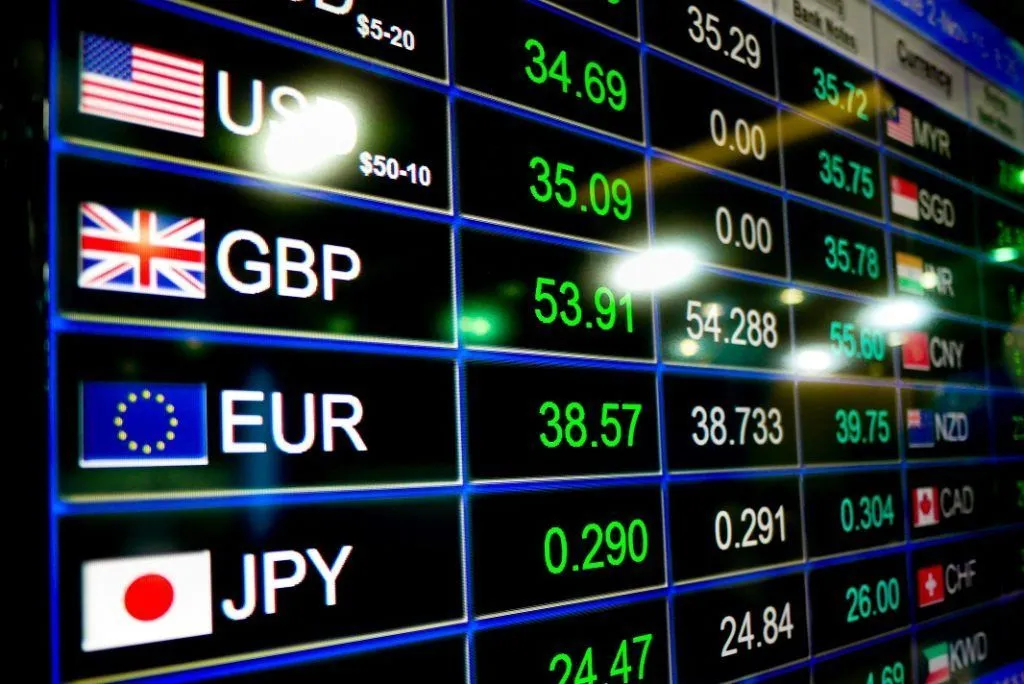
How Do Interest Rates Affect Exchange Rates?
Interest rates and exchange rates are closely connected in the global economy. A country's interest rates influence the flow of money across borders, affecting the demand for its currency. When central banks raise or lower interest rates, the value of the national currency often changes in response. However, while interest rates are an important factor, exchange rates are also influenced by inflation, economic growth, political stability, and market expectations.
This article explains how interest rates affect exchange rates, why investors pay close attention to central bank decisions, and the factors that can strengthen or weaken this relationship.
Understanding Exchange Rates
An exchange rate is the value of one currency compared to another. For example, if one U.S. dollar (USD) buys 0.90 euros (EUR), the exchange rate reflects the relative value of the two currencies.
Exchange rates fluctuate continuously because of changes in supply and demand in the foreign exchange (forex) market.
What Are Interest Rates?
Interest rates represent the cost of borrowing money or the reward for saving it. Most countries have a central bank that sets a benchmark interest rate, influencing lending, borrowing, and investment throughout the economy.
Examples include:
-
The U.S. Federal Reserve's federal funds rate
-
The European Central Bank's policy rates
-
The Bank of England's Bank Rate
Changes in these rates can quickly affect financial markets worldwide.
The Basic Relationship
In general:
-
Higher interest rates tend to strengthen a currency.
-
Lower interest rates tend to weaken a currency.
This happens because investors seek the highest risk-adjusted returns on their investments.
Why Higher Interest Rates Strengthen a Currency
When a country's interest rates rise, its financial assets—such as government bonds, savings accounts, and deposits—often offer better returns.
As a result:
-
Foreign investors move money into the country.
-
They must purchase the local currency.
-
Demand for that currency increases.
-
The currency appreciates.
Example
Suppose Country A raises interest rates from 2% to 5%, while Country B keeps rates at 2%.
Investors seeking higher returns may:
-
Sell Country B's currency.
-
Buy Country A's currency.
-
Invest in Country A's bonds or deposits.
Greater demand for Country A's currency pushes its exchange rate higher.
Why Lower Interest Rates Weaken a Currency
Lower interest rates reduce the returns available on financial investments.
As a result:
-
Foreign investment may decline.
-
Domestic investors may seek better opportunities abroad.
-
Demand for the currency falls.
-
The currency may depreciate.
This weaker currency can make exports more competitive while increasing the cost of imports.
Capital Flows Drive Currency Values
International investors constantly compare investment opportunities around the world.
Countries offering:
-
Higher interest rates
-
Stable economies
-
Low inflation
-
Predictable monetary policy
often attract more foreign capital.
These capital inflows increase demand for the country's currency.
Conversely, countries with low interest rates and weak economic prospects may experience capital outflows that put downward pressure on their currencies.
Interest Rate Differentials
Currency markets often focus on the difference between interest rates in two countries rather than the level of rates alone.
For example:
-
Country X interest rate: 6%
-
Country Y interest rate: 3%
The 3% difference encourages investors to consider moving funds into Country X, provided the additional return outweighs the risks.
This is why exchange rates often react strongly when one central bank changes policy while another keeps rates unchanged.
Expectations Matter
Financial markets are forward-looking.
Currencies often move before an interest rate change actually occurs because traders anticipate future central bank actions.
For example:
-
If investors expect several rate increases over the next year, the currency may strengthen immediately.
-
If markets expect future rate cuts, the currency may weaken well before the first reduction.
Expectations can sometimes have a greater impact than the actual announcement.
Inflation and Interest Rates
Central banks often raise interest rates to combat inflation.
Higher rates can:
-
Reduce consumer spending.
-
Slow borrowing.
-
Lower inflation over time.
If investors believe a central bank is successfully controlling inflation, confidence in the currency may increase, further supporting its value.
However, if inflation remains extremely high despite rising interest rates, the currency may still weaken because purchasing power continues to decline.
Economic Growth Also Matters
Interest rates cannot be viewed in isolation.
A country with:
-
strong economic growth,
-
healthy employment,
-
stable government finances,
is generally more attractive to investors than a country raising rates during an economic crisis.
Sometimes a country raises rates because inflation is out of control or investors have lost confidence. In those situations, higher interest rates may not strengthen the currency as expected.
The Carry Trade
One way investors use interest rate differences is through the carry trade.
This strategy involves:
-
borrowing in a country with low interest rates,
-
converting the funds into a higher-yielding currency,
-
investing in higher-interest assets.
If exchange rates remain stable or move favorably, investors can earn profits from the interest rate difference.
However, sudden currency movements can quickly eliminate these gains, making carry trades risky.
When Higher Rates Do Not Strengthen a Currency
Although higher interest rates usually support a currency, exceptions are common.
A currency may still weaken if:
-
Inflation is accelerating rapidly.
-
The country faces political instability.
-
Investors fear a recession.
-
Government debt appears unsustainable.
-
Financial markets lose confidence.
In these cases, investors may avoid the currency despite attractive interest rates.
Real Interest Rates Are Important
Investors often pay more attention to real interest rates, which adjust for inflation.
Real interest rate ≈ Nominal interest rate − Inflation rate
For example:
-
Interest rate: 8%
-
Inflation: 7%
-
Real interest rate: approximately 1%
Another country may offer:
-
Interest rate: 5%
-
Inflation: 1%
-
Real interest rate: approximately 4%
Despite having a lower nominal rate, the second country may attract more investors because the real return is higher.
Short-Term vs. Long-Term Effects
Interest rate changes often have immediate effects on currency markets.
However, over the long term, exchange rates depend on many additional factors, including:
-
Economic productivity
-
Trade balances
-
Government policies
-
Political stability
-
Investor confidence
-
Global economic conditions
Interest rates are only one part of the overall picture.
A Simple Example
Imagine the central bank of Country Z raises interest rates from 3% to 5%.
Foreign investors respond by purchasing Country Z's government bonds.
To buy these bonds, investors first purchase Country Z's currency.
As demand rises:
-
The currency appreciates.
-
Imported goods become cheaper.
-
Exports become relatively more expensive.
-
Inflation may ease because imports cost less.
This illustrates how interest rate decisions can influence both currency values and the broader economy.
Conclusion
Interest rates play a major role in determining exchange rates because they influence international investment flows. Higher interest rates generally attract foreign capital, increasing demand for a country's currency and causing it to appreciate. Lower interest rates often have the opposite effect by reducing investment returns and encouraging capital outflows.
However, exchange rates are shaped by much more than interest rates alone. Inflation, economic growth, political stability, investor confidence, and expectations about future monetary policy all contribute to currency movements. Understanding how these factors interact provides a clearer picture of why exchange rates change and why currency markets sometimes react in unexpected ways.
- Arts
- Business
- Computers
- Jogos
- Health
- Início
- Kids and Teens
- Money
- News
- Personal Development
- Recreation
- Regional
- Reference
- Science
- Shopping
- Society
- Sports
- Бизнес
- Деньги
- Дом
- Досуг
- Здоровье
- Игры
- Искусство
- Источники информации
- Компьютеры
- Личное развитие
- Наука
- Новости и СМИ
- Общество
- Покупки
- Спорт
- Страны и регионы
- World

 English
 Russian
 French
 Spanish
 Portuguese
 Deutsch
 Turkish
 Dutch
Dutch
 Italiano
 Arabic
 Romaian
 Greek
Greek
