
How do interest rates affect profits?
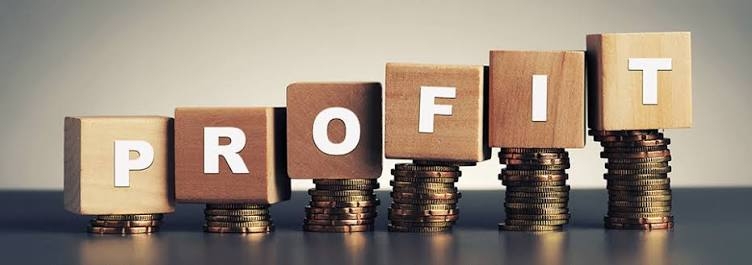
How Do Interest Rates Affect Profits?
Interest rates play an important role in determining how profitable a business can be. They influence the cost of borrowing, consumer spending, investment decisions, cash flow, and the value of future earnings. When interest rates change, businesses may see their profits rise or fall even if their sales remain unchanged.
Understanding this relationship is particularly important for business owners and investors because interest rates can affect both the costs a company pays and the revenue it generates.
1. Higher Interest Rates Increase Borrowing Costs
One of the most direct ways interest rates affect profits is through borrowing costs. Businesses often use loans, lines of credit, bonds, or other forms of debt to finance operations, purchase equipment, expand facilities, or manage cash flow.
When interest rates rise, new borrowing generally becomes more expensive. Companies with variable-rate debt may also see their existing interest payments increase.
For example, suppose a company has $1 million in debt at an interest rate of 5%. Its annual interest expense would be approximately $50,000. If the rate rises to 8%, the annual interest expense increases to about $80,000.
That additional $30,000 is an expense that reduces the company's profit, assuming everything else stays the same.
genui{"finance_accounting_operations":{"type_id":"COMPOUND_INTEREST","content":"FV=PV(1+r)^n"}}
Businesses with large amounts of debt are therefore often more sensitive to rising interest rates than companies with little or no debt.
2. Lower Interest Rates Can Increase Profits
The opposite can happen when interest rates decline. Lower rates generally reduce the cost of borrowing, allowing businesses to obtain financing more cheaply.
A company might use cheaper financing to:
-
Purchase new machinery
-
Open additional locations
-
Hire more employees
-
Increase inventory
-
Develop new products
-
Expand into new markets
Lower interest expenses can directly increase net profit. At the same time, additional investment may increase sales and operating income over the longer term.
For example, if a business borrows $2 million and its interest rate falls from 7% to 5%, its annual interest expense could fall from $140,000 to $100,000. The resulting $40,000 reduction in interest expense can increase profit before tax, assuming other factors remain unchanged.
3. Interest Rates Affect Consumer Spending
Interest rates do not only affect businesses through their own borrowing. They can also influence how much customers are willing and able to spend.
When interest rates rise, consumers may face higher costs for mortgages, credit cards, personal loans, and other borrowing. As a result, households may have less disposable income available for purchases.
Businesses that sell discretionary products—such as cars, furniture, electronics, travel, and luxury goods—can be particularly affected.
If consumers reduce their spending, businesses may experience lower sales and revenue. Lower revenue can then reduce profits, especially when the company has significant fixed costs.
Conversely, lower interest rates can encourage borrowing and spending, potentially increasing demand for products and services.
4. Interest Rates Influence Business Investment
Businesses constantly make decisions about whether new investments are worthwhile. Interest rates are an important part of these calculations.
Suppose a company is considering a project expected to generate a particular return. If financing costs are low, the project may appear attractive. If interest rates rise significantly, the cost of financing may increase enough to make the project less profitable.
Higher rates can therefore cause companies to delay or cancel expansion plans.
Reduced investment can affect profits in two ways. In the short term, the business may avoid additional expenses. However, in the longer term, failing to invest in new equipment, technology, or capacity could limit growth and reduce future profits.
5. Interest Rates Affect Cash Flow
Profit and cash flow are not the same thing, but interest rates can affect both.
A company may report a profit while still experiencing cash-flow difficulties. Higher interest payments can make this problem worse because more cash must be used to service debt.
Businesses with substantial debt obligations need to ensure that they have enough cash available to make interest and principal payments. If interest rates rise unexpectedly, a company with variable-rate debt may suddenly face larger payments.
This can leave less cash available for wages, suppliers, investments, and other operating expenses.
6. The Impact Depends on the Company's Debt Level
Not every business is affected by interest-rate changes to the same extent.
A company with little debt may experience only a small direct impact from changing interest rates. A highly leveraged company, however, may see a significant change in profitability.
Consider two businesses with identical operating profits. Company A has very little debt, while Company B has $10 million in loans.
If interest rates increase, Company B may experience a substantial increase in interest expense, while Company A may be largely unaffected.
This is one reason investors often examine a company's debt levels when assessing its sensitivity to interest-rate changes.
7. Interest Income Can Increase Profits
Higher interest rates are not always negative for businesses.
Companies with significant cash reserves may earn more interest when rates increase, particularly if they hold money in interest-bearing accounts, certificates of deposit, money-market instruments, or other investments.
For example, a company holding $5 million in cash could potentially earn substantially more interest when market rates are higher than when rates are near zero.
Therefore, a business with a strong cash position and little debt may actually benefit from higher interest rates through increased interest income.
8. Interest Rates Can Affect Profit Margins
Profit margin measures how much profit a company keeps from its revenue. Changes in interest expenses can affect the portion of revenue that ultimately becomes net profit.
Imagine a company generating $1 million in annual operating profit. If it pays $100,000 in interest, $900,000 remains before taxes and other relevant expenses. If interest expense increases to $180,000, only $820,000 remains.
The business has not necessarily become less efficient operationally, but its net profitability has declined because financing has become more expensive.
Companies with thin profit margins may be especially vulnerable because even relatively small increases in interest expenses can have a noticeable effect on their bottom line.
9. Different Industries React Differently
The effect of interest rates varies considerably across industries.
Financial institutions may benefit from higher interest rates under certain conditions because they can earn more on loans and investments. However, they can also face higher funding costs and increased credit risk.
Real estate companies are often sensitive to interest rates because property purchases frequently involve substantial borrowing. Higher rates can increase financing costs and reduce demand for property.
Manufacturing companies may be affected when higher rates discourage investment in machinery and equipment.
Consumer businesses can be affected when higher borrowing costs reduce household spending.
Technology companies with large cash balances and relatively little debt may experience a smaller direct impact from rising rates, although changing economic conditions can still affect their sales and investment valuations.
10. Interest Rates Can Affect Business Valuations
Interest rates can also influence how investors value companies.
When interest rates rise, investors may demand higher returns from investments. This can reduce the present value they place on future corporate earnings.
Businesses whose expected profits are far in the future can be particularly sensitive to changes in interest rates. This is one reason growth-oriented companies can experience significant changes in their market valuations when interest-rate expectations change.
Importantly, a change in a company's stock price does not necessarily mean its current operating profits have changed. Interest rates can affect the valuation investors place on future profits even when the company's immediate earnings remain stable.
Conclusion
Interest rates can affect business profits through several interconnected channels. Higher rates can increase borrowing costs, reduce consumer spending, discourage investment, squeeze cash flow, and reduce net profit. Lower rates can have the opposite effect by making financing cheaper and encouraging borrowing, investment, and consumer demand.
However, the impact is not the same for every business. Companies with large debts are generally more exposed to rising rates, while businesses with substantial cash reserves may benefit from higher interest income. Industry, debt structure, profit margins, customer behavior, and the broader economy all determine how strongly interest-rate changes affect a company's profitability.
For business owners, monitoring interest rates is therefore more than a financing concern. It is an important part of understanding costs, planning investments, managing cash flow, and protecting long-term profits.
- Arts
- Business
- Computers
- Spellen
- Health
- Home
- Kids and Teens
- Money
- News
- Personal Development
- Recreation
- Regional
- Reference
- Science
- Shopping
- Society
- Sports
- Бизнес
- Деньги
- Дом
- Досуг
- Здоровье
- Игры
- Искусство
- Источники информации
- Компьютеры
- Личное развитие
- Наука
- Новости и СМИ
- Общество
- Покупки
- Спорт
- Страны и регионы
- World

 English
 Russian
 French
 Spanish
 Portuguese
 Deutsch
 Turkish
 Italiano
 Arabic
 Romaian
 Portuguese (Brazil)
 Greek
Greek