
What is international economics?
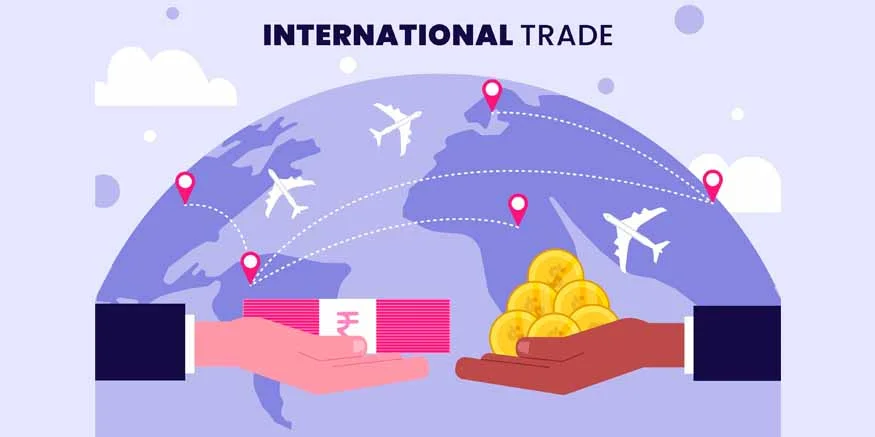
What Is International Economics?
International economics is the branch of economics that studies economic activities and relationships between countries. It examines how nations trade goods and services, move capital across borders, exchange currencies, and develop economic policies that affect the global economy. As countries become increasingly connected through trade, investment, technology, and finance, international economics has become an important part of understanding how the modern world economy works.
Unlike domestic economics, which mainly focuses on economic activity within one country, international economics considers interactions between different economies. These interactions can create opportunities for growth and specialization, but they can also produce challenges such as trade deficits, currency fluctuations, unemployment in certain industries, and international financial crises.
Main Areas of International Economics
International economics is generally divided into two broad areas: international trade and international finance.
1. International Trade
International trade refers to the buying and selling of goods and services between countries. Countries trade because they differ in resources, technology, labor skills, climate, production costs, and other economic conditions.
For example, one country may have favorable conditions for producing coffee, while another may be more efficient at producing machinery. Instead of producing everything domestically, countries can specialize in products they can produce relatively efficiently and trade with one another.
The concept of comparative advantage is central to international trade. It suggests that countries can benefit from specializing in goods and services they can produce at a lower opportunity cost and then trading with other countries.
International trade includes:
-
Imports, which are goods and services purchased from other countries
-
Exports, which are goods and services sold to other countries
-
Trade agreements between countries
-
Tariffs and other trade restrictions
-
Balance of trade
-
Global supply chains
2. International Finance
International finance focuses on financial transactions and monetary relationships between countries. It includes foreign exchange markets, international investment, exchange rates, and cross-border financial flows.
For example, when a company from one country invests in a factory in another country, the transaction is part of international finance. Similarly, when people or businesses exchange one currency for another to purchase foreign goods, exchange rates become important.
International finance helps explain why the value of currencies changes and how changes in one country's financial conditions can affect other economies.
Why Do Countries Trade?
Countries trade for several reasons. First, natural resources are distributed unevenly around the world. Some countries have large supplies of oil, minerals, agricultural land, or other resources, while others have limited supplies.
Second, countries have different levels of technology and worker productivity. A country with advanced technology may be able to produce certain products more efficiently than countries with less-developed production methods.
Third, specialization allows countries to use their resources more efficiently. Rather than attempting to produce every product themselves, countries can focus on areas where they have an economic advantage and obtain other products through trade.
International trade can therefore increase the variety of goods available to consumers, reduce production costs, encourage competition, and support economic growth.
Comparative Advantage
One of the most important ideas in international economics is comparative advantage. A country has a comparative advantage when it can produce a particular good or service at a lower opportunity cost than another country.
For example, suppose Country A is highly efficient at producing both computers and clothing, while Country B is less efficient at producing both. Country B could still benefit from trade if its opportunity cost of producing clothing is lower than Country A's. Country A could specialize more in computers, while Country B specializes more in clothing.
Through trade, both countries may obtain more goods than they could have produced independently with the same resources.
This principle explains why international trade can benefit countries even when one country is more productive in almost every industry.
Exchange Rates
An exchange rate is the price of one country's currency expressed in terms of another country's currency. Exchange rates are essential to international economics because international purchases and investments often require currency conversion.
For example, an American company purchasing goods from Japan may need to exchange U.S. dollars for Japanese yen. If the value of the yen changes, the cost of Japanese goods measured in dollars can also change.
Exchange rates can affect:
-
Import prices
-
Export competitiveness
-
International tourism
-
Foreign investment
-
Inflation
-
Business profits
Currencies may operate under different exchange-rate systems. Some countries allow exchange rates to be determined largely by market forces, while others manage or control their currencies to varying degrees.
Trade Barriers
Although international trade can provide significant benefits, governments sometimes restrict trade to protect domestic industries or pursue other economic objectives.
Common trade barriers include tariffs, quotas, subsidies, and regulations.
A tariff is a tax placed on imported goods. It can make foreign products more expensive and provide domestic producers with greater protection from international competition.
A quota limits the quantity of a particular product that can be imported. Governments may use quotas to protect domestic industries or manage supplies of certain goods.
Trade barriers can benefit some domestic producers, but they may also increase prices for consumers and reduce competition. Other countries may respond with their own restrictions, potentially leading to trade disputes.
Balance of Trade
The balance of trade measures the difference between a country's exports and imports of goods and services.
When a country exports more than it imports, it has a trade surplus. When it imports more than it exports, it has a trade deficit.
A trade deficit is not necessarily a sign that an economy is performing poorly. A country may import large quantities of goods because consumers and businesses have strong purchasing power, while foreign investors may also be investing heavily in the country.
Therefore, economists examine trade balances alongside other indicators, such as economic growth, employment, investment, productivity, and national income.
Globalization and International Economics
Globalization has increased the importance of international economics. Businesses can now operate across multiple countries, source materials internationally, manufacture products in different locations, and sell to customers around the world.
For example, a smartphone may be designed in one country, use components manufactured in several others, be assembled somewhere else, and then be sold globally. This creates complex international supply chains.
Globalization can provide businesses with access to larger markets and lower-cost production. Consumers can also benefit from greater product variety and competitive prices.
However, globalization can create challenges. Industries facing strong foreign competition may experience job losses or declining demand. Countries can also become more exposed to economic problems originating elsewhere.
International Economic Organizations
Several international institutions help shape the global economic system.
The International Monetary Fund (IMF) works to promote international monetary cooperation and financial stability and provides financial assistance to countries facing certain economic difficulties.
The World Bank supports development projects and provides financing and expertise to developing economies.
The World Trade Organization (WTO) provides a framework for international trade rules and helps resolve certain trade disputes between member economies.
These organizations play different roles, but together they contribute to international economic cooperation.
Importance of International Economics
International economics is important because no modern economy operates completely independently. Countries depend on one another for resources, products, services, technology, investment, and financial flows.
Studying international economics helps explain why:
-
Countries import and export goods
-
Currency values rise and fall
-
International investment occurs
-
Trade policies affect consumers and businesses
-
Economic crises can spread between countries
-
Global supply chains influence prices and production
-
Governments negotiate international trade agreements
For businesses, understanding international economics can help with decisions about foreign markets, pricing, investment, sourcing, and currency risks. For governments, it provides tools for evaluating trade policies, exchange-rate policies, and international economic relationships.
Conclusion
International economics is the study of economic interactions among countries. It covers international trade, comparative advantage, exchange rates, foreign investment, trade policies, and global financial relationships.
As technology and globalization continue to connect economies, understanding international economics is increasingly important. International trade can allow countries to specialize, improve efficiency, expand markets, and increase consumer choice. At the same time, international economic relationships can create challenges that require careful policies and cooperation.
Ultimately, international economics helps explain how countries are connected through the movement of goods, services, money, investment, and resources. Understanding these connections provides a clearer picture of how the global economy operates and how economic decisions in one country can influence people and businesses around the world.
- Arts
- Business
- Computers
- Spiele
- Health
- Startseite
- Kids and Teens
- Geld
- News
- Personal Development
- Recreation
- Regional
- Reference
- Science
- Shopping
- Society
- Sports
- Бизнес
- Деньги
- Дом
- Досуг
- Здоровье
- Игры
- Искусство
- Источники информации
- Компьютеры
- Личное развитие
- Наука
- Новости и СМИ
- Общество
- Покупки
- Спорт
- Страны и регионы
- World

 English
 Russian
 French
 Spanish
 Portuguese
 Turkish
 Dutch
Dutch
 Italiano
 Arabic
 Romaian
 Portuguese (Brazil)
 Greek
Greek