
Interest MCQs
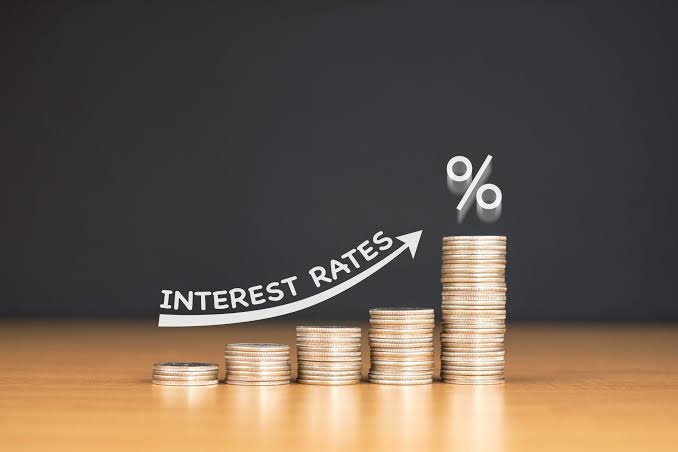
Interest MCQs: Multiple-Choice Questions on Interest
Interest is an important topic in mathematics, finance, banking, and economics. It describes the amount earned on savings or investments or the cost paid for borrowing money. Understanding interest calculations is useful for students preparing for examinations and for anyone who wants to improve their financial knowledge.
Multiple-choice questions (MCQs) are an effective way to test knowledge of concepts such as simple interest, compound interest, principal, rate, time, amount, and interest calculations. The following Interest MCQs cover basic concepts as well as practical calculation problems.
Basic Interest Concepts
Interest is generally calculated based on three main factors: the principal, the interest rate, and the time period.
-
Principal (P): The original amount of money invested or borrowed.
-
Rate (R): The percentage charged or earned over a specific period.
-
Time (T): The duration for which the money is borrowed or invested.
-
Interest (I): The additional amount paid or earned.
-
Amount (A): The principal plus the interest.
For simple interest, the standard formula is:
Simple Interest = (P × R × T) / 100
The total amount is:
A = P + SI
Compound interest differs from simple interest because interest is added to the principal and can itself earn interest in subsequent periods.
Interest MCQs
1. What is the original amount of money invested or borrowed called?
A. Interest
B. Principal
C. Amount
D. Rate
Answer: B. Principal
The principal is the initial sum of money before interest is added.
2. What is the simple interest on $1,000 at 5% per year for 2 years?
A. $50
B. $100
C. $150
D. $200
Answer: B. $100
Using SI = (P × R × T) / 100:
SI = (1,000 × 5 × 2) / 100 = $100.
3. If $2,000 is invested at 6% simple interest for 3 years, what is the interest earned?
A. $240
B. $300
C. $360
D. $420
Answer: C. $360
SI = (2,000 × 6 × 3) / 100 = $360.
4. What is the total amount when $5,000 earns $500 in simple interest?
A. $4,500
B. $5,000
C. $5,500
D. $6,000
Answer: C. $5,500
Amount = Principal + Interest = $5,000 + $500 = $5,500.
5. Which factor does NOT directly appear in the simple interest formula?
A. Principal
B. Rate
C. Time
D. Monthly income
Answer: D. Monthly income
Simple interest depends on the principal, interest rate, and time.
6. If the principal is $3,000, the rate is 4%, and the time is 2 years, what is the simple interest?
A. $120
B. $180
C. $240
D. $300
Answer: C. $240
SI = (3,000 × 4 × 2) / 100 = $240.
7. What happens to simple interest if the principal is doubled while the rate and time remain unchanged?
A. It is halved
B. It remains unchanged
C. It doubles
D. It becomes four times larger
Answer: C. It doubles
Simple interest is directly proportional to the principal.
8. What happens to simple interest if the interest rate is doubled while all other factors remain unchanged?
A. It doubles
B. It is halved
C. It remains unchanged
D. It becomes zero
Answer: A. It doubles
Because simple interest is directly proportional to the interest rate.
9. What is compound interest?
A. Interest calculated only on the original principal
B. Interest calculated on the principal and accumulated interest
C. A fixed banking fee
D. A tax on investments
Answer: B. Interest calculated on the principal and accumulated interest
With compound interest, previously earned interest can become part of the amount on which future interest is calculated.
10. Which type of interest generally produces more interest over several periods when the rate and principal are the same?
A. Simple interest
B. Compound interest
C. Zero interest
D. Fixed fees
Answer: B. Compound interest
Compound interest can generate interest on previously accumulated interest.
11. If an investment earns $200 interest on a principal of $2,000, what is the amount?
A. $1,800
B. $2,000
C. $2,200
D. $2,400
Answer: C. $2,200
Amount = $2,000 + $200 = $2,200.
12. A loan of $4,000 is charged simple interest at 5% per year for 3 years. What is the total interest?
A. $400
B. $500
C. $600
D. $700
Answer: C. $600
SI = (4,000 × 5 × 3) / 100 = $600.
13. What is the annual interest rate if $300 interest is earned on $2,000 for 3 years using simple interest?
A. 3%
B. 5%
C. 7.5%
D. 10%
Answer: B. 5%
R = (SI × 100) / (P × T)
R = (300 × 100) / (2,000 × 3) = 5%.
14. If the principal is $1,500 and the simple interest is $225 at 5% per year, how long was the money invested?
A. 2 years
B. 3 years
C. 4 years
D. 5 years
Answer: B. 3 years
T = (SI × 100) / (P × R)
T = (225 × 100) / (1,500 × 5) = 3 years.
15. Which statement about compound interest is correct?
A. Interest is never added to the principal
B. Interest is always lower than simple interest
C. Interest may be calculated on accumulated interest
D. It can only be used for loans
Answer: C. Interest may be calculated on accumulated interest
This is the key feature that distinguishes compound interest from simple interest.
Why Practice Interest MCQs?
Practicing Interest MCQs helps students improve their understanding of financial mathematics while developing calculation speed and accuracy. These questions can also help identify areas that need additional study, such as converting percentages, calculating time, distinguishing simple from compound interest, and finding the total amount.
Interest questions are commonly relevant to mathematics tests, banking examinations, finance courses, competitive examinations, and general financial education. Regular practice can make formulas easier to remember and help learners solve numerical problems more confidently.
Conclusion
Interest is a fundamental concept in both mathematics and personal finance. A strong understanding of principal, rate, time, simple interest, compound interest, and total amount makes it easier to solve a wide range of financial problems.
Interest MCQs provide a convenient way to test these skills. By practicing both conceptual and numerical questions, learners can improve their accuracy, understand how interest works, and prepare more effectively for examinations.
- Arts
- Business
- Computers
- Games
- Health
- Home
- Kids and Teens
- Money
- News
- Personal Development
- Recreation
- Regional
- Reference
- Science
- Shopping
- Society
- Sports
- Бизнес
- Деньги
- Дом
- Досуг
- Здоровье
- Игры
- Искусство
- Источники информации
- Компьютеры
- Личное развитие
- Наука
- Новости и СМИ
- Общество
- Покупки
- Спорт
- Страны и регионы
- World

 Russian
 French
 Spanish
 Portuguese
 Deutsch
 Turkish
 Dutch
Dutch
 Italiano
 Arabic
 Romaian
 Portuguese (Brazil)
 Greek
Greek